Lake.com’s AI Search Case: Choosing Articles That Answer Travelers
Lake.com, a lakefront rental platform, created articles based on AI search question patterns. This article explains what its reported 5x figure measures and shows how accommodation providers can choose articles by splitting traveler questions into destination, activities, and lodging.
When choosing articles, accommodation providers should first ask whether they can answer questions travelers have before choosing a destination, not just describe amenities. Lake.com, a lakefront rental platform, studied the questions people ask AI and created articles for each stage of trip planning.
Even detailed room descriptions do not help travelers who still wonder, “Will we enjoy this season?” or “What if it rains?” After reviewing the case, this article uses a fictional lakeside inn to explore how to choose articles and link them to property pages.
Articles Lake.com Created from AI Search Question Patterns
Lake.com created articles for three stages of questions: researching destinations, comparing rentals, and finding things to do. The reported 5x refers to organic traffic from branded searches, not bookings or revenue.
Lake.com is a booking platform for stays near lakes and waterfronts. Its work is described in a customer case study by Profound, a company that provides AI search analytics tools[1].
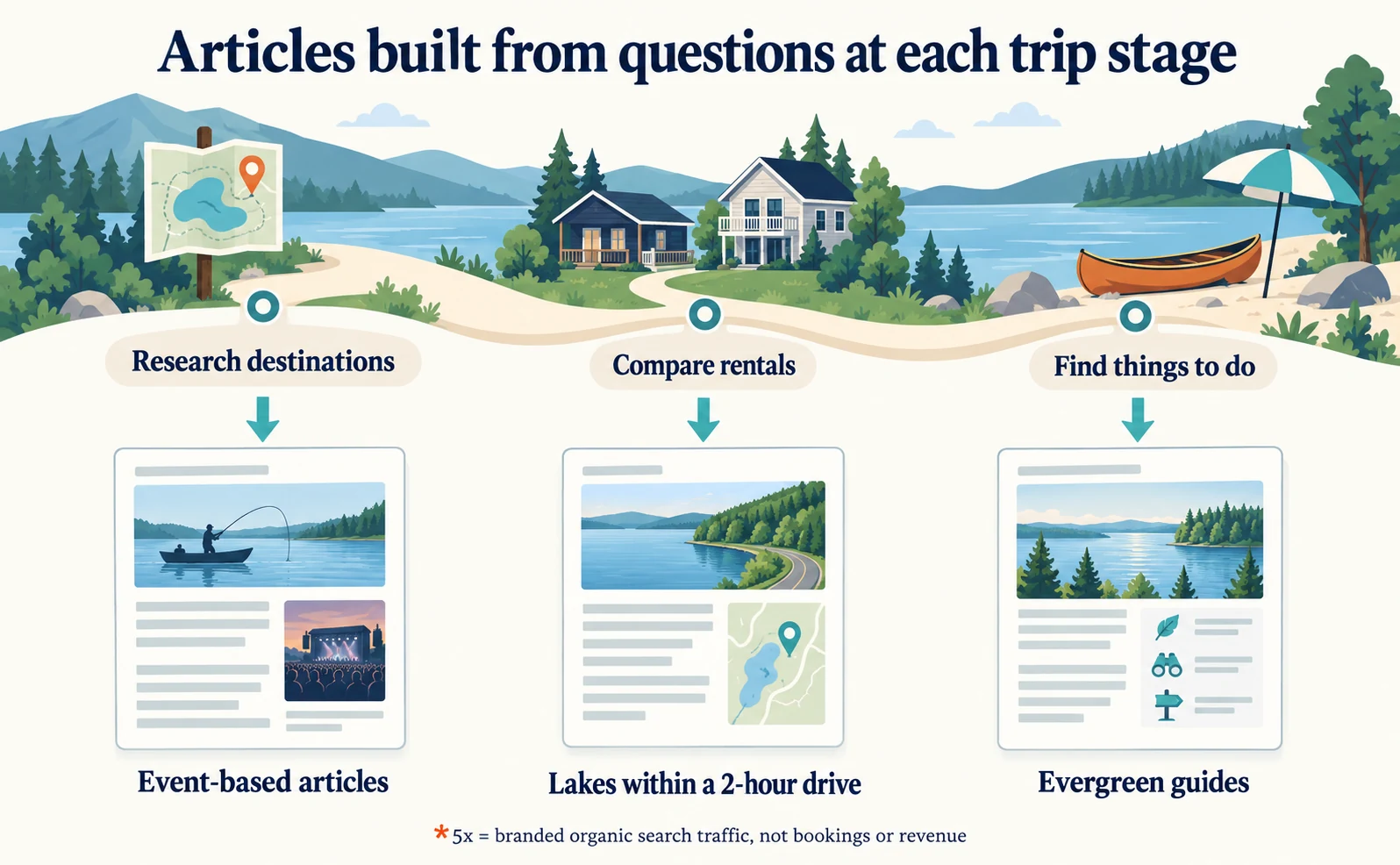
According to the case, Lake.com used the tools to study traveler question patterns and created content such as[1]:
- Articles tied to events like fishing tournaments and music festivals
- Guides to lakes within a two-hour drive of major cities
- Evergreen guides that did not require rebuilding URLs each year
The case reports that branded organic traffic in the run-up to July 4 was five times that of the same period the previous year[1]. Organic traffic means visits from unpaid search results. This does not mean AI-referred bookings or revenue grew fivefold.
Expanding seasonal content for major holidays is listed as a next milestone, not completed work[1]. The material is a case study from a tool vendor, not a study that isolates seasonal or brand effects. Its publication date is not stated in the text and it includes 2025 figures, so it is not treated as news.
The tables, article ideas, and property conditions below are our own illustrative suggestions, not materials Lake.com used.
Choose One Trip Your Property Wants to Help With
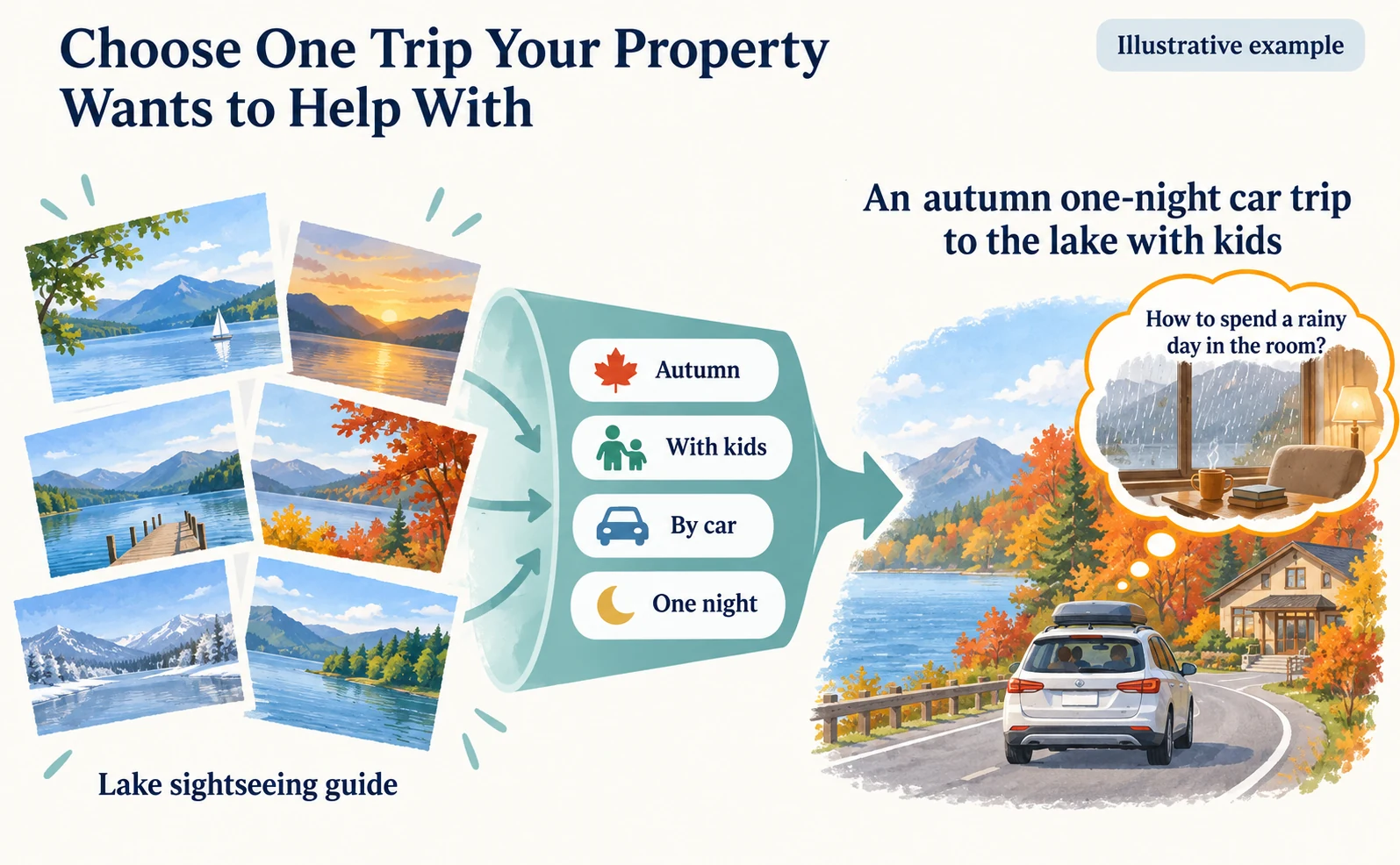
First, narrow down one trip by deciding the season, companions, and transport. “An autumn one-night trip by car to the lake with children” makes it easier to choose explanations than “a lake sightseeing guide.”
From here, we use a fictional property called Lakeside Inn. The person in charge writes the following three items in a document they already use.
| What to decide | Illustrative entry | How it helps choose articles |
|---|---|---|
| The trip to help with | An autumn weekend, one night, with children | Sets season and companions |
| What is still undecided | Whether to go if it rains, where to spend time | Finds hesitations before comparing lodging |
| What you can verify | Amenities, route to the lake, nearby facilities’ opening information | Selects articles you can answer |
Under “What is still undecided,” write what travelers are unsure about, not amenities you want to promote. “How to spend time in the room on a rainy day” connects a travel decision with room information.
Imagined questions are hypotheses at this stage. Compare them with questions guests have actually asked. Without records, treat them as assumptions rather than “frequently asked questions.”
Split Traveler Questions into Destination, Activities, and Lodging
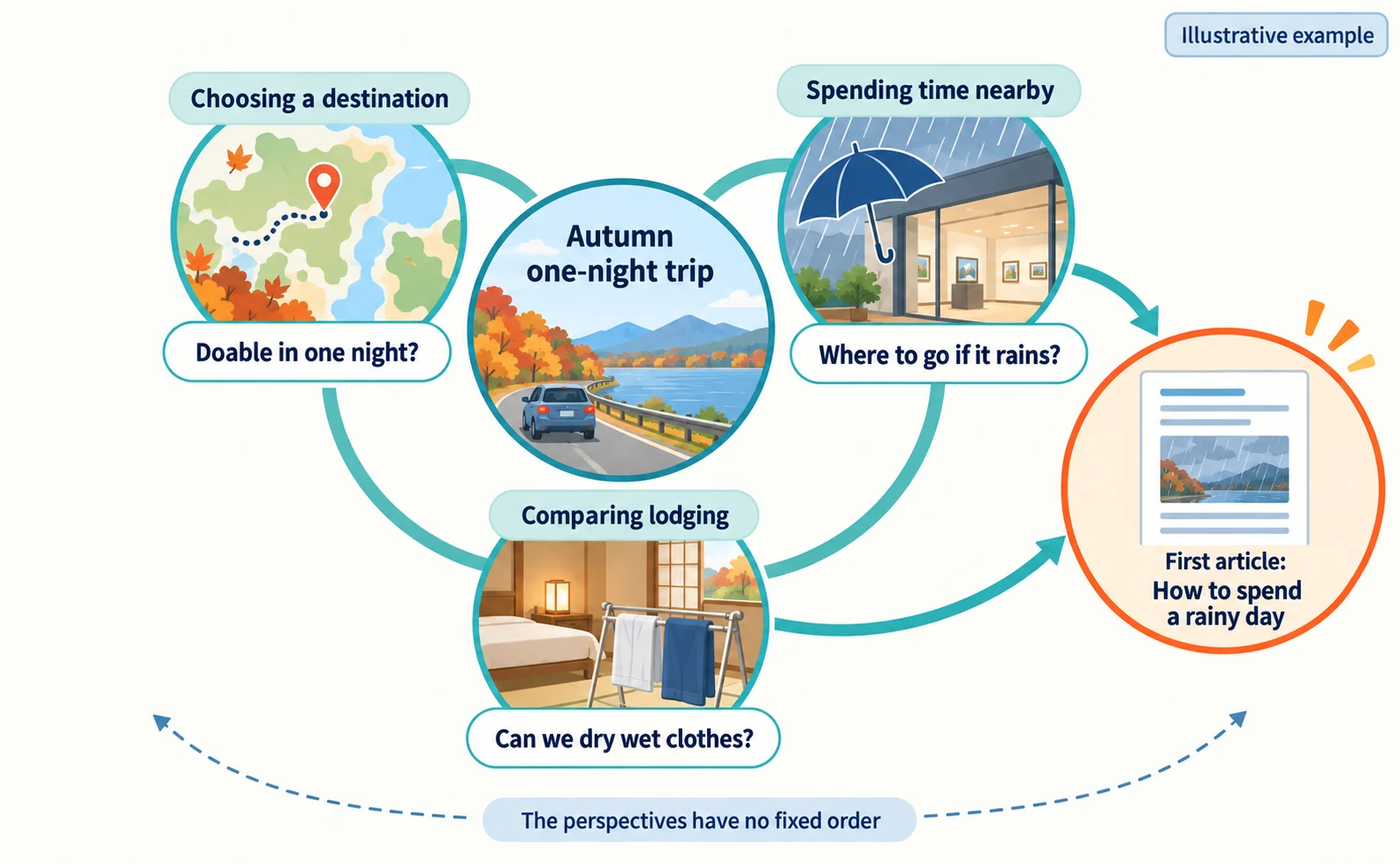
Look at one trip from three perspectives, choosing a destination, spending time nearby, and comparing lodging, and pick the first article from questions you can verify and that affect decisions. Travelers do not always move in this order.
| Perspective | Illustrative question | What the article answers | Information to read next |
|---|---|---|---|
| Choosing a destination | Can we cover it in one autumn night? | Travel from the starting point and stops | Directions to the inn |
| Spending time nearby | Where can we go if it rains? | Indoor options and opening days | On-site amenities guide |
| Comparing lodging | Can we dry wet clothes? | Laundry and drying facilities and conditions | Detailed amenity information |
With this table, the first candidate is “How to spend a rainy day.” It answers people deciding whether to cancel while guiding them to nearby facilities and the inn’s amenities.
If you cannot verify indoor options or amenity conditions, there is less reason to choose this topic first. If a rainy-day guide already exists, adding opening days or links may serve the goal better than a new article.
For gathering questions, see Start with Customer Inquiries.
Answers and Verification Dates on Local and Seasonal Pages
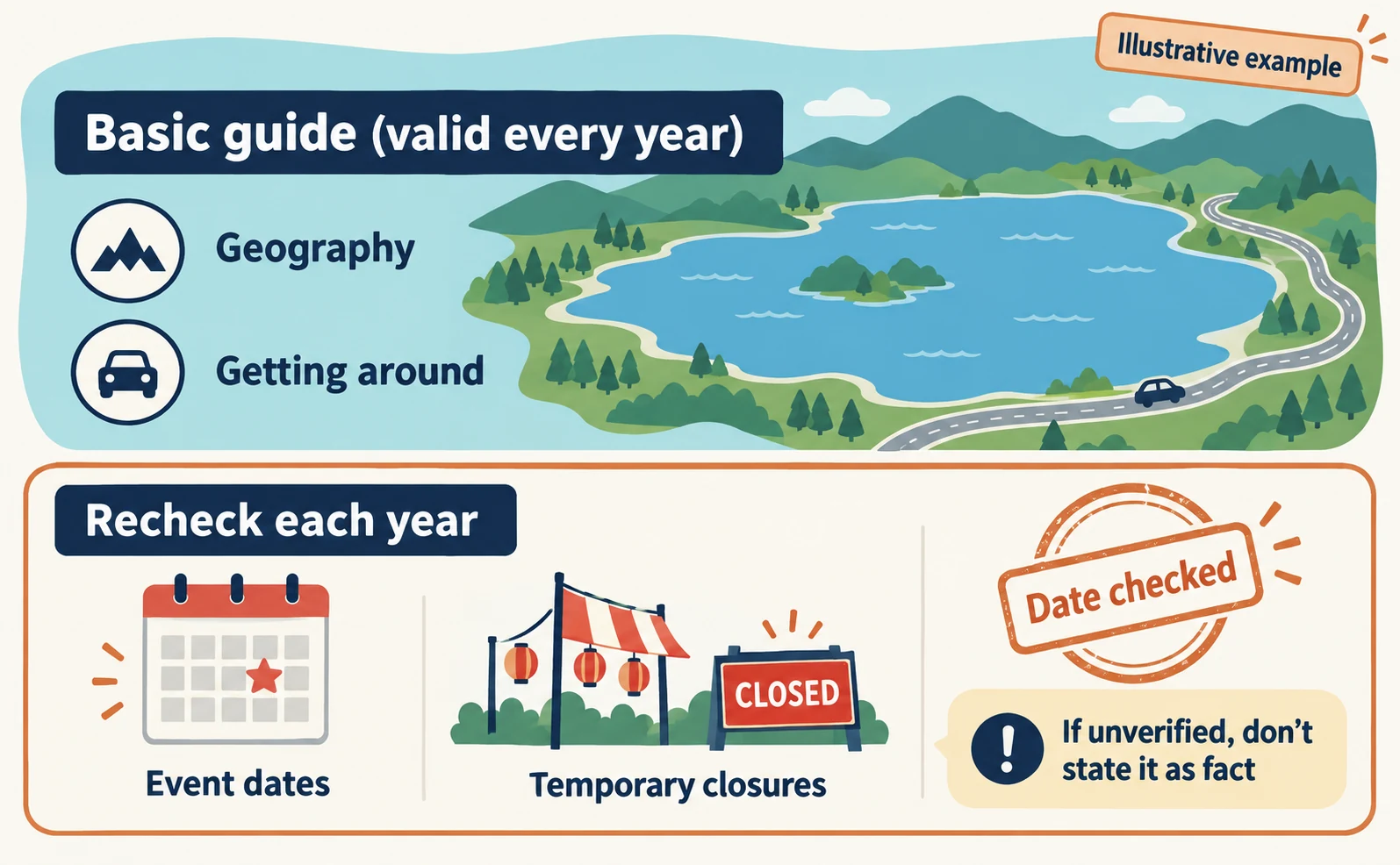
Separate seasonal information that stays valid each year from information you must recheck, and add a verification date to the latter. This avoids assuming last year’s schedule still applies.
Put geography and general travel guidance in the basic guide. Keep event dates and temporary closures in a separate section with the date checked. The case describes Lake.com’s evergreen guides as ones that did not require rebuilding URLs each year[1].
| Information to publish | What to check before publishing | If unknown |
|---|---|---|
| Nearby facilities’ opening days | The operator’s current official information | Mark as unverified; do not state it is open |
| Travel from the inn | Starting point, transport, basis | Do not publish travel times without conditions |
| Activity participation rules | Organizer’s age and reservation guidance | Do not assume children can join |
| Inn amenities | Conditions confirmed by your staff | Do not infer availability from photos |
The person writing the local guide checks nearby facilities, and operations staff check amenity conditions. If either is unverified, soften the wording or hold that section.
Match Property Page Links to the Question Just Answered
Link from local articles to property pages with text that shows what the reader will learn about the question just raised. “Book now” alone does not say what the linked page explains.
Google lists making content findable through internal links and providing important content as text among the fundamentals that apply to AI features[2].
The example below assumes the fictional Lakeside Inn has laundry and drying facilities and a shared indoor space.
Before: “Enjoy the lake even on rainy days. Book your stay at Lakeside Inn, a convenient base for sightseeing.”
After: “On a rainy day, you can consider spending time at nearby indoor facilities or returning to the inn to rest. Check opening days before adding places to your plans. If you stay in, ‘Shared indoor space hours’ and ‘Laundry and drying facility conditions’ show which spaces you can use and when.”
The quoted phrases are suggested link text. Link them to pages already published on your site; if no page explains the conditions, add that information to your property guide first.
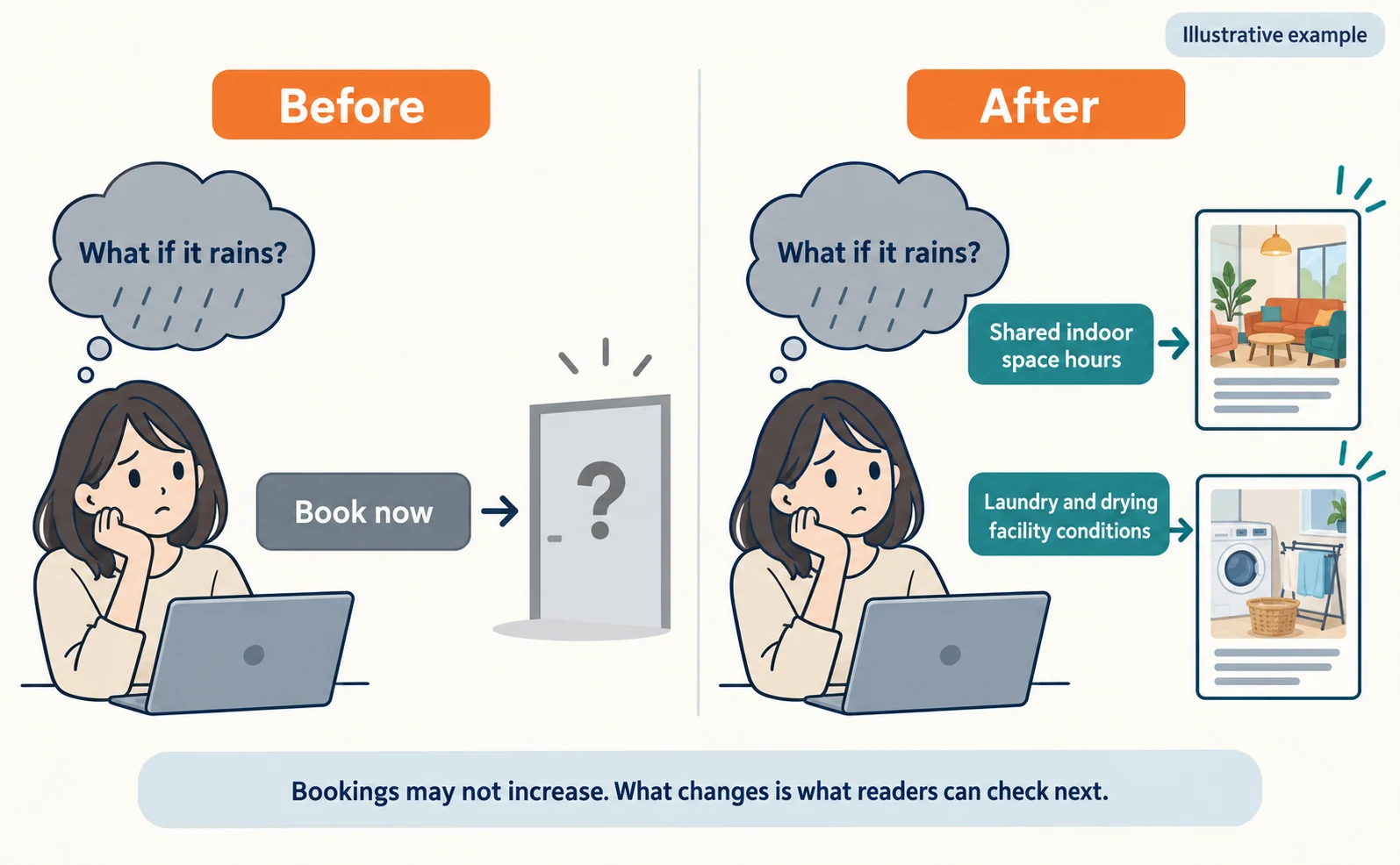
This change alone cannot be said to increase bookings. What changes is the information readers can check next. After publishing, record the page, change date, and question answered, and check visits, clicks to property information, and completed bookings separately.
The lesson from Lake.com is not the multiple but the idea of covering questions beyond your property itself. For an overview of AI search optimization, see What Is AIO?.
FAQ
- Q. Does the 5x figure mean AI-referred bookings increased?
- No. It compares branded organic search traffic in the run-up to July 4 with the same period the previous year. Growth in bookings or revenue cannot be confirmed.
- Q. Has Lake.com already expanded its seasonal articles?
- Event articles, nearby lake guides, and evergreen guides are described as completed. Expanding seasonal content for major holidays is listed as a next milestone.
- Q. Will similar articles produce the same results?
- That cannot be guaranteed. The case comes from a tool vendor and does not isolate seasonal or brand effects.
Sources
- [1] How Lake.com 5x’ed branded traffic by tapping into AI Search behavior (Profound) — accessed 2026-09-23
- [2] AI features and your website (Google Search Central) — accessed 2026-09-23
About the author
Shogo MizushimaCEO of kairos Inc. / AgentSignal Developer
Develops AgentSignal, a tool for measuring AI crawler visits and AI-referred traffic, and diagnosing AIO readiness. Writes about measurement and practical improvements for AI search using observed data.
Related articles
AIO and AI search
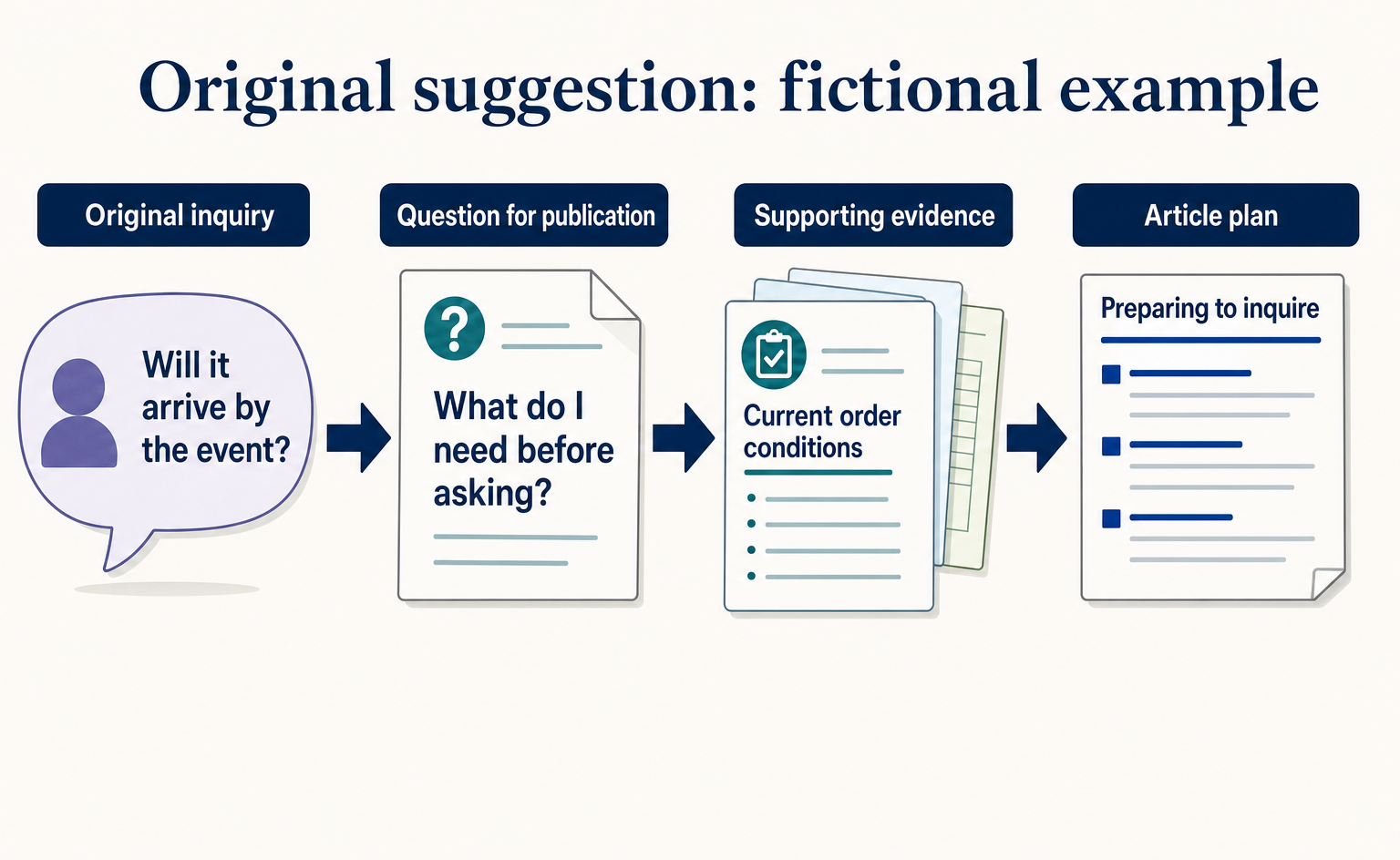
Where to Find Article Ideas Only Your Business Can Write: Start with Customer Inquiries
You do not need original research data to create useful articles. Learn how to turn customer questions, answers, and decision criteria into article plans, with worksheets and fictional before-and-after examples covering anonymization, question grouping, and evidence checks.
Published
AIO and AI search
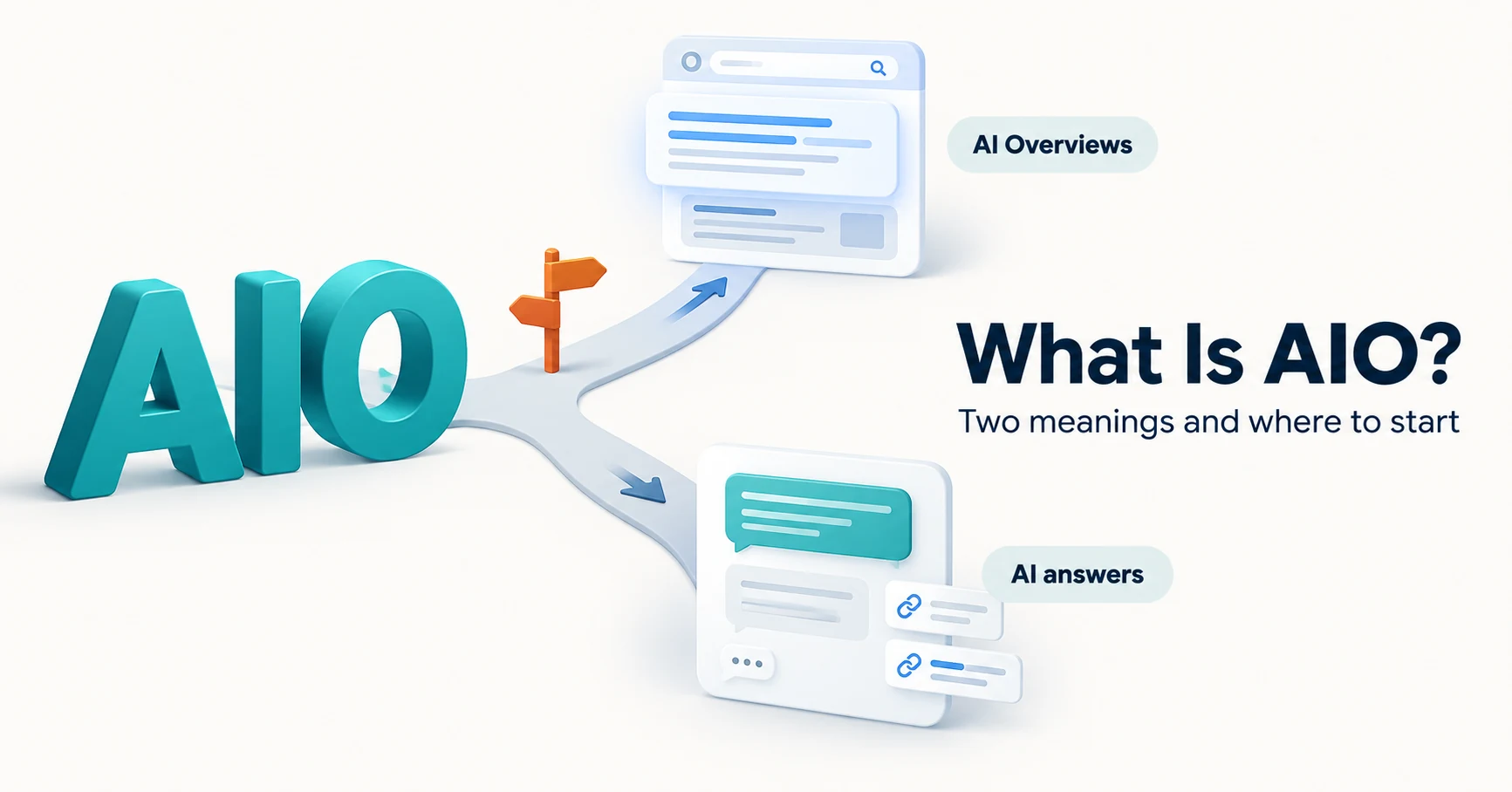
What Is AIO? Its Two Meanings and Where to Start with AI Optimization
AIO has two meanings: work to get your company featured in AI answers, and Google Search’s AI Overviews. Learn how it relates to SEO, what to confirm in a proposal, what Search Console and Bing reports show, and your first tasks.
Published
AIO and AI search
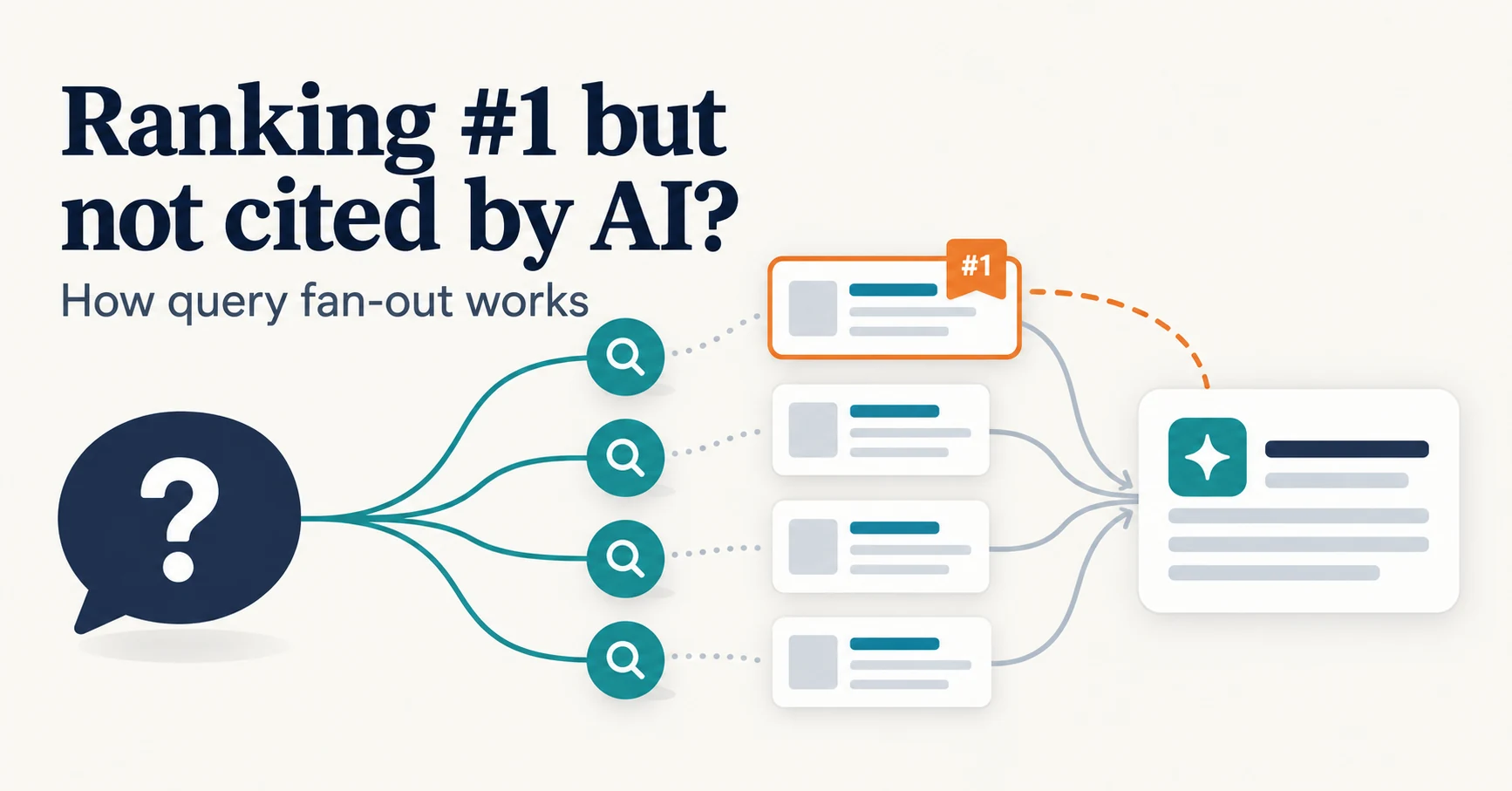
Ranking First but Not Cited by AI? How Query Fan-Out Works
Query fan-out is a technique in which AI may run several related searches to answer one question. Learn why a first-place page may not be cited, which related questions your pages should answer, and what you can observe in Search Console and Bing.
Published