AI-search pipeline up 15%: what CRS tracked with Google Analytics and Looker
CRS reported a 15% increase in AI-search pipeline, a pre-sale measure rather than closed revenue. The team used Google Analytics and Looker to connect referrals with leads and deals.
A report saying “AI cited us” does not explain how much it helped sales. CRS, which provides access to credit information through an API, offers a case for looking further along the customer journey.
The company reportedly increased AI-search-attributed pipeline by 15%. Pipeline refers to potential business before a deal closes. Profound’s case study
Here, we consider how LLM optimization can connect with sales records.
CRS’s visibility, traffic, and pipeline figures measure different outcomes
The case reports 20-fold AI visibility, an 8% increase in weekly LLM referral traffic, and a 15% increase in AI-search-attributed pipeline. Profound’s case study
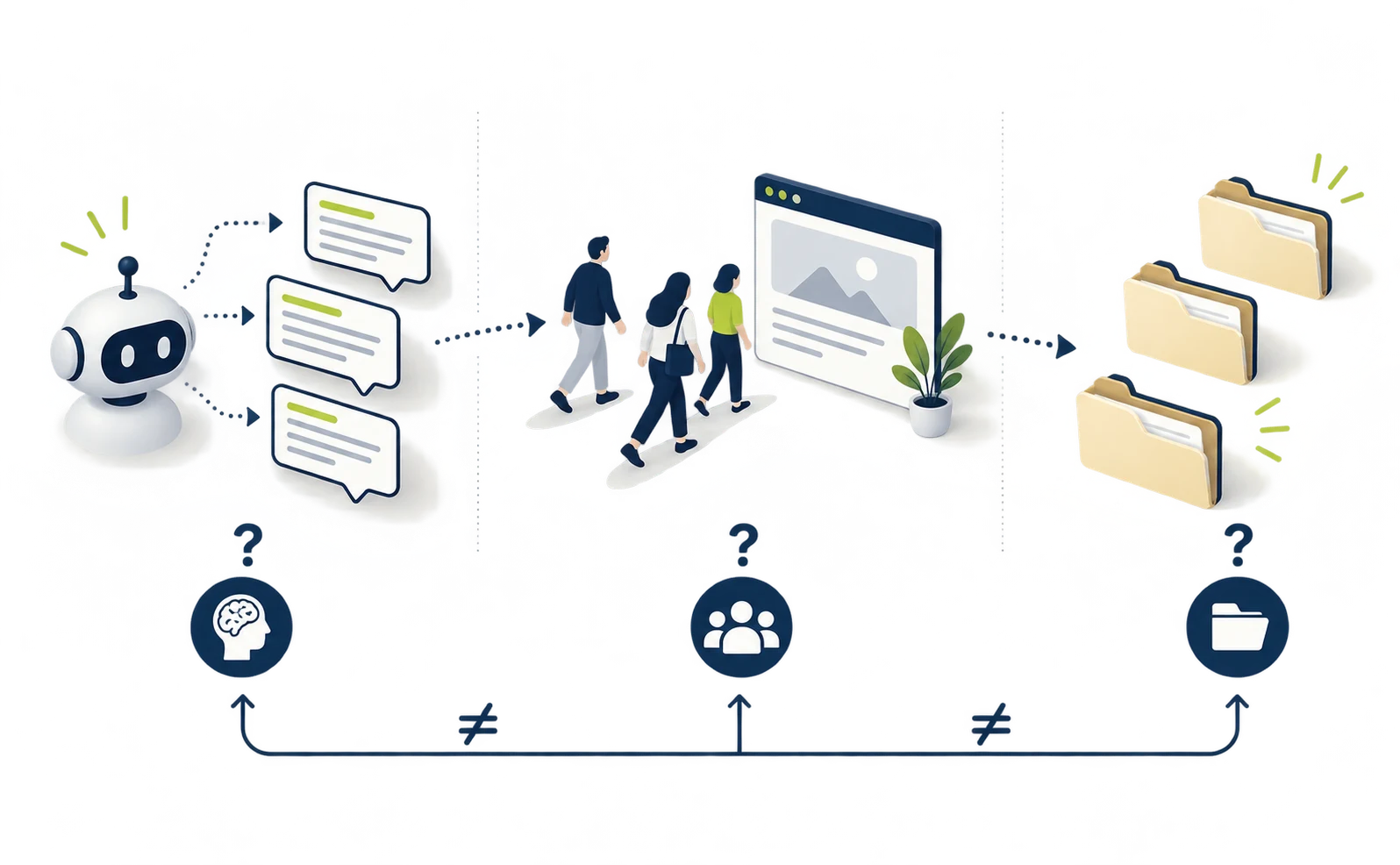
Illustration: Separate AI mentions, website visits, and open sales opportunities.
It does not specify whether the pipeline figure is a count or monetary value or provide the full aggregation rules. It cannot be presented as a 15% increase in closed deals or revenue.
Citations, visits, and opportunities describe different stages. Define what counts as one event in your own reporting first.
Using Google Analytics and Looker to connect answers with sales activity
CRS describes using Google Analytics and Looker to connect AI answers with qualified leads and deals. Profound’s case study

Illustration: Connect answer observations, analytics, and sales notes while retaining attribution gaps.
For your own process, identify which records can actually be connected rather than assuming every individual journey is observable.
Analytics may show the landing page, while a customer-management record shows whether an inquiry became an opportunity. Connect those records only where evidence supports the relationship.
Keep an observed referral and a customer’s statement that they discovered you through AI in separate fields.
Content distribution and publisher relationships happened alongside the work
Content distribution and relationships with prominent publications were also part of CRS’s work. Profound’s case study
Record advertising, external coverage, and sales activity occurring during the same period. That helps avoid assigning every change in pipeline to an article edit.
The FAQ Agent appears in a forward-looking section, not isolated causal evidence
The FAQ Agent appears in the source’s forward-looking section. That passage does not establish that FAQ production caused the reported 15% pipeline increase. Profound’s case study
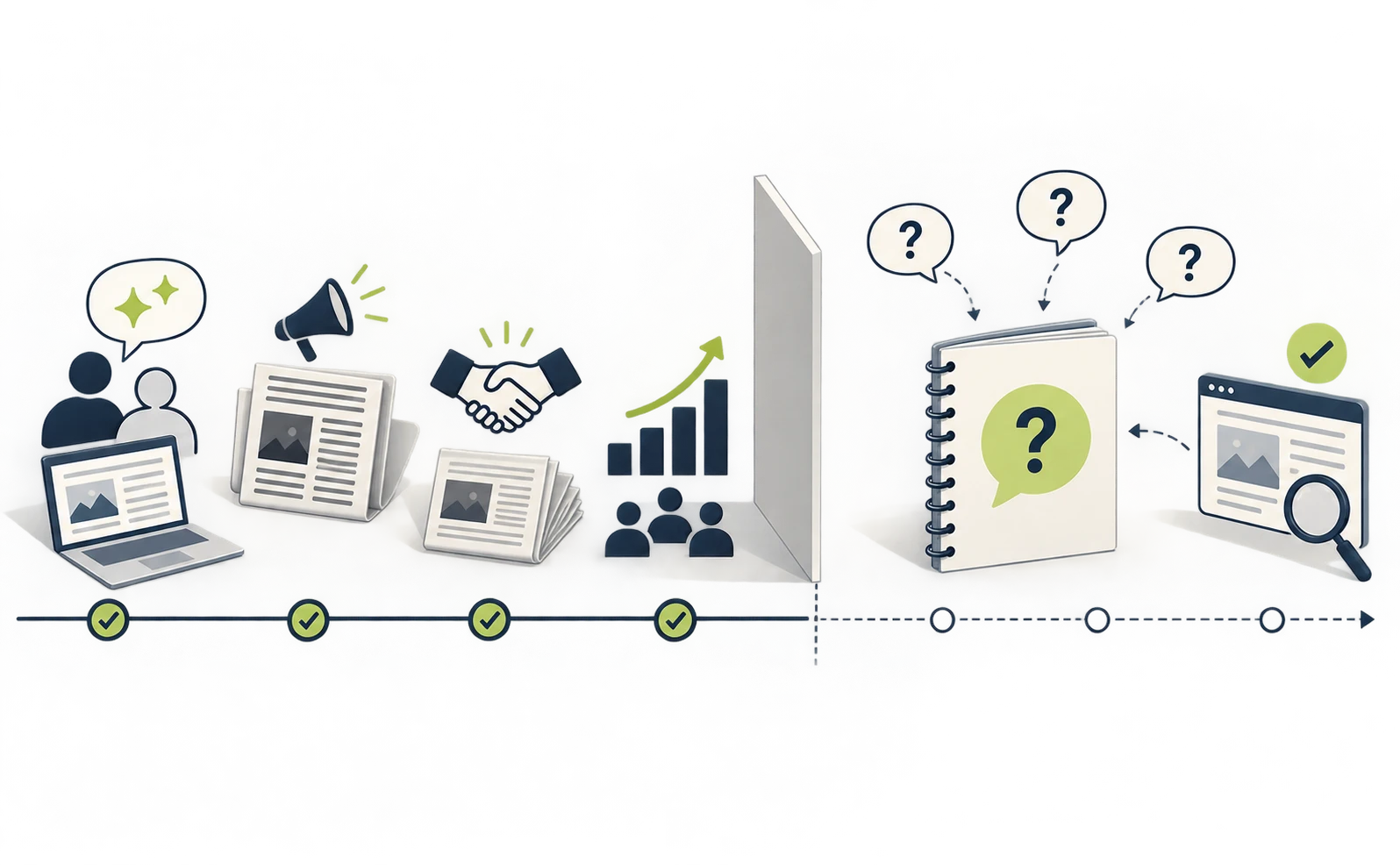
Illustration: Distinguish reported past results from a proposed future FAQ initiative.
In your own reports, distinguish completed changes from planned experiments. A planned FAQ update should not become an explanation for a past result.
To identify a next step, collect recurring pre-sales questions and check whether the website already answers them.
Prepare to connect observable AI visits with inquiries and opportunities
Begin by checking the records between an inquiry and an opportunity. This is our proposed process, not CRS’s actual configuration.
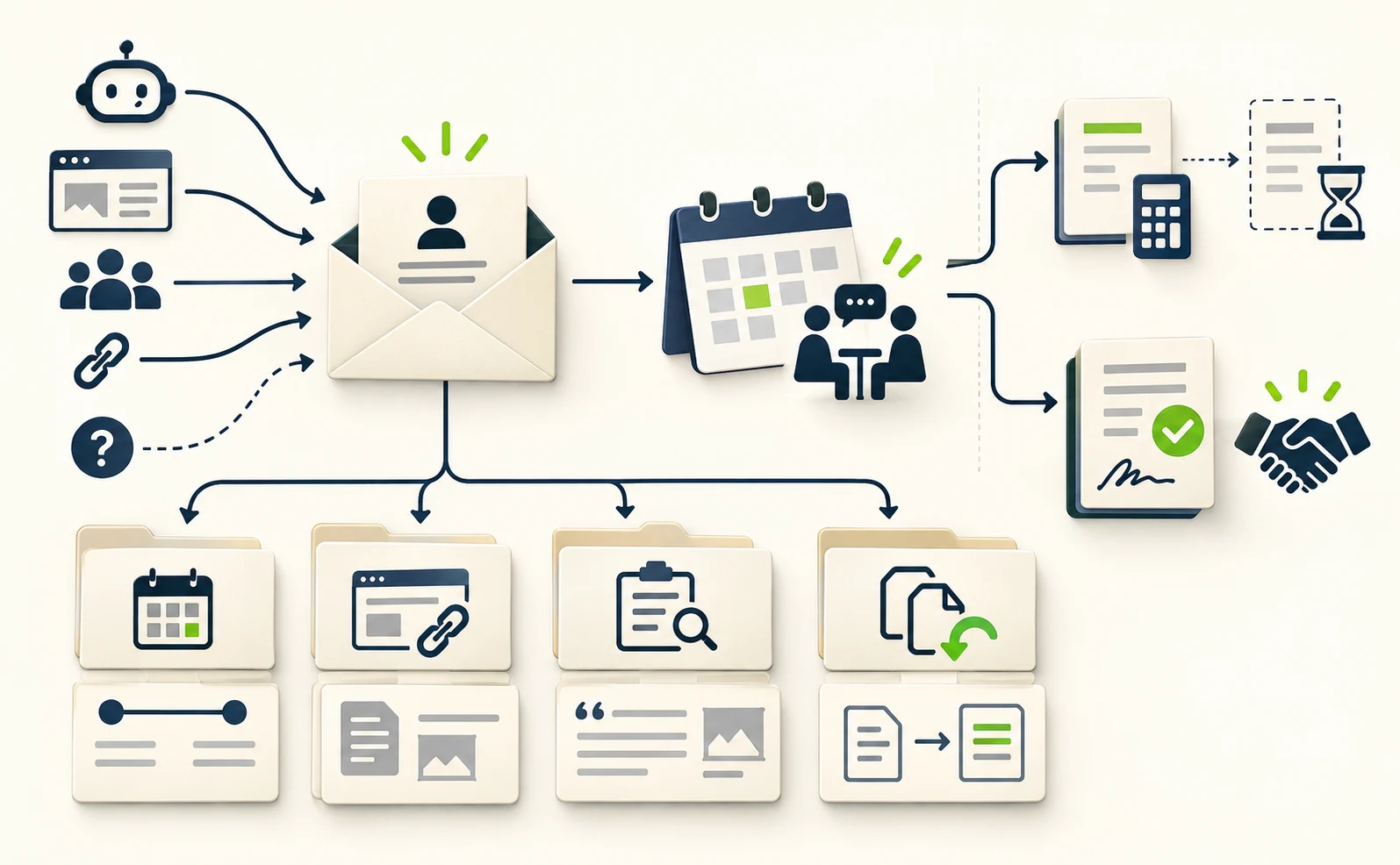
Illustration: Track inquiries and meetings alongside dates, source evidence, and page changes.
- Check what the inquiry form saves to your customer-management system.
- Connect available landing-page and referral information to the inquiry.
- Agree with sales on when an inquiry becomes an opportunity.
- Preserve unknown discovery sources as unknown.
GA4 documents an “AI Assistant” channel for recognized AI referrers. Google AI Overviews and AI Mode are excluded from that channel. Google’s channel definitions
Treat it as the traffic captured by that definition rather than all AI-related visits.
Define an opportunity and compare consistent time periods
Define the opportunity stage before comparing equal-length periods. An illustrative definition is an inquiry for which an initial sales meeting has been scheduled.
| Field | Purpose |
|---|---|
| Opportunity criteria | Keep counting consistent across staff |
| Inquiry and opportunity dates | The two events may occur in different months |
| Referral and customer statement | Preserve the evidence for AI attribution |
| Page change date | Make before-and-after review possible |
Start with verified counts. If you report monetary values, separate expected value from closed revenue. The aim is to show how far people progressed after a citation.
FAQ
- Q. Is the 15% pipeline increase revenue?
- No. It concerns potential business before closing; the detailed count-versus-value basis is not disclosed.
- Q. Does GA4 identify every AI-related visit?
- No. Its AI Assistant channel covers recognized referrers and excludes Google AI Overviews and AI Mode.
Sources
- [1] Profound’s case study — accessed 2026-09-26
- [2] Google’s channel definitions — accessed 2026-09-26
About the author
Shogo MizushimaCEO of kairos Inc. / AgentSignal Developer
Develops AgentSignal, a tool for measuring AI crawler visits and AI-referred traffic, and diagnosing AIO readiness. Writes about measurement and practical improvements for AI search using observed data.
Related articles
AIO and AI search
Airbyte reported a $100,000 ChatGPT-originated deal: the content changes behind its AIO work
Airbyte reported one $100,000 contract originating from ChatGPT. The team analyzed over 500 prompts and revised content into direct answers, lists, and steps.
Published
AIO and AI search
AI-referred inquiries up 51%: Arizona College of Nursing’s local AIO approach
Arizona College of Nursing reported 51% more AI-referred enrollment inquiries and 26% more visits in 90 days. The team examined questions across 24 markets and developed tuition comparisons and local FAQs.
Published
AIO and AI search
AI-referred signups up 37%: how OpusClip made AIO measurement continuous
OpusClip reported 37% more AI-referred signups and 20% more traffic. The team combined seven-day rolling averages with human checks of AI answers.
Published