Over 300 AI citations in a month: Ramp’s two company-size comparison pages
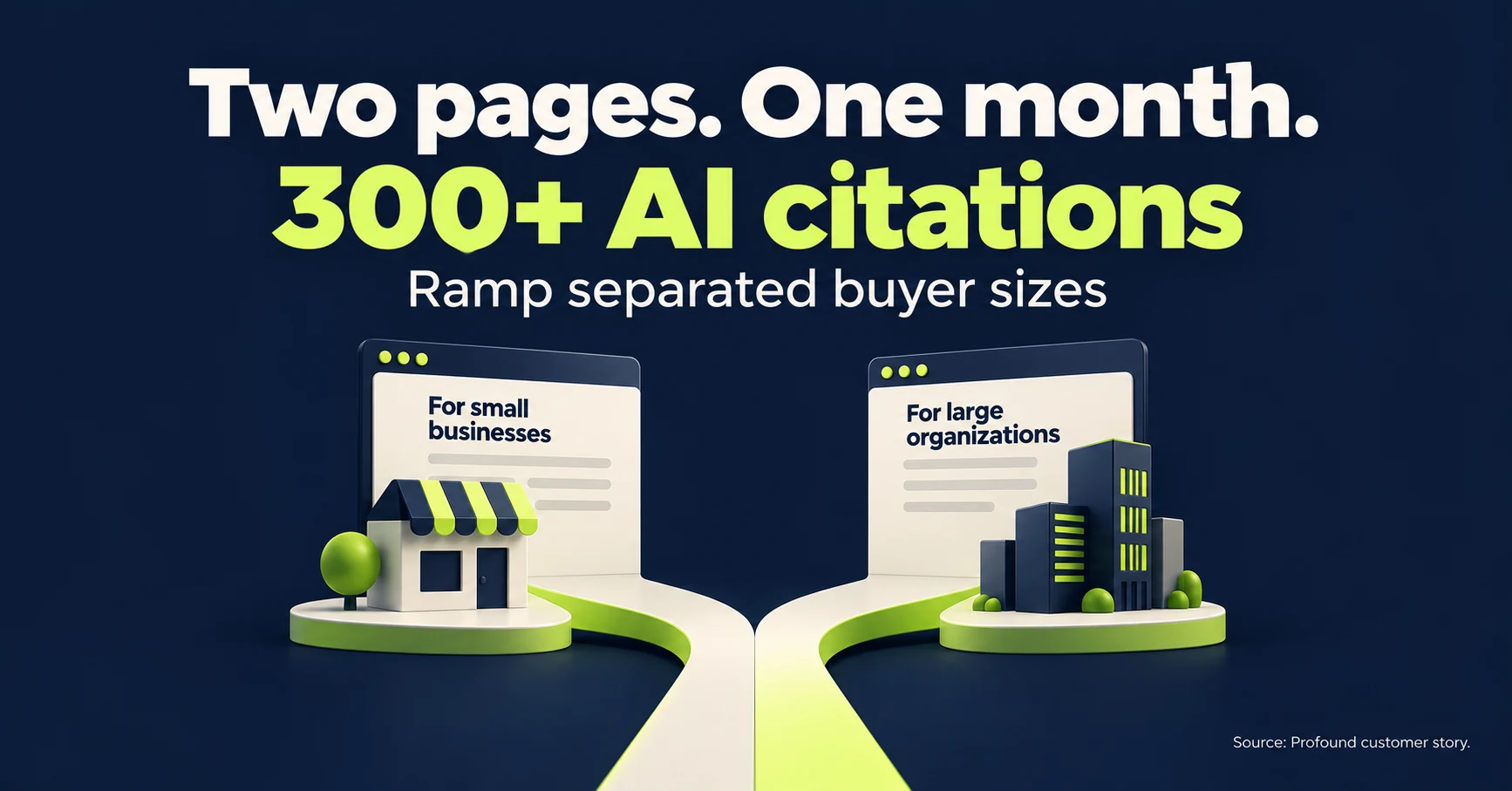
Ramp reported more than 300 AI citations across two comparison pages in one month. Separate pages addressed accounts-payable requirements for small and large businesses.
Two people looking for the “best software” may need very different answers when one runs a small business and the other works at a large enterprise. Ramp addressed that distinction.
The company reportedly earned more than 300 AI citations in one month across two company-size-specific accounts payable pages. Profound’s case study
Accounts payable management covers handling invoices and paying suppliers. The practical AI search optimization lesson is to organize explanations around the buyer’s conditions.
Ramp’s problem: low visibility for accounts payable questions
Ramp identified weak AI visibility in the accounts payable category. Being known as a company did not mean appearing equally across every product topic. Profound’s case study

Illustration: Brand recognition does not necessarily mean appearing as an option in a product category.
Check branded explanations and unbranded comparisons separately.
An AI may correctly answer “What does our company do?” while omitting it from “Which invoice tool works for a small team?” Check whether a page actually answers the latter question.
Different company sizes led to separate comparison pages
Ramp created separate accounts payable software pages for small businesses and large organizations. Profound’s case study

Illustration: Small and large businesses may need different operational details when choosing software.
The current small-business guide and large-business guide explicitly identify their audiences. Their current versions may differ from those used during the reported measurement period.
The editorial lesson is to reflect audience differences in comparison criteria, not just in the title.
As an illustration, a small team may care about operating without a dedicated administrator, while an enterprise may need multiple approvers and system integrations. Select actual criteria from your own customer evidence.
The result: more than 300 citations across two pages, with a visibility-chart caveat
The reported outcome is more than 300 citations across two pages in one month. A citation is not a visit or a signup. Profound’s case study

Illustration: Keep page citations separate from visibility changes with unresolved measurement differences.
For visibility, the source’s prose describes a change from 3.2% to 22.2%, while the chart displays a different starting value and period. Because their relationship remains unclear, this article does not use a visibility multiplier in its headline.
The vendor-published story does not isolate page separation as the cause or establish that another company will reproduce the result.
Try it yourself: separate buying questions by customer size or role
Choose two customer groups with different purchasing conditions and compare their questions. This is our proposed exercise.
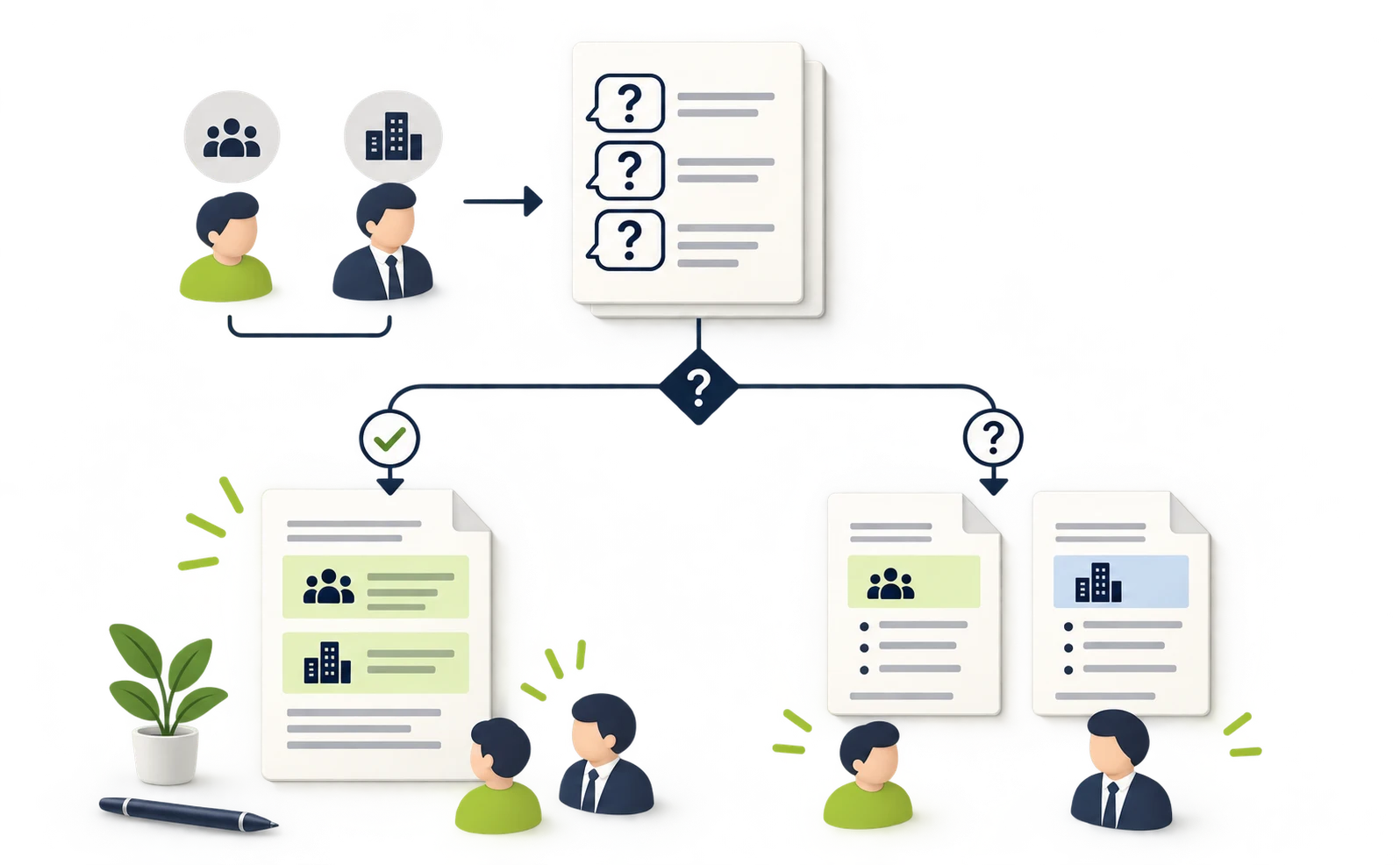
Illustration: Use sections for shared answers and consider separate pages for substantially different needs.
| Illustrative customer | Decision condition | Information to explain |
|---|---|---|
| Small team | No dedicated administrator | Setup, daily tasks, and support |
| Multi-location business | Branch-specific approvals | Permissions, approval sequence, and consolidated reporting |
Use sales and support records to identify actual questions. Separate those with a common answer from those whose answer depends on the customer’s situation.
When comparing other products, check official information under the same criteria and retain the verification date. Include unsupported conditions as well as strengths.
Decide whether separate pages or sections will answer the questions better
If most answers are shared, audience-specific sections on one page may be sufficient. Consider separate pages when implementation conditions and comparison criteria need substantially different explanations.
After publication, keep audience-specific questions consistent and observe which URLs are cited. If a small-business question returns an enterprise page, review the body’s target audience and internal links as well as the title.
The goal is an answer that fits the reader’s situation, not a larger page count.
FAQ
- Q. Are the 300+ citations inquiries?
- No. They are reported AI citations across two pages, not visits or inquiries.
- Q. Must each company size have a separate page?
- No. Use sections when most answers are shared; separate pages when substantial needs differ.
Sources
- [1] Profound’s case study — accessed 2026-09-26
- [2] small-business guide — accessed 2026-09-26
- [3] large-business guide — accessed 2026-09-26
About the author
Shogo MizushimaCEO of kairos Inc. / AgentSignal Developer
Develops AgentSignal, a tool for measuring AI crawler visits and AI-referred traffic, and diagnosing AIO readiness. Writes about measurement and practical improvements for AI search using observed data.
Related articles
AIO and AI search
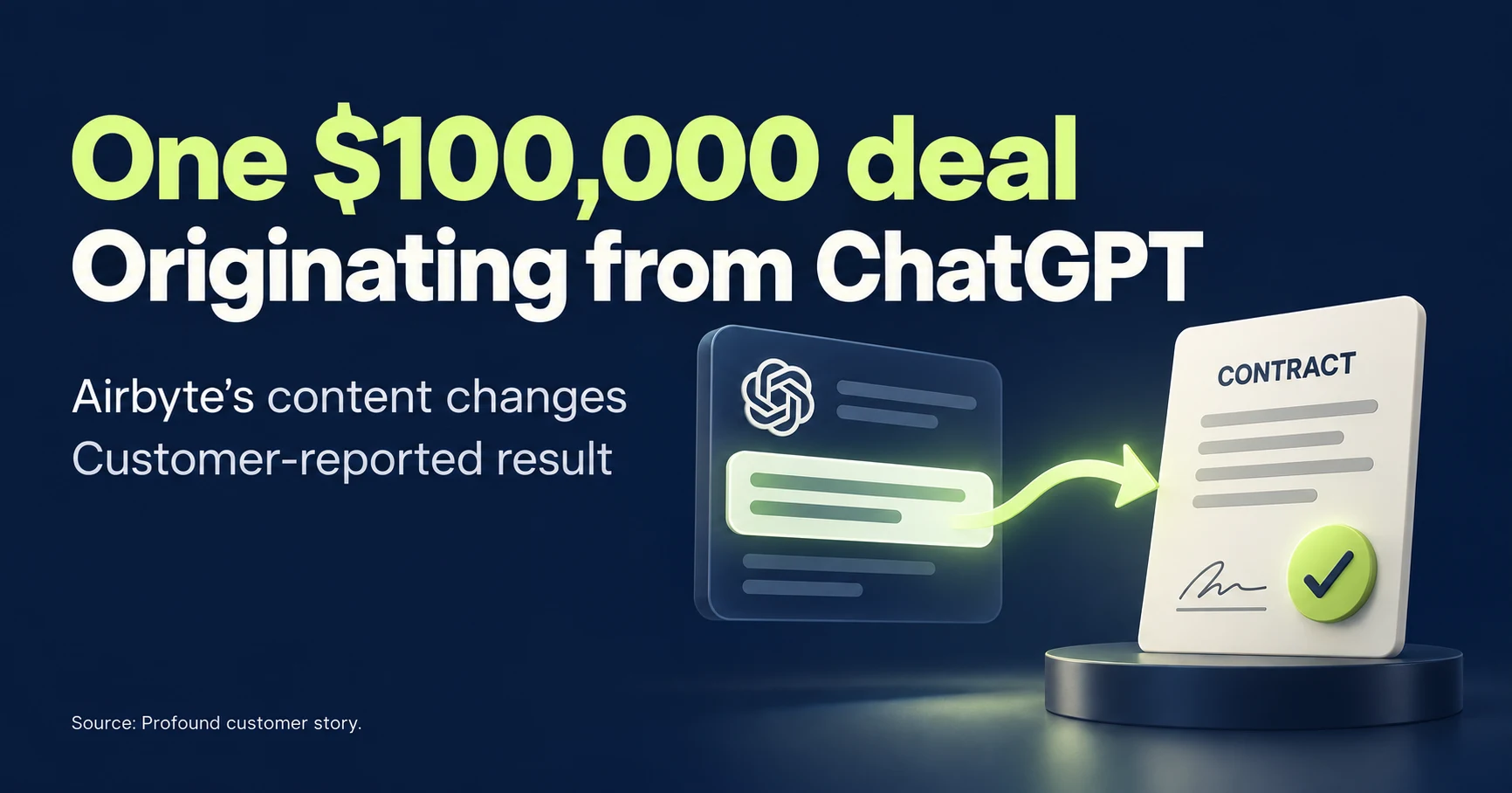
Airbyte reported a $100,000 ChatGPT-originated deal: the content changes behind its AIO work
Airbyte reported one $100,000 contract originating from ChatGPT. The team analyzed over 500 prompts and revised content into direct answers, lists, and steps.
Published
AIO and AI search
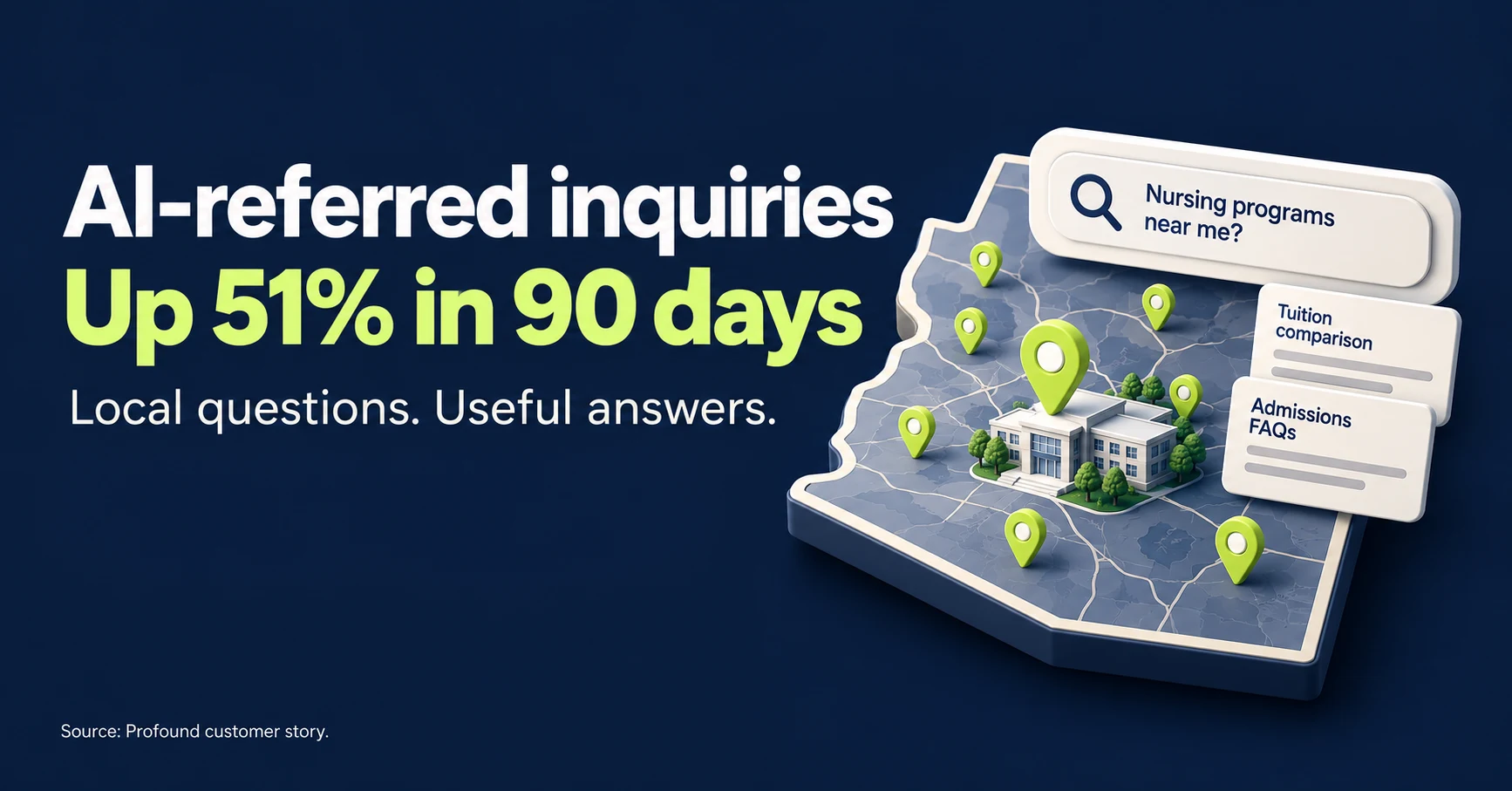
AI-referred inquiries up 51%: Arizona College of Nursing’s local AIO approach
Arizona College of Nursing reported 51% more AI-referred enrollment inquiries and 26% more visits in 90 days. The team examined questions across 24 markets and developed tuition comparisons and local FAQs.
Published
AIO and AI search
AI-referred signups up 37%: how OpusClip made AIO measurement continuous
OpusClip reported 37% more AI-referred signups and 20% more traffic. The team combined seven-day rolling averages with human checks of AI answers.
Published