LLMO by Industry: Question Examples and Pages to Prioritize
In LLMO, what changes by industry is the questions customers ask AI and the pages that answer them. See question examples for e-commerce, B2B, local shops, professional services, manufacturing and hiring, plus how to choose the first page to fix.
LLMO means helping your business get found in answers from ChatGPT, Google’s AI features and similar services. Two things change by industry: the questions customers ask AI, and the pages that hold the answers.
Imagine a marketer at a company selling corporate training who is told to “start on LLMO.” Every example they find is about restaurants or online shops. They cannot tell where to begin on their own site.
This article gives that marketer an industry-by-industry table and a way to pick the first page to fix. The question examples and the training company below were created by us for illustration. They are not survey results or any company’s track record.
Customer Questions and Answer Pages Are What Differ in LLMO by Industry
The basic work is the same in every industry. What differs is which questions come in and which page answers them.
Google says there are no additional technical requirements or special optimizations needed to appear in AI Overviews or AI Mode [1]. As with regular search, a page must be indexed and eligible to show with a snippet [1].
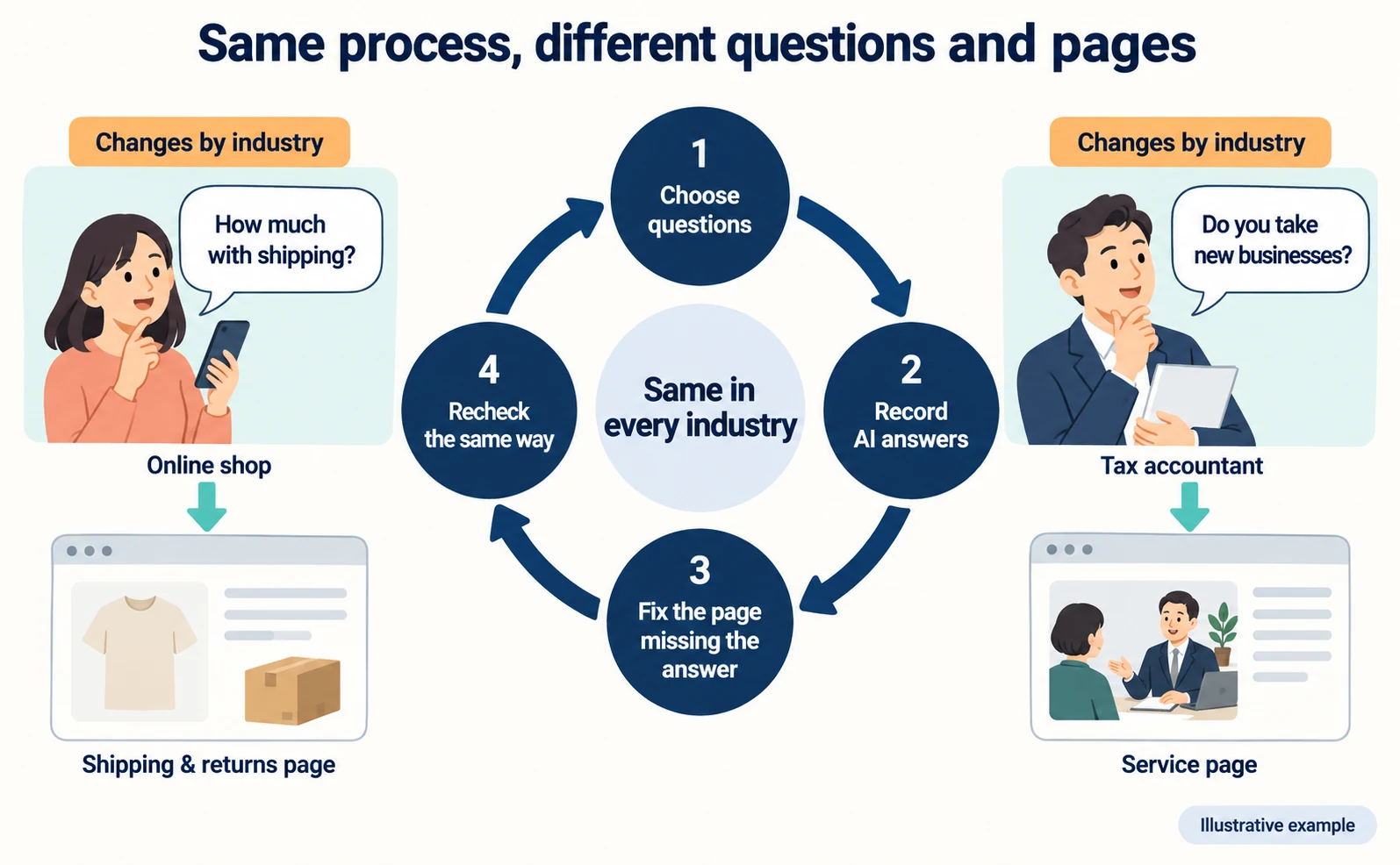
So the process is shared:
- Choose questions customers are likely to ask.
- Record whether AI answers mention your business.
- Fix the page where the answer is missing.
- Check again under the same conditions.
The questions themselves, however, vary widely. An online shop hears “How much with shipping?” A tax accountant hears “Do you take clients who just started a business?” Different questions call for different answer pages.
Google also notes that meeting the requirements does not guarantee appearance [1]. The tables here are tools for deciding what to fix, not promises of visibility.
Question Examples by Industry and the Pages That Answer Them
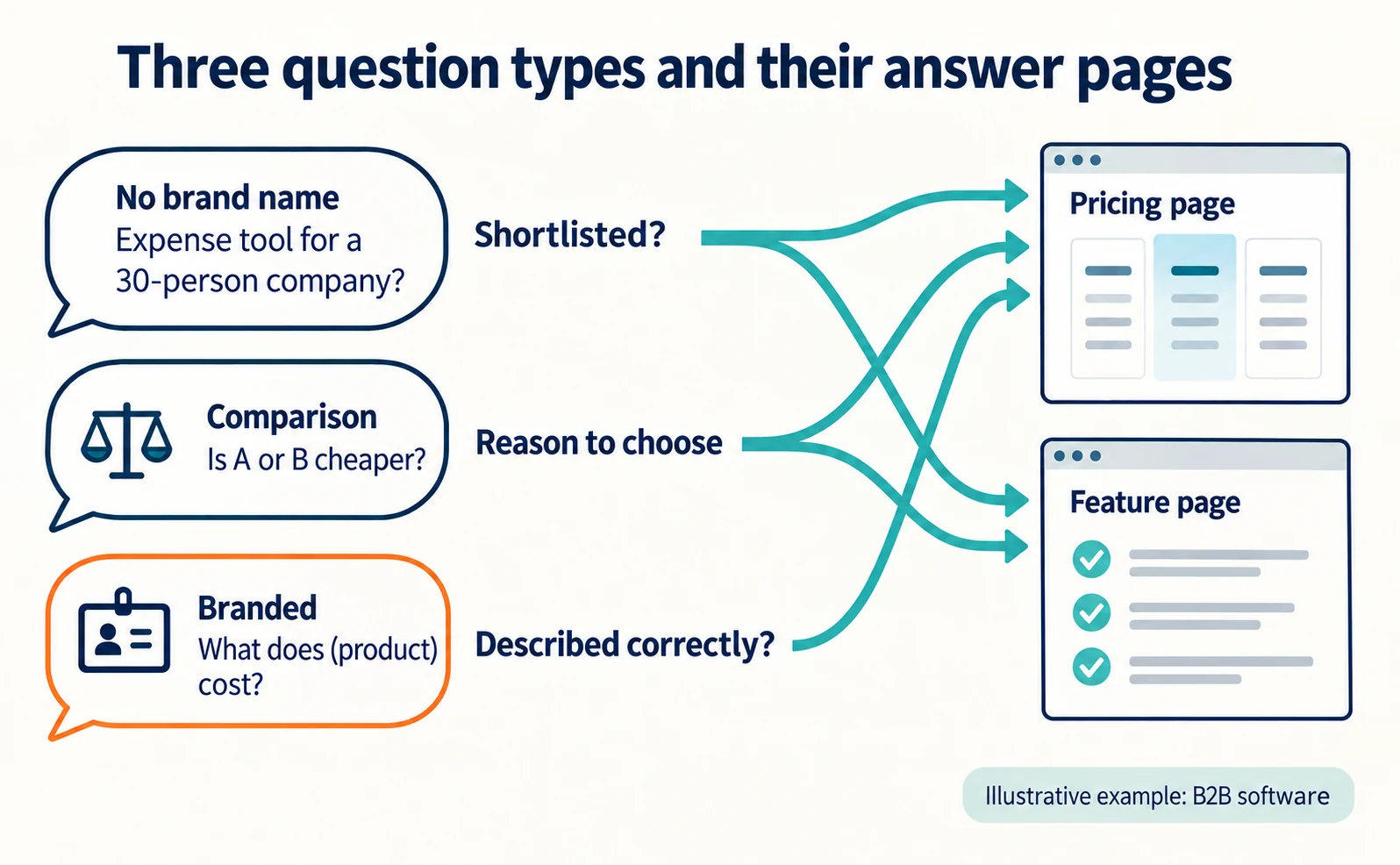
Sort questions into three types and decide which page answers each.
- No brand name: questions like “Which company is good for…?” that show whether you make the shortlist.
- Comparison: questions like “What is the difference between A and B?” that look for reasons to choose.
- Branded: questions like “What does (your company) cost?” that check whether your description is correct.
| Industry | No brand name | Comparison | Branded | Answer page |
|---|---|---|---|---|
| E-commerce (homeware) | Where can I buy wooden tableware with free shipping? | Is wooden or plastic tableware easier to care for? | Does (shop) accept returns? | Product page, shipping and returns page |
| B2B SaaS | Which expense tool works for a 30-person company? | Is A or B cheaper for expense reports? | What does (product) cost? | Pricing page, feature page |
| Local shop (restaurant) | Japanese restaurants near the station with private rooms? | Set course or à la carte for a booking? | How late is (restaurant) open? | Store information, booking page |
| Professional services (tax) | Tax accountants who advise new businesses? | Hiring an accountant vs filing yourself? | What does (firm) charge and which areas does it cover? | Service page, pricing page |
| Manufacturing (machining) | Who can do small-lot prototypes? | Machining or sheet metal for a prototype? | What materials and lead times does (company) offer? | Machining specs, materials list |
| Hiring | Companies where beginners can start in sales? | How do (company) and (other company) differ in work style? | What training does (company) offer? | Careers page, role descriptions |
This table is an editorial example. Replace the wording with language from your own inquiry records and sales notes. Phrases your customers actually wrote make better questions to check.
E-commerce: Product Pages, Shipping and Return Conditions
For e-commerce, first check that product pages state use, specifications, price, stock and return conditions.
If someone asks “How much with shipping?” or “Can I return it?”, AI cannot use your page as the basis for an answer unless the page says so.
If you use structured data (a standard format for adding product names, prices and similar details to a page for search services), check that it matches what visitors see. Google asks sites not to mark up information that is not visible to users [2]. Its AI features guidance also lists matching structured data to the visible text [1].
If you list products in Merchant Center, check that information is current too [1].
B2B and Professional Services: Pricing Pages and Scope of Service
For intangible services, prioritize writing total-cost conditions, scope and exclusions on the pricing or service page.
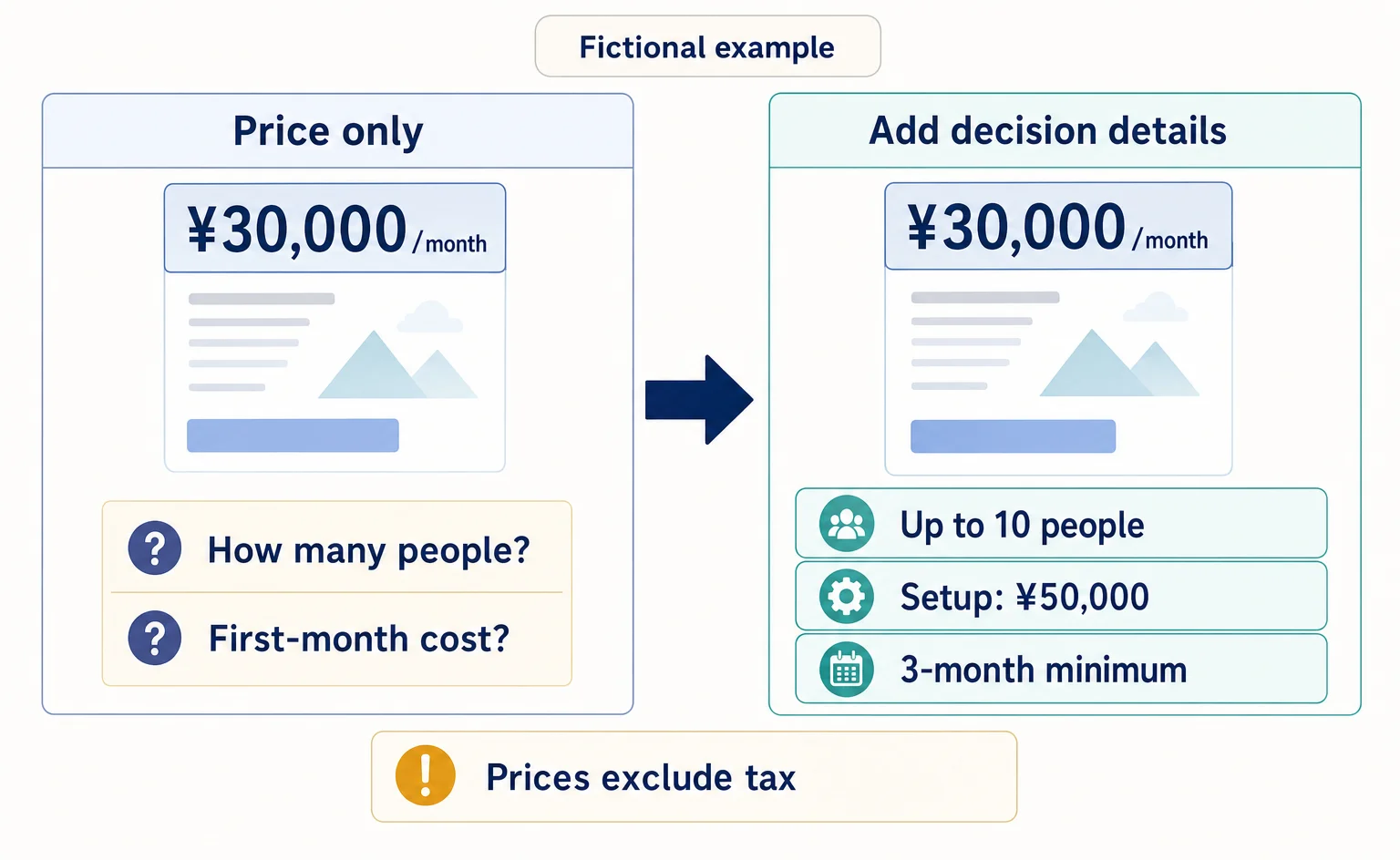
“From X per month” cannot answer “How much for 30 people?” A worked example by headcount, setup fees and conditions for extra charges give both readers and AI something to base a decision on.
For professional firms, state practice areas, service regions and the steps from consultation to contract in the main text. We cover the questions a pricing page should answer in Five Questions Your Pricing Page Should Answer.
Local Shops and Manufacturing: Location, Conditions and Published Specifications
For businesses chosen by location or specification, first check that the selection criteria appear as text on the page.
Google lists making important content available in text form as a basic practice [1]. If materials or minimum lot sizes appear only inside image catalogs or PDFs, consider writing them into the page text as well.
For shops, state service area, hours and how to book on the page, and keep your Google Business Profile up to date [1].
Three Criteria for Choosing the Priority Page
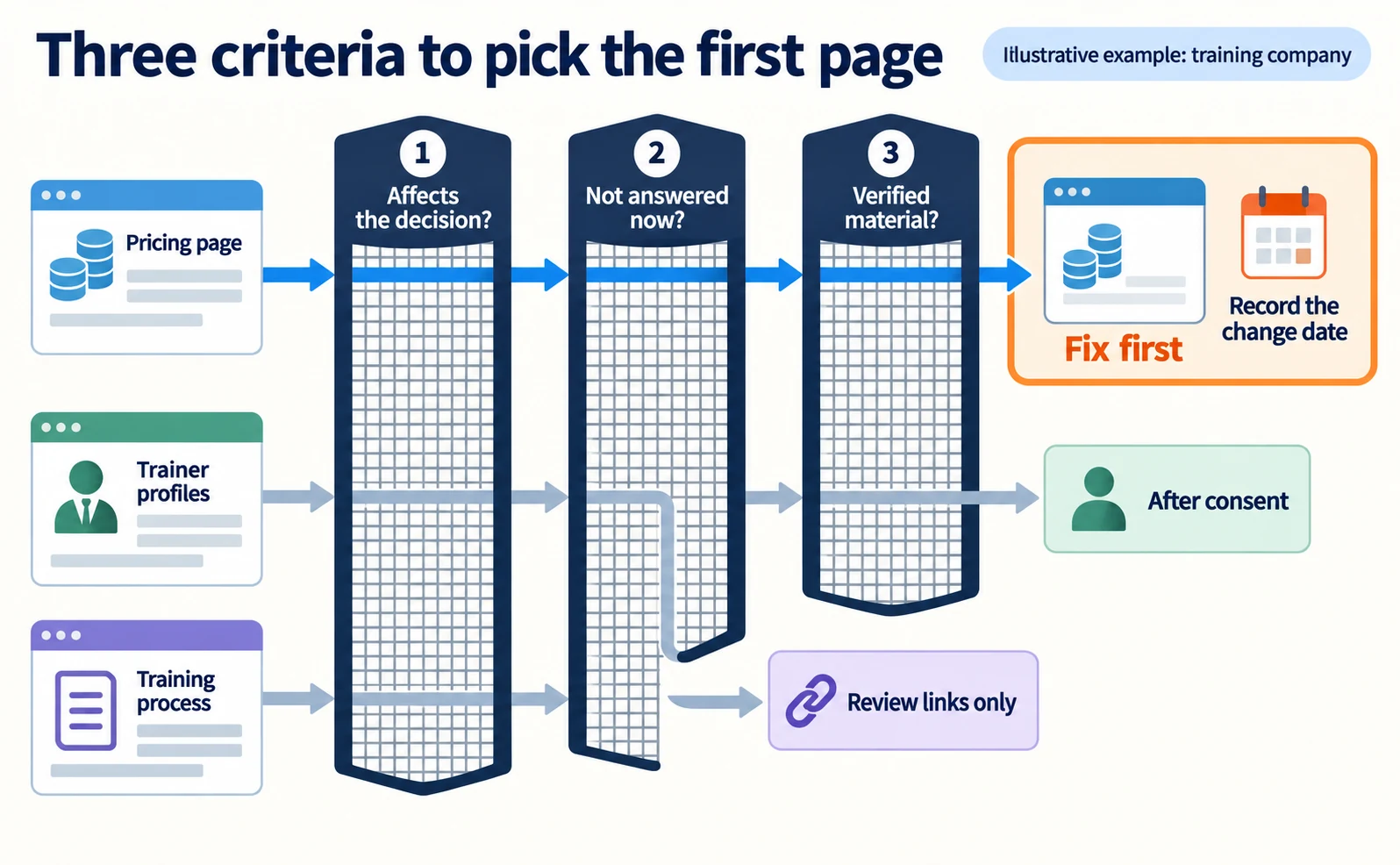
When you have several candidates, apply these three criteria in order and pick the first page.
- Does it affect whether someone decides to buy or sign up?
- Does the current page fail to answer the question?
- Can you fill the gap with verified internal material?
If a page fails the third test, confirm the facts internally first. Writing prices or scope from guesswork only produces readable misinformation.
Here is a fictional example. A corporate training company finds three candidates.
| Candidate page | Question | 1. Affects decision | 2. Not answered now | 3. Material available | Decision |
|---|---|---|---|---|---|
| Pricing page | How much for new-hire training for 30 people? | Yes | Yes (only “from X per person”) | Yes (approved price list) | Fix first |
| Trainer profiles | What experience do trainers have? | Partly | Yes | No (publication consent unconfirmed) | After consent |
| Training process | Can we take it online? | Yes | No (already stated) | Yes | Review links only |
In this example, the company starts with the pricing page. Fixing one page at a time and recording the change date makes later comparison easier.
Records to Keep After Changes, in Any Industry
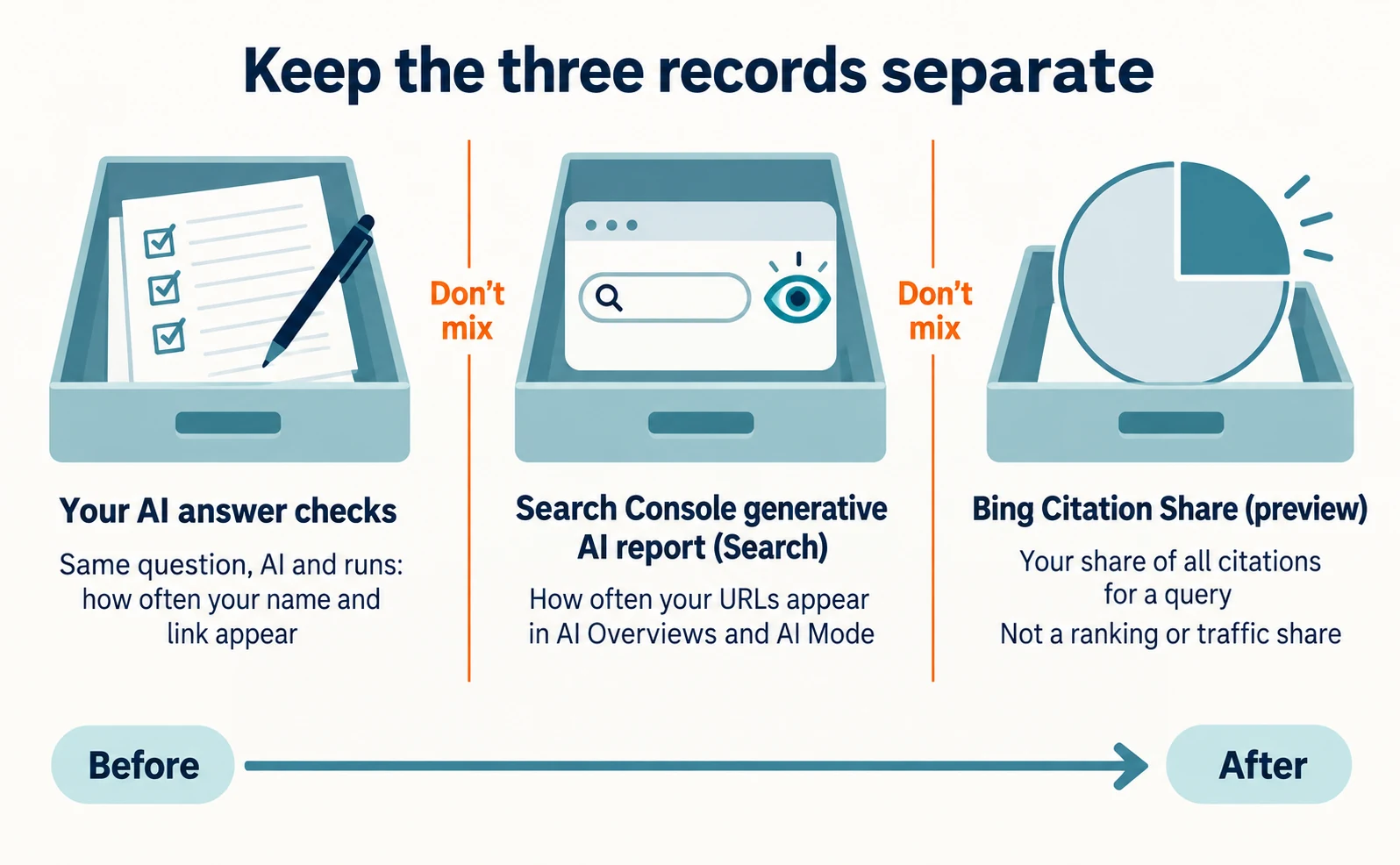
Whatever the industry, record AI answer mentions, AI-referred visits and AI impressions in search separately.
First, AI answers. Use the same questions, the same AI and the same number of runs, and note whether your name and link appear. An example recording sheet is in LLMO, GEO, AEO and AIO.
Second, the Search version of the generative AI performance report in Search Console. It shows how often your URLs appeared in AI Overviews and AI Mode, by page, country, device and date [3][4]. Google announced it had rolled out to all websites worldwide as of August 31, 2026 [3]. Sites with too few impressions may not see the report [4]. Discover has a separate report [3].
Third, Citation Share in Bing Webmaster Tools. It shows your site’s share of all citations displayed for a specific query, and it is offered as a preview [5]. Microsoft describes it as an observational metric, not a ranking or a share of traffic [5]. Its denominator is all citations for that query, unlike the first record, which counts how many runs mentioned you.
We could not find primary research comparing which pages AI cites most in each industry. Rather than borrowing another company’s pattern, compare your own records before and after a change.
Start by choosing three questions from your industry’s row and one page to answer them. The before-and-after records tell you where to work next.
FAQ
- Q. What if my industry is not in the table?
- List three points customers hesitate over before buying, and turn each into a no-brand, comparison and branded question. Then assign one answer page to each, and use it just like the table.
- Q. Do AI services cite different pages depending on the industry?
- We could not find primary research comparing citation patterns by industry. Instead of applying another company’s pattern, record answers and cited sources for your own questions and compare them before and after changes.
- Q. Do I need special files or settings for AI?
- Google says no new files or special structured data are required for AI Overviews or AI Mode. Start by checking that the answer to each question is in the page text.
Sources
- [1] AI features and your website (Google Search Central) — accessed 2026-09-23
- [2] Introduction to structured data markup in Google Search (Google Search Central) — accessed 2026-09-23
- [3] Introducing Search Generative AI performance reports in Search Console (Google Search Central Blog) — accessed 2026-09-23
- [4] Generative AI performance report (Search) (Google Search Console Help) — accessed 2026-09-23
- [5] New AI Visibility Insights in Bing Webmaster Tools: Intents, Topics, Citation Share, Compare (Microsoft Bing Blogs) — accessed 2026-09-23
About the author
Shogo MizushimaCEO of kairos Inc. / AgentSignal Developer
Develops AgentSignal, a tool for measuring AI crawler visits and AI-referred traffic, and diagnosing AIO readiness. Writes about measurement and practical improvements for AI search using observed data.
Related articles
AIO and AI search
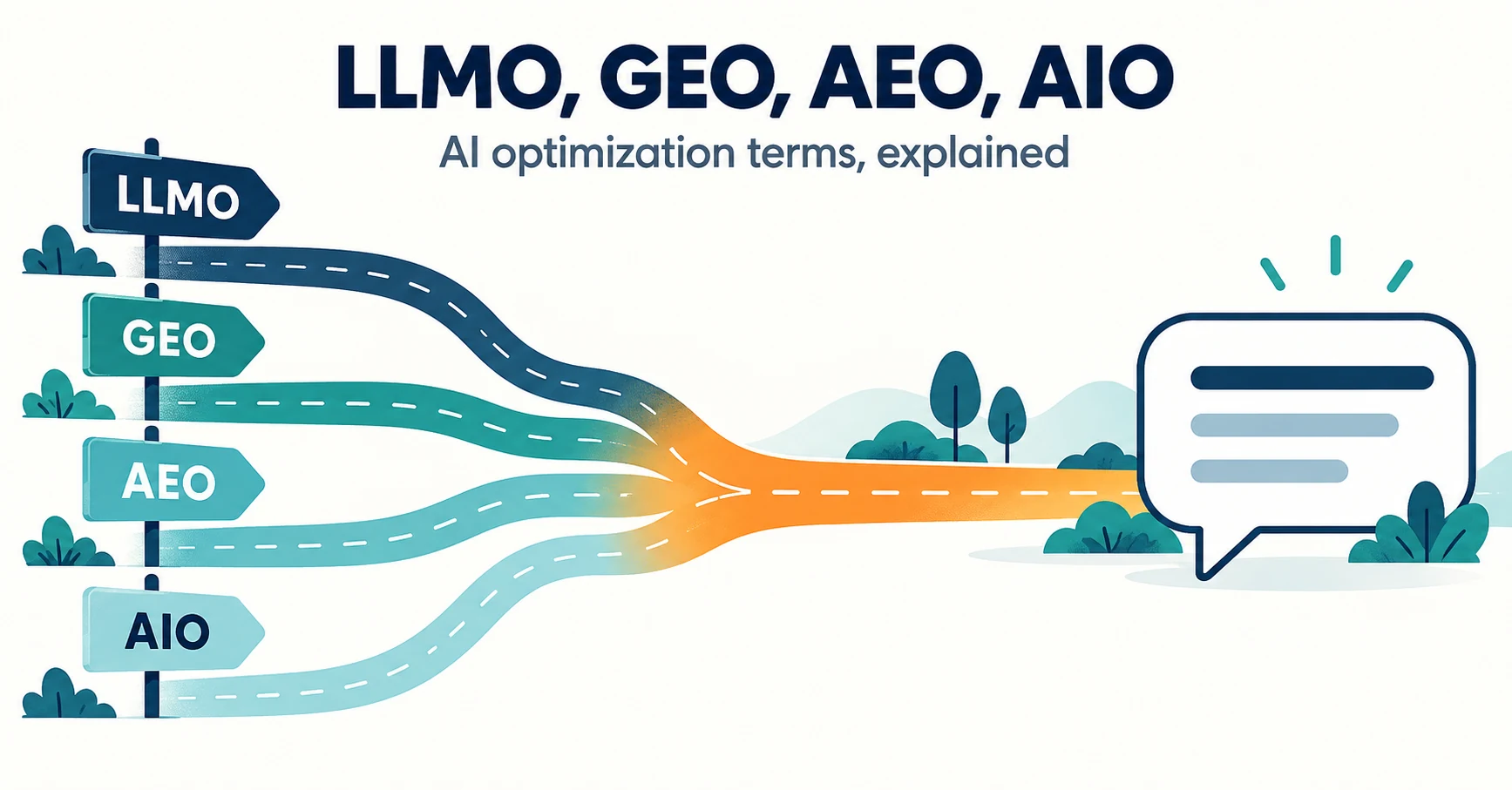
LLMO, GEO, AEO and AIO: Understanding AI Optimization Terms
LLMO, GEO, AEO and AIO are names for work that helps AI answers find your company. Learn what GEO and AEO mean, how GEO differs from local map optimization, where the terms overlap, and how to compare proposals that use different names.
Published
Measurement and site improvement
Before Adding More AI-Focused Articles: Five Questions Your Pricing Page Should Answer
Getting visits but few inquiries for your business service? Use this worksheet and a fictional before-and-after example to review what pricing includes, extra charges, cost calculations, contract terms, and what happens after someone applies.
Published
AIO and AI search
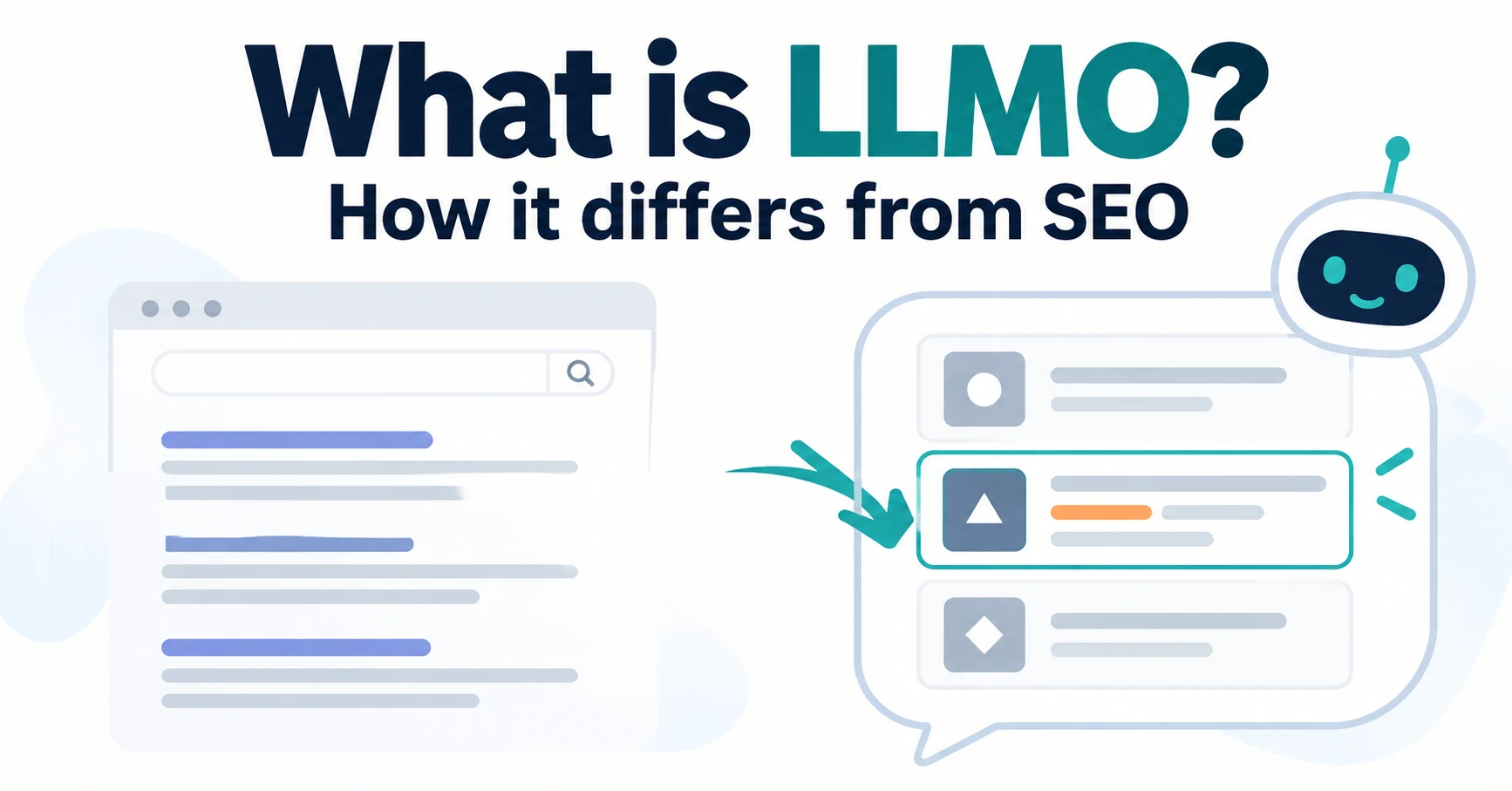
What Is LLMO? How It Differs from SEO and Why Some Say It Is Pointless
LLMO is the work of helping answers from ChatGPT and other AI find and accurately describe your company. Learn how it differs from SEO, why some call it pointless, how E-E-A-T relates, how to measure results and what to do in the first month.
Published