LLMO, GEO, AEO and AIO: Understanding AI Optimization Terms
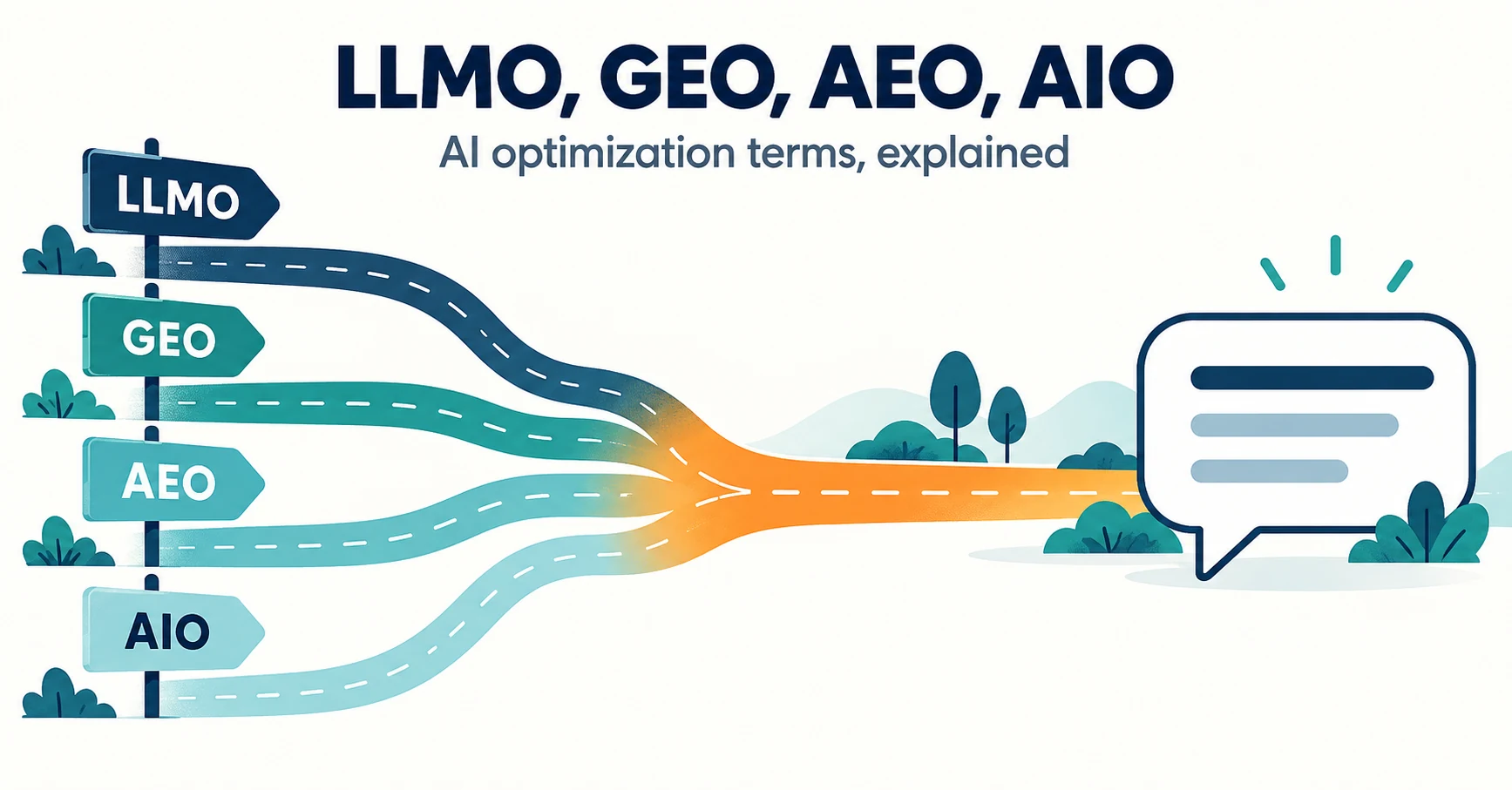
LLMO, GEO, AEO and AIO are names for work that helps AI answers find your company. Learn what GEO and AEO mean, how GEO differs from local map optimization, where the terms overlap, and how to compare proposals that use different names.
LLMO, GEO, AEO and AIO are all names connected with helping AI answers find your company. Much of the work overlaps, but the targets and scope are not always the same.
Suppose Company A proposes “LLMO” and Company B proposes “GEO.” Do you need two separate efforts, or are they the same? The names alone do not tell you. This article covers the criteria for comparison, what GEO and AEO mean, where the four terms overlap and differ, and how to compare proposals.
Comparing LLMO, GEO, AEO and AIO: target, origin and scope
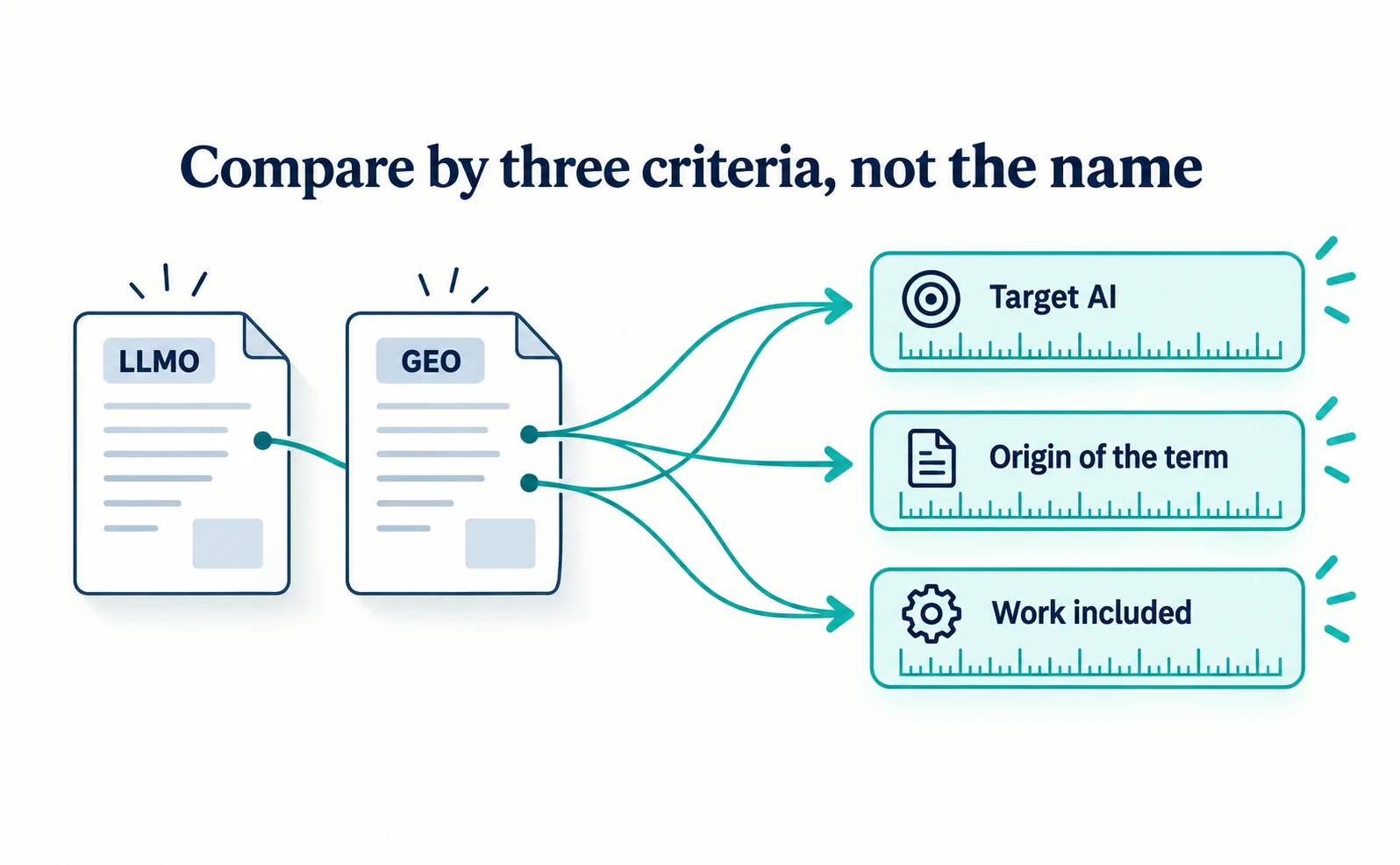
Compare by three criteria rather than the label: target AI, origin of the term and work included. Aligning these lets you place differently named proposals in the same table.
- Target AI: Google Search’s AI features only, or also ChatGPT and Gemini
- Origin of the term: who defined it and how, such as a research paper, tool provider or glossary
- Work included: questions tested, items reported, pages changed and how results are tracked
Providers define these terms and their scope differently. In your own documents, writing one line such as “We call this X and cover Y” keeps discussions aligned.
What GEO means: getting selected as a source in generative AI answers
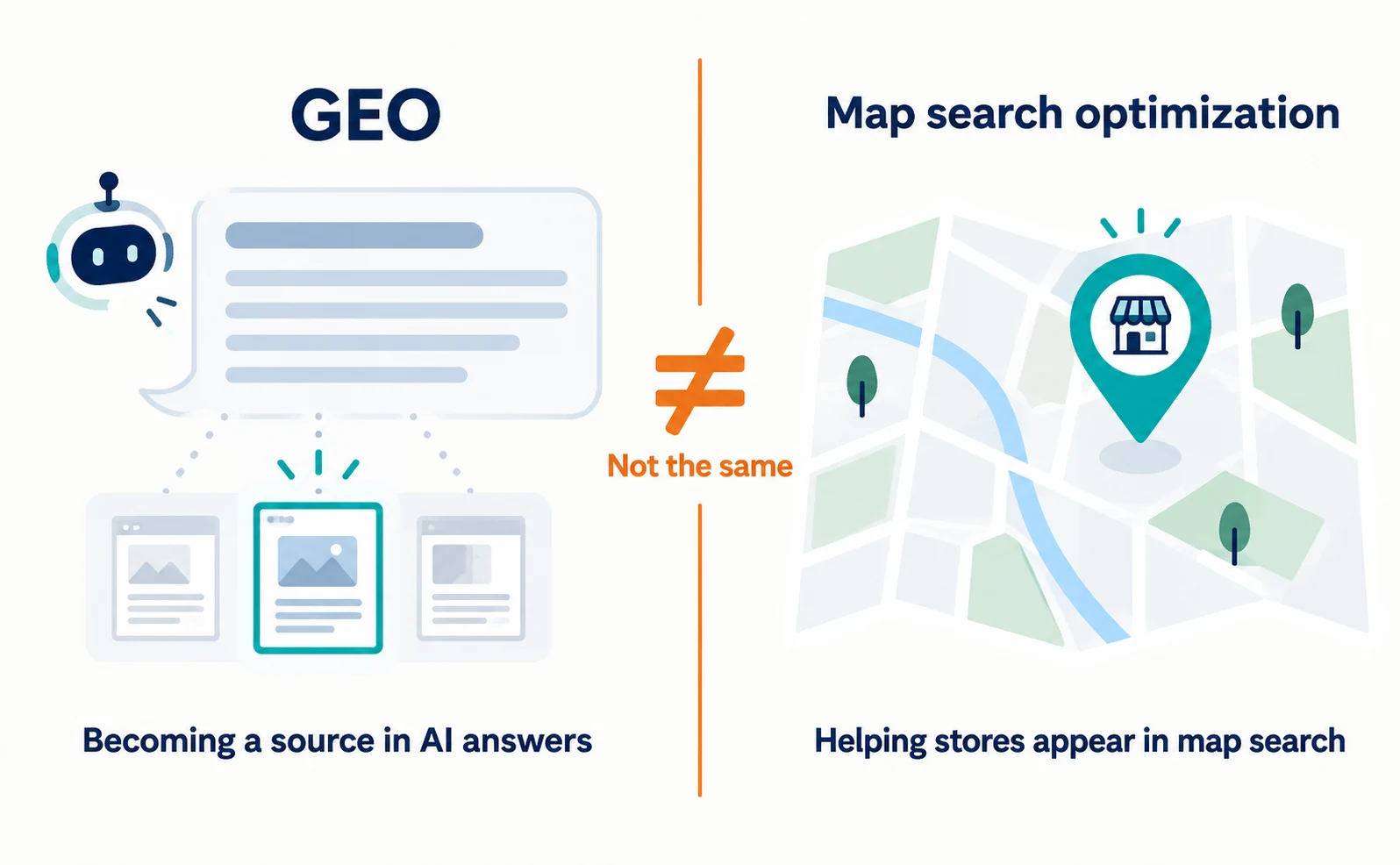
GEO (Generative Engine Optimization) is a name for work that helps your content become more visible as a source in answers generated by AI.
The term was introduced in the paper “GEO: Generative Engine Optimization” by researchers at Princeton University and elsewhere. Published in August 2024 in the KDD 2024 proceedings, it presents GEO as a framework for improving content visibility in generative engine responses [1].
Note that GEO is not about geographical location. Work to help stores appear in map searches such as Google Maps is usually called local search or map optimization (known as MEO in Japan) and is different from GEO. If a proposal says “GEO,” confirm whether it targets AI answers or map search.
What AEO means: getting used in direct answers to questions
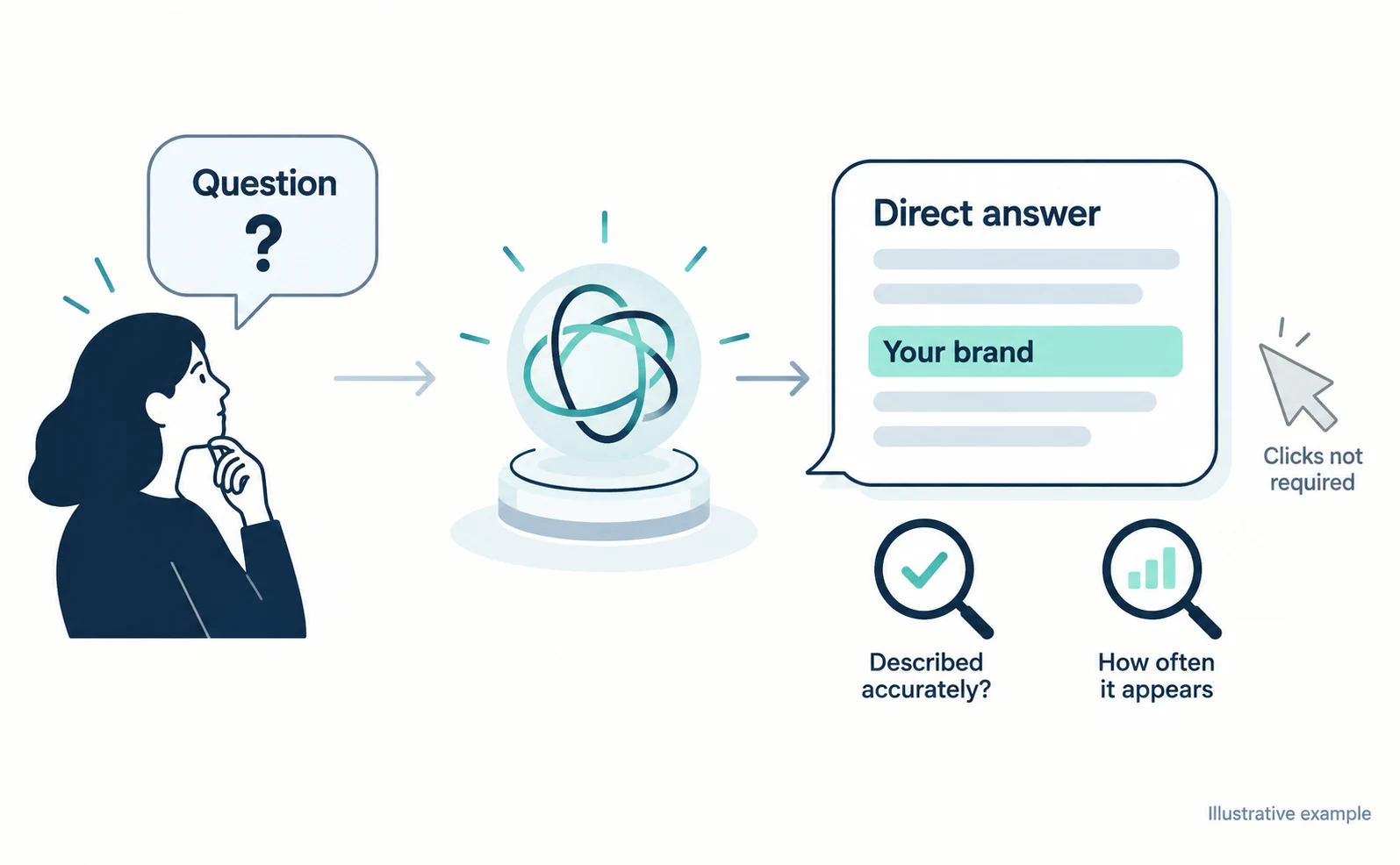
AEO (Answer Engine Optimization) is a name for work that helps AI answers that respond directly to questions reference or feature your company.
HubSpot’s glossary describes AEO as structuring content so that answer engines such as ChatGPT, Gemini and Perplexity surface it when generating direct responses [2]. It says success is measured by how frequently and accurately a brand appears in AI answers, regardless of clicks [2].
HubSpot also sells AEO tools. Use its definition as a reference, but expect the work to overlap heavily with LLMO and GEO. Before commissioning AEO separately, check whether it duplicates work in existing proposals.
Comparing overlaps and differences with LLMO and AIO
The work behind the four terms is largely shared, but AIO alone can mean Google’s AI Overviews. Internally, choose one name and add the target AI.
| Term | Focus | Origin or example definition | Watch out for |
|---|---|---|---|
| LLMO | Answers generated by large language models (LLMs) | Semrush defines it as improving a brand’s visibility and portrayal in LLM responses [3] | Defined by a tool provider |
| GEO | Answers generated by AI | Introduced in a research paper [1] | Do not confuse with map search optimization |
| AEO | Direct answers to questions | Defined in HubSpot’s glossary [2] | Work overlaps with LLMO |
| AIO | AI in general, or AI Overviews | Some Japanese tools use it for AI Overviews [4] | Has two meanings |
Mieruca SEO’s AIO Report (AIOレポート) shows how often Google’s AI Overviews appear for registered keywords [4]. A label saying AIO does not guarantee that ChatGPT research is included. The two meanings of AIO are explained in What Is AIO?
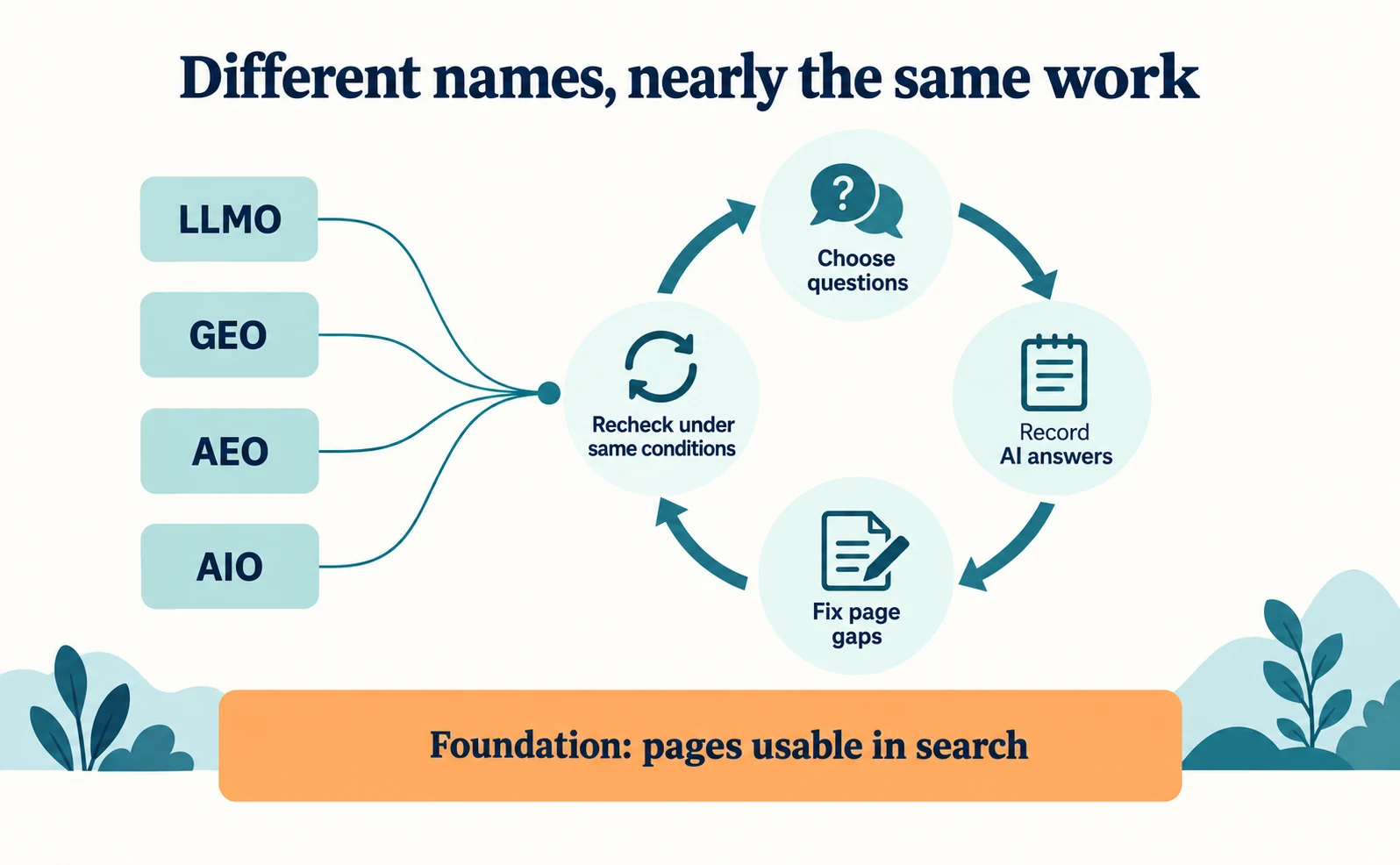
The shared work is nearly identical under any label: choose customer questions, record AI answers, fix gaps on public pages and recheck under the same conditions. Google says there are no additional requirements for appearing in AI Overviews or AI Mode and that SEO basics apply [5]. Whatever the label, keeping pages usable in search is the foundation.
Comparing proposals with different names on the same scope
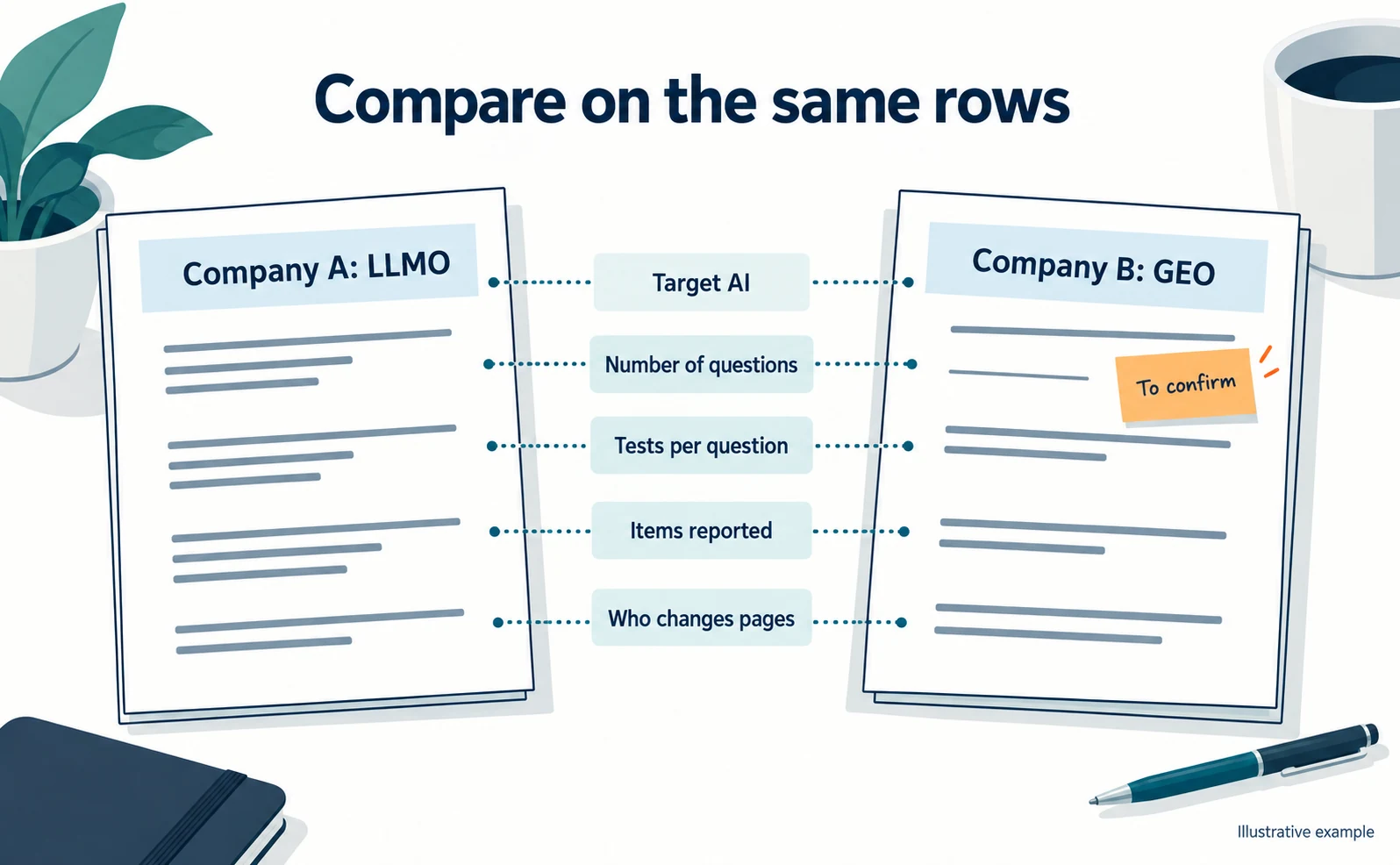
Compare proposals in a table that aligns target AI, number of questions, measurement method and who makes changes. The table below is a template; the entries for Companies A and B are hypothetical.
| Item | Company A (LLMO) | Company B (GEO) |
|---|---|---|
| Target AI | ChatGPT, Gemini | Google’s AI features only |
| Number of questions | 20 | Not stated (to confirm) |
| Tests per question | 3 each | 1 each |
| Items reported | Name mentions, links, cited sources | Whether you appeared |
| Official reports used | None | Search Console Generative AI report |
| Who changes pages | Your company | Company B drafts, your company fact-checks |
Filling in the table reveals points such as “different names, overlapping work” or “same name, different targets.” Do not fill blank fields with guesses; keep them as items to confirm.
In the measurement row, also confirm whether official reports are used. Search Console’s Generative AI report rolled out to all websites on August 31, 2026, and shows impressions in Google’s AI features in separate Search and Discover reports, by page, country and date, with a device breakdown for Search only [6]. Clicks are not among the announced items [6].
Bing Webmaster Tools’ Citation Share, launched in preview on June 16, 2026, shows your site’s share of all citations across all sites for a specific grounding query, the search query the AI uses to find supporting sources [7]. Microsoft describes it as an observational metric, not a ranking or traffic share [7]. If a proposal promises to “raise citation share,” ask which metric it means.
Finally, choose one internal name. Example: “We call this LLMO and cover ChatGPT and Google’s AI features.” LLMO and how to start are explained in What Is LLMO?, and the link with the old name SGE in SGE Is Now AI Overviews.
FAQ
- Q. Is GEO the same as local map optimization?
- No. GEO is a name for work on visibility in generative AI answers. Local map optimization (called MEO in Japan) helps stores appear in map searches such as Google Maps. Confirm which one a proposal targets.
- Q. Should we use LLMO or GEO?
- Either is fine. Choose one internal name and add a line stating the target AI and scope of work.
- Q. Do we need to commission AEO separately?
- Often the work overlaps with LLMO or GEO. Before commissioning it separately, compare whether the target AI, questions, reports and pages duplicate existing proposals.
Sources
- [1] GEO: Generative Engine Optimization (Princeton University et al. (KDD 2024)) — accessed 2026-09-23
- [2] AEO (Answer Engine Optimization) (HubSpot) — accessed 2026-09-23
- [3] LLM Optimization: How to Do It (Semrush) — accessed 2026-09-23
- [4] ミエルカSEOに新機能「AIOレポート」を搭載 (Faber Company) — accessed 2026-09-23
- [5] AI features and your website (Google Search Central) — accessed 2026-09-23
- [6] Introducing Search Generative AI performance reports in Search Console (Google Search Central Blog) — accessed 2026-09-23
- [7] New AI Visibility Insights in Bing Webmaster Tools: Intents, Topics, Citation Share, Compare (Microsoft Bing Blogs) — accessed 2026-09-23
About the author
Shogo MizushimaCEO of kairos Inc. / AgentSignal Developer
Develops AgentSignal, a tool for measuring AI crawler visits and AI-referred traffic, and diagnosing AIO readiness. Writes about measurement and practical improvements for AI search using observed data.
Related articles
AIO and AI search
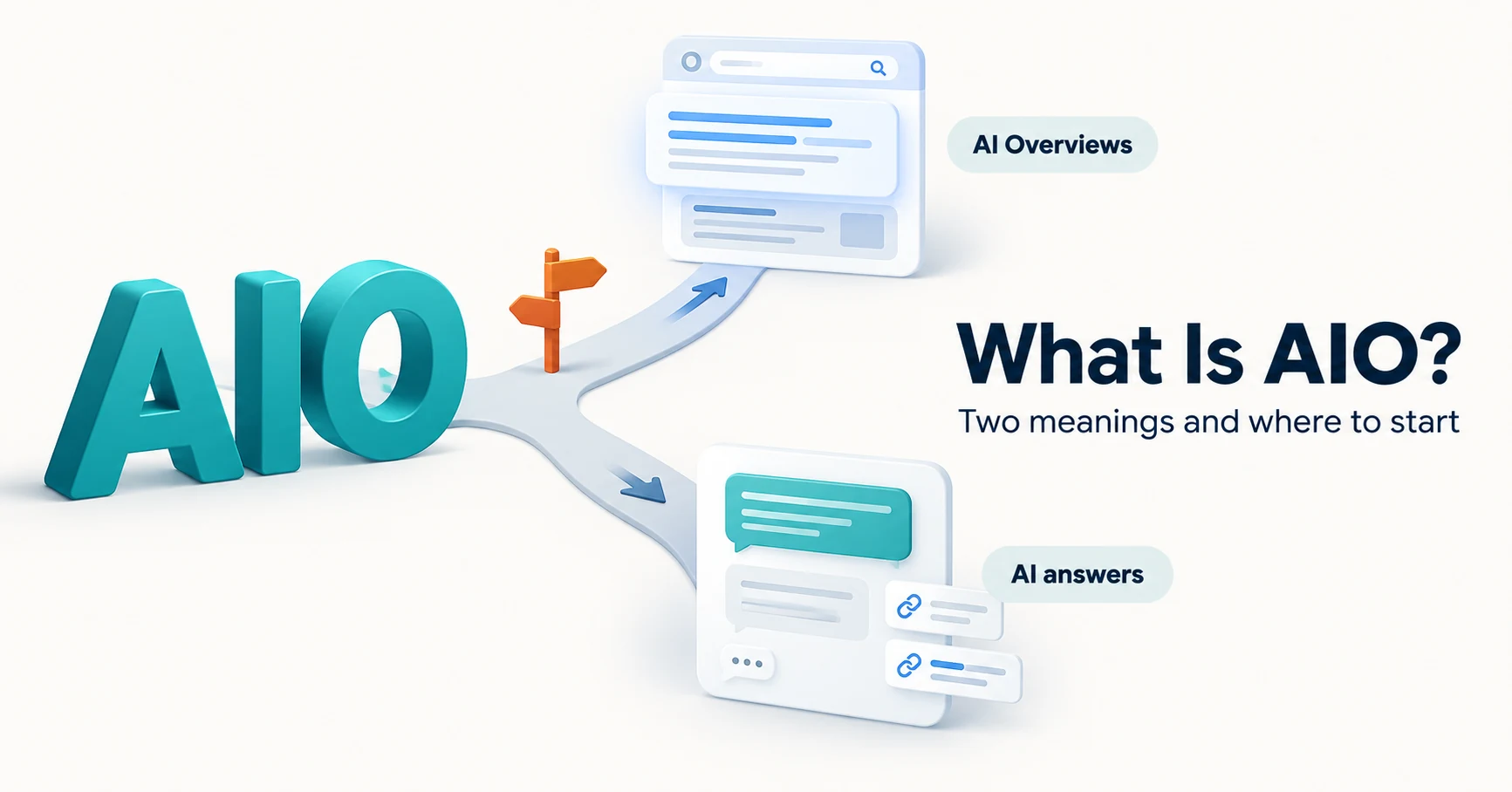
What Is AIO? Its Two Meanings and Where to Start with AI Optimization
AIO has two meanings: work to get your company featured in AI answers, and Google Search’s AI Overviews. Learn how it relates to SEO, what to confirm in a proposal, what Search Console and Bing reports show, and your first tasks.
Published
AIO and AI search
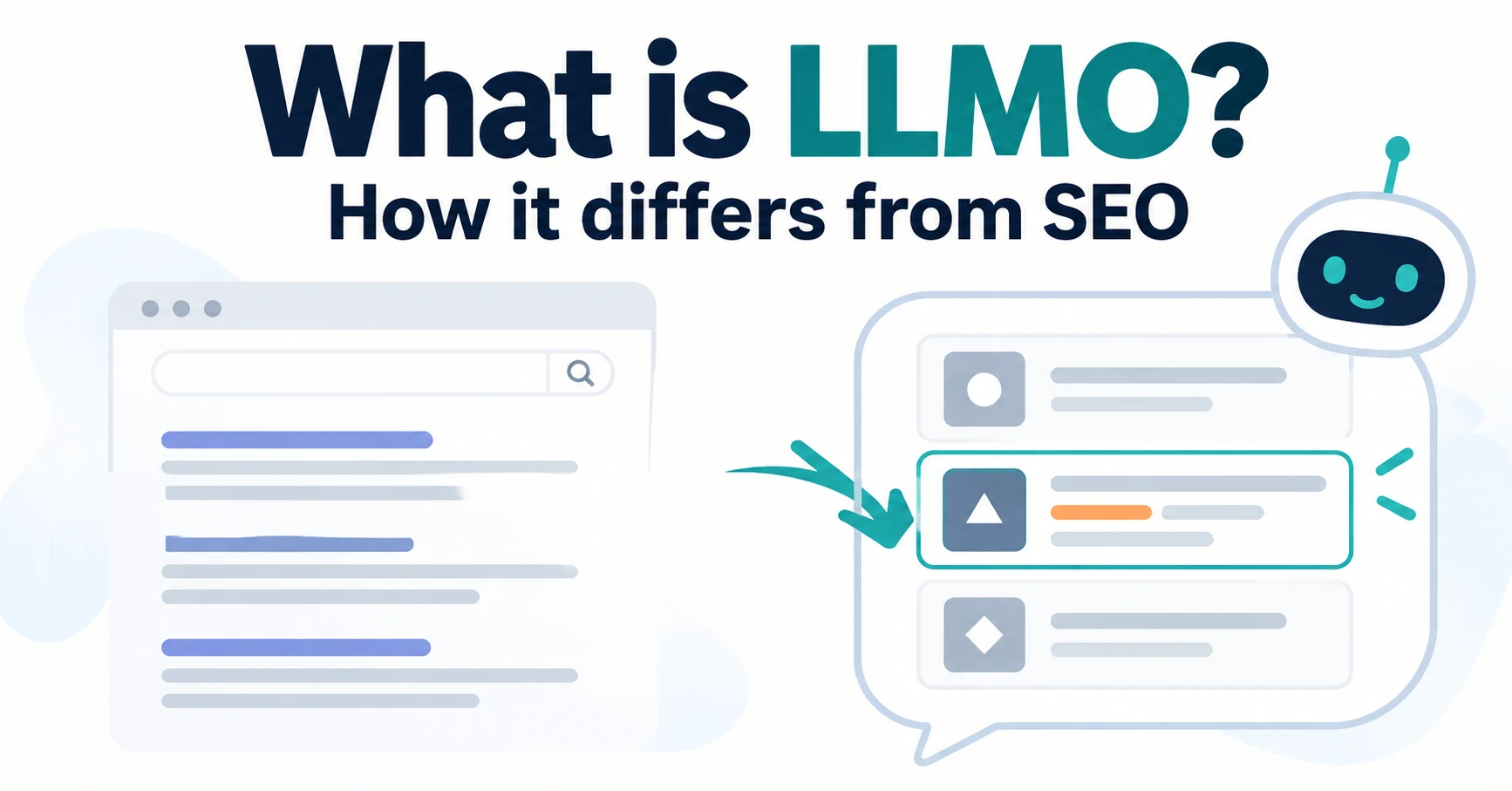
What Is LLMO? How It Differs from SEO and Why Some Say It Is Pointless
LLMO is the work of helping answers from ChatGPT and other AI find and accurately describe your company. Learn how it differs from SEO, why some call it pointless, how E-E-A-T relates, how to measure results and what to do in the first month.
Published
AIO and AI search
What Are AI Overviews? How to Review Your Former SGE Work
AI Overviews are AI-generated summaries shown in Google Search. Learn how they relate to the former SGE trial, how they differ from AI Mode, why no extra requirements apply, how to review earlier work and how to check the Search Console generative AI report.
Published