From about $1K to over $100K a month: What did an overseas brand write to grow sales from AI search?
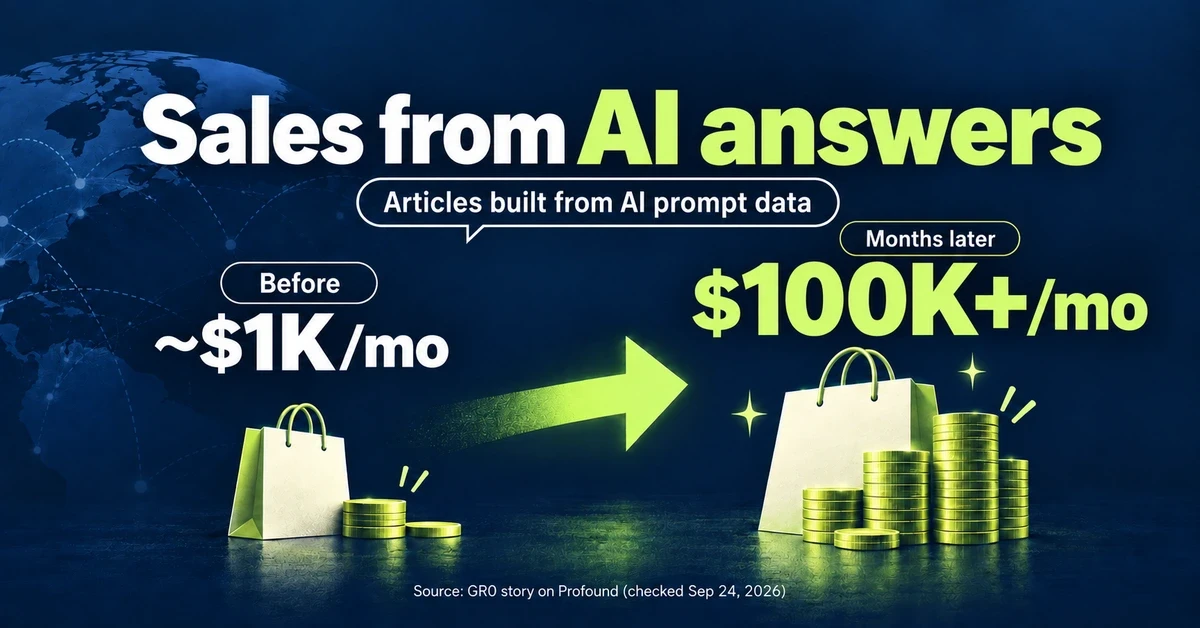
GR0 reports that a beauty and wellness brand's monthly sales through AI answers grew from about $1,000 to over $100,000 within months. The brand chose article topics based on AI prompt data. Here is the case in brief, plus three steps to check your own product pages.
Monthly sales through AI answers: about $1,000, then over $100,000 a few months later. That's what GR0 reports.
A GR0 executive shared this direct-to-consumer beauty and wellness brand's story on Profound's site.
What changed: the brand chose article topics based on AI prompt data.
Monthly sales from AI answers: about $1,000 to over $100,000
This is monthly revenue from products bought through AI answers, not profit.
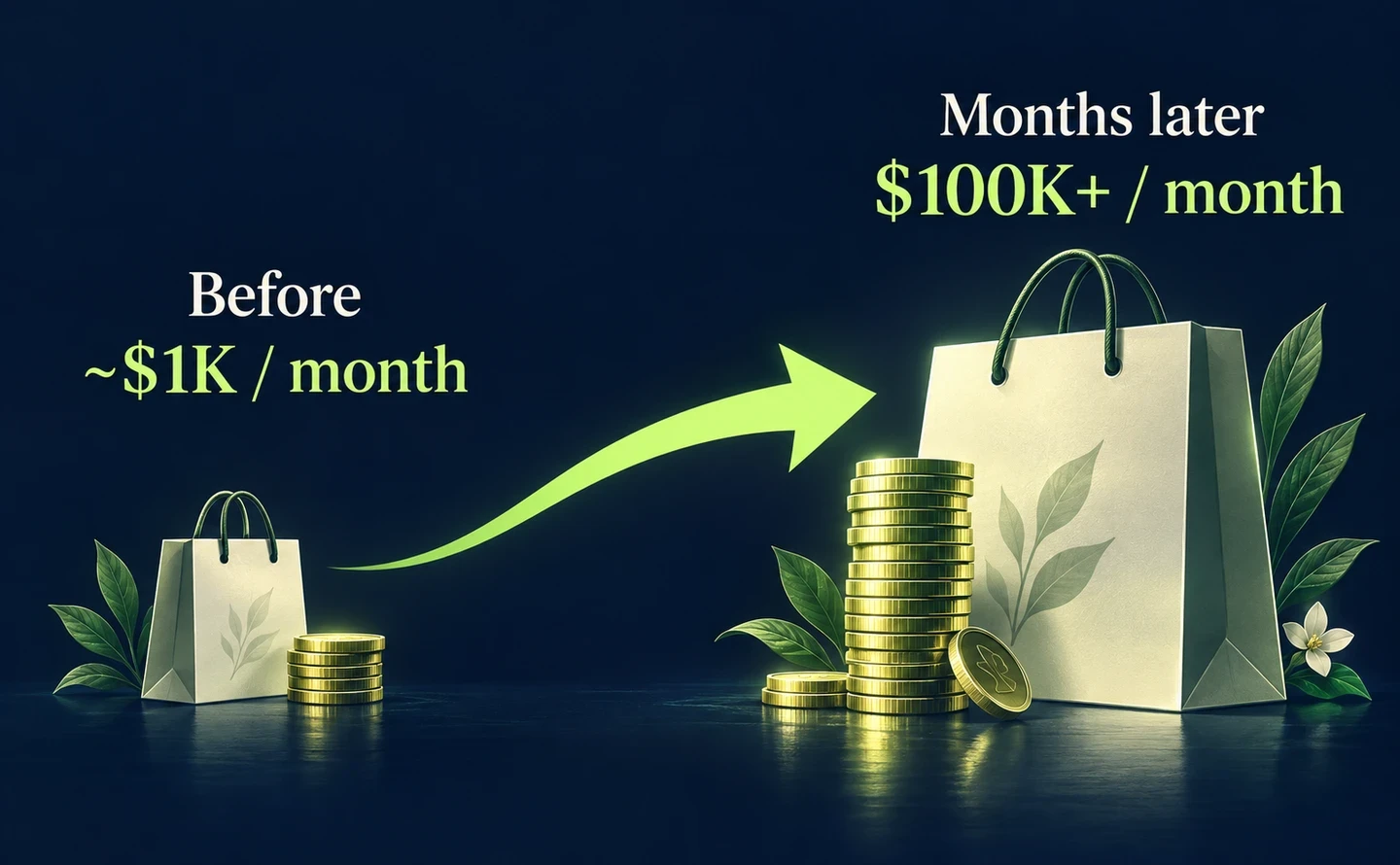
Monthly sales through AI answers at two points in time, as reported by GR0. Sizes are not to scale
So what did the brand change during those months?
Article topics chosen from the questions customers ask AI
GR0 chose this brand's article topics based on AI prompt data from Profound.
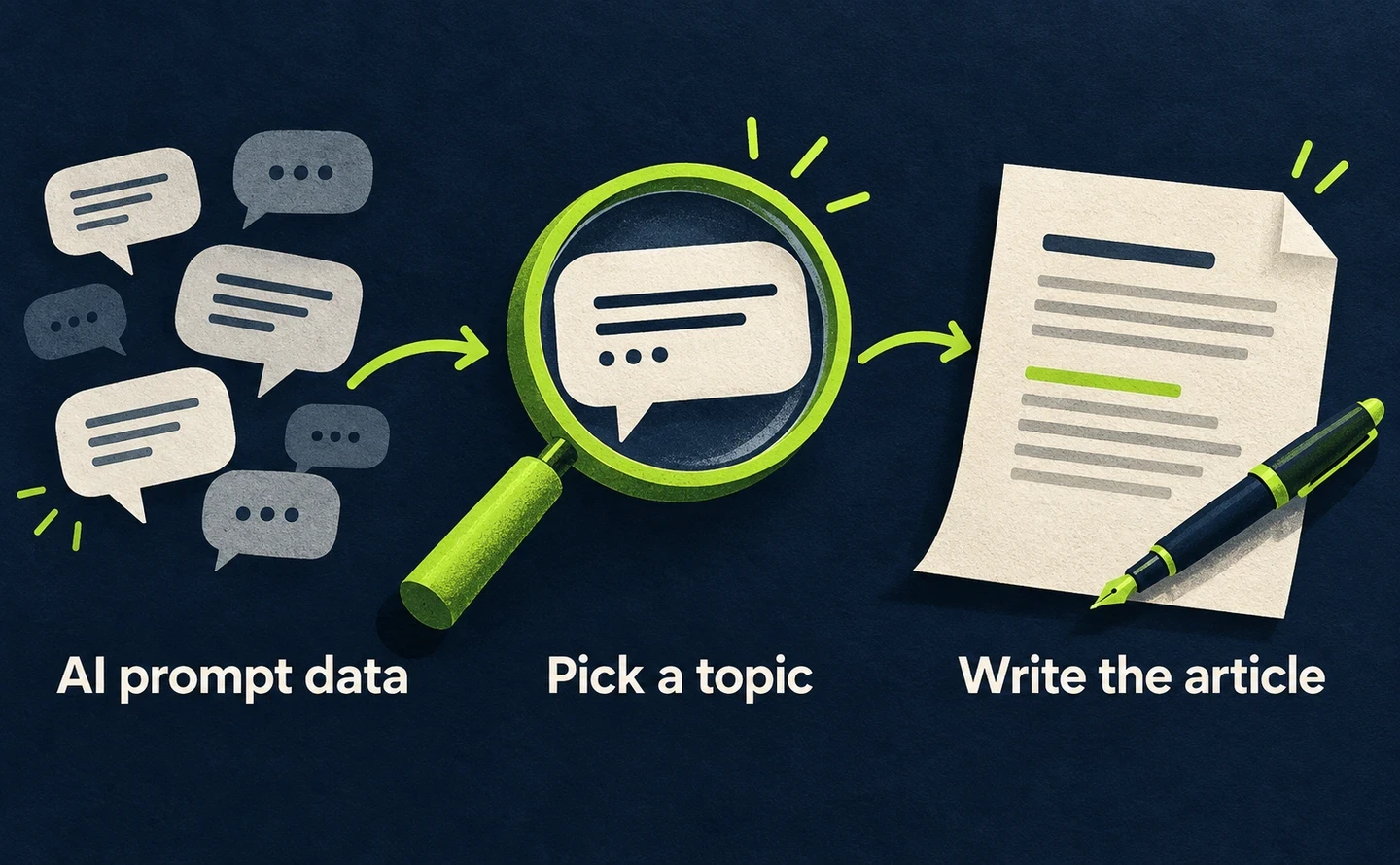
Choosing article topics from AI prompt data (actual articles and prompts are not public)
Kevin Miller of GR0 said the team wouldn't have known what to write without it.
In our reading, the brand started from questions a shopper might have before buying.
The actual articles and prompts are not public.
Does your product page answer pre-purchase questions?
Here is our suggestion. Start by picking one pre-purchase question customers often ask, and check whether your product page answers it.
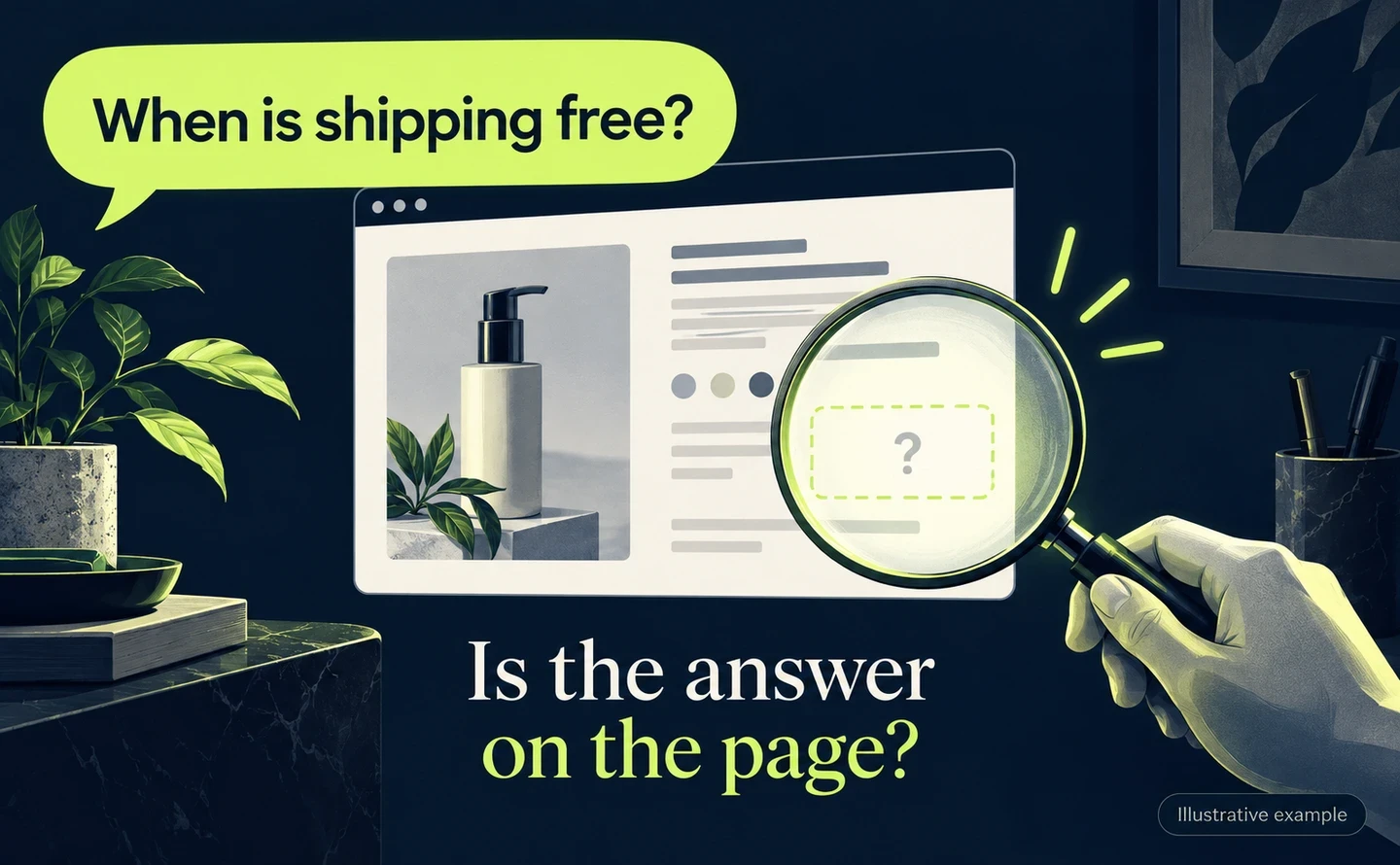
Illustrative example: check whether a common question is answered on the page
- Pick one pre-purchase question from your support emails or chat logs.
- Open the matching product page and look for the answer in the text.
- If it's missing, add an answer based on internal sources such as your shipping policy. If the answer lives on another page, such as a shipping page, link to it from the product page.
For example (illustrative only):
Question: When is shipping free?
Answer to add: The order amount that qualifies for free shipping, and whether any regions are excluded
After updating, open the live product page and confirm the answer can be read there. If you added a link, check that it leads to the right section.
This won't necessarily bring the growth this brand saw. For now, the goal is one question answered on the page.
Source: GR0 customer story (Profound). Not independently verified; brand name, dates, cost, and counting method undisclosed. No publication date shown; confirmed live on September 24, 2026.
Yen figures in the Japanese edition use a simplified rate of ¥158 per US dollar (Twelve Data USD/JPY, 158.09118 shown on September 24, 2026).
Sources
- [1] GR0 customer story (Profound) — accessed 2026-09-24
- [2] USD/JPY historical data (Twelve Data) — accessed 2026-09-24
About the author
Shogo MizushimaCEO of kairos Inc. / AgentSignal Developer
Develops AgentSignal, a tool for measuring AI crawler visits and AI-referred traffic, and diagnosing AIO readiness. Writes about measurement and practical improvements for AI search using observed data.
Related articles

AI shopping and booking
51% of US consumers use AI shopping tools. How much has product selection changed?
That does not mean AI placed 51% of orders. It is the share of US consumers who reported using at least one AI-powered shopping tool during the past month.
Published
AI shopping and booking
Same AI, different doors: why Amazon blocked Muse while Shopify offers a connection
Amazon has reportedly blocked Meta's AI agent, Muse. Meanwhile, Shop's official help lists Muse as an example of a supported AI platform.
Published
AI shopping and booking
From Budget to Purchase: Mastercard’s Canadian AI Trial
An AI assistant has completed a purchase within a shopper’s stated budget in a transaction announced in Canada. The task went beyond recommending a product.
Published