What Are AI Search Ads? How They Differ from Organic Citations and Your Options
AI search ads are paid placements shown on AI answer screens. Learn how they differ from organic citations, what Google and ChatGPT require from advertisers in Japan, and how to decide between ads and organic visibility, based on official information as of September 23, 2026.
Your manager asks: we hear we can advertise on ChatGPT now. If we pay, will the AI recommend our products?
To answer, you first need to separate two mechanisms. An ad shown on an AI screen and an AI citing your page in its answer are two separate mechanisms.
This article uses official information as of September 23, 2026 to explain what AI search ads are, how they differ from organic citations, which ad options are open to businesses in Japan, and how to choose where to focus.
What AI search ads are
AI search ads are paid placements that appear on or around the screen where an AI shows its answer, labeled as advertising. They are separate from the pages the answer cites as sources (organic citations).
By AI search, we mean services where you ask a question and the AI writes a summarized answer. The main examples are AI Overviews in Google Search and ChatGPT.
On Google, ads can appear above or below an AI Overview, or within it [1]. In ChatGPT, ads are labeled as sponsored and visually separated from the answer [2].
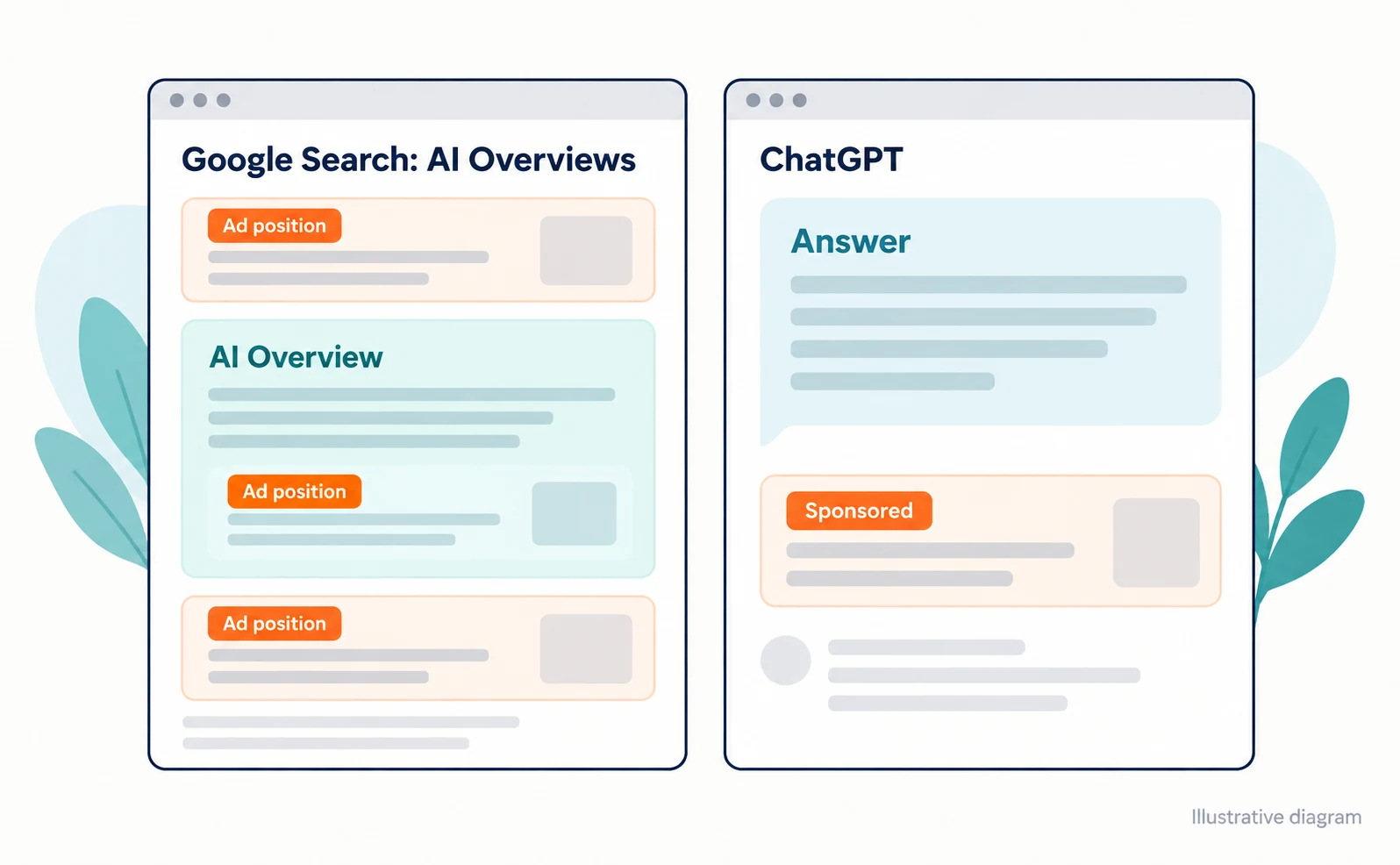
To a reader, the AI answer and the ad appear side by side. But they appear for different reasons. An ad is a slot an advertiser pays for. An organic citation is a page the AI chose to help answer the question.
How ads differ from organic citations
An ad is a paid slot, while an organic citation is a page the AI chooses as a source for its answer. The official documentation does not say that running ads makes your pages more likely to be cited.
OpenAI states that ads do not influence the answers ChatGPT gives [2]. Answers are shaped by what is most helpful to the user and are shown separately from ads.
Google's help page explains that ads in AI Overviews are served through the existing ad auction system [1]. It does not say that advertising makes a page more likely to be chosen as an AI Overview source. Avoid building a budget on a relationship you cannot confirm.
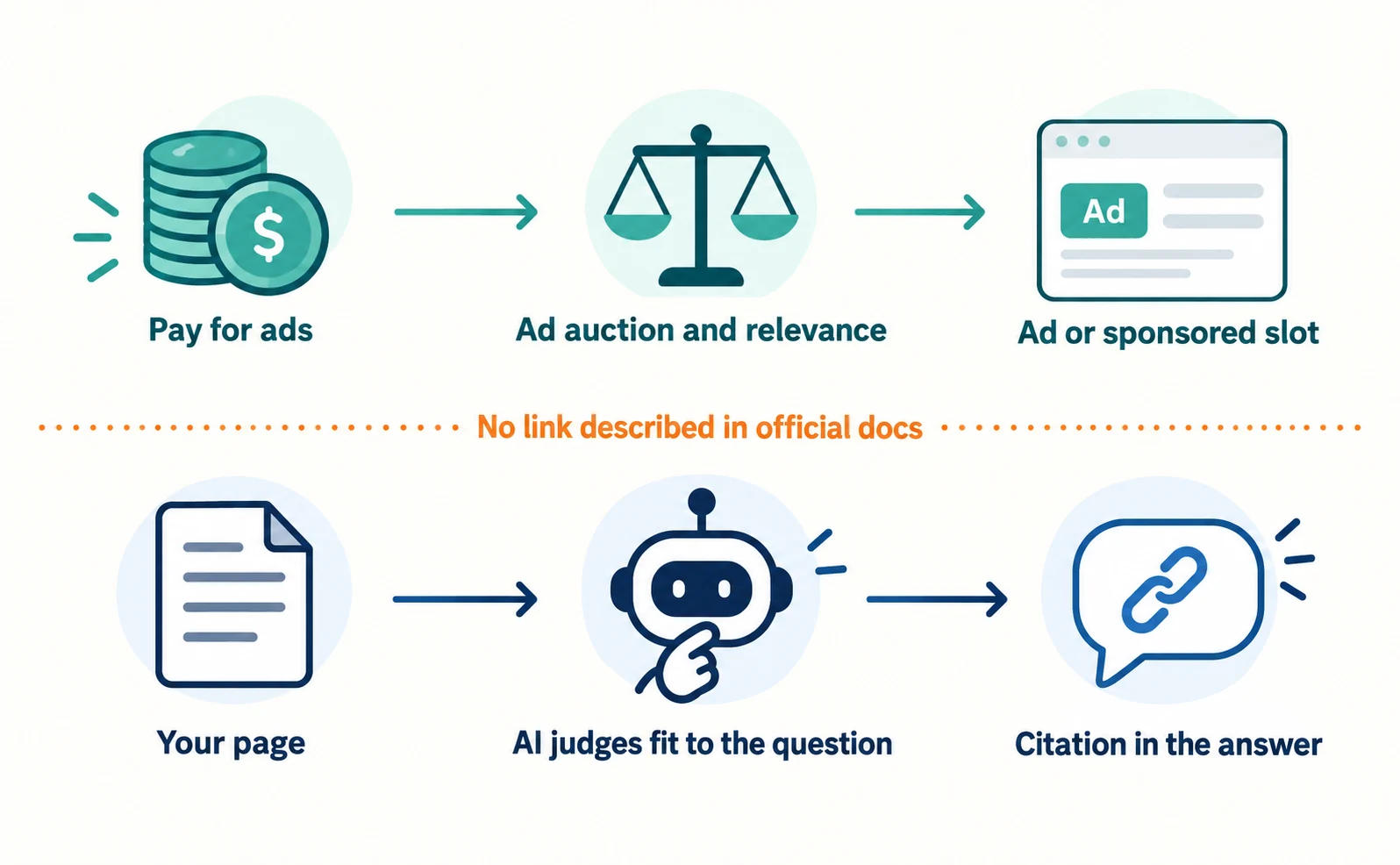
Here are the differences on the same criteria.
| Item | Ads | Organic citations |
|---|---|---|
| How it appears | A slot labeled as an ad or sponsored [1][2] | Within the answer text or links |
| What decides it | Google: the ad auction [1]; ChatGPT: relevance to the conversation topic and similar signals [2] | Pages the AI judges relevant to the question |
| Cost | Ad spend | No payment for the placement (page improvement work is a separate cost) |
| If you stop | The ad no longer appears | Depends on your page content and availability |
| Checking results | Numbers in the ad dashboard | Record real questions and answers |
When reading the table, focus on the last row. Ads come with dashboard numbers, but organic citations only become visible when you ask the AI questions and record the answers.
Measurement has limits too. Google reports ads shown within AI Overviews as top ads. There is currently no separate report for ads shown inside AI Overviews [1]. ChatGPT advertisers receive aggregate information such as views and clicks, and cannot see users' chats [2].
When you advertise on ChatGPT, a program named OAI-AdsBot visits your ad's landing page. It only visits pages submitted as ads, and the data it collects is not used to train AI models [5]. For more on AI programs that visit websites, see our guide to how AI crawlers differ.
Where to advertise and eligibility by service
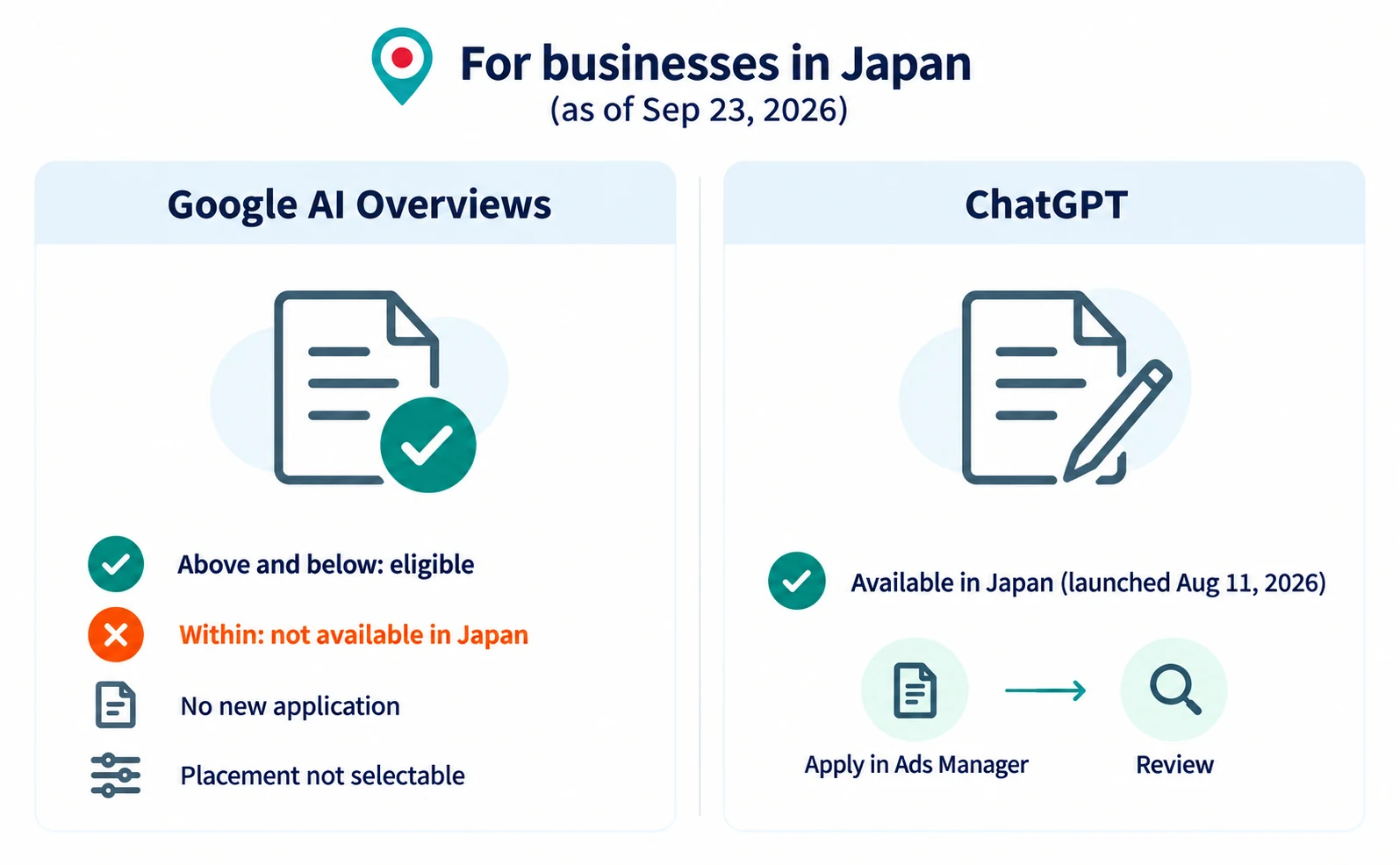
As of September 23, 2026, businesses in Japan can apply for ChatGPT ads through Ads Manager, OpenAI's advertising dashboard. Japan is not yet among the countries where ads can appear within Google's AI Overviews.
Here are both services compared on the same criteria.
| Item | Google AI Overviews | ChatGPT |
|---|---|---|
| Status in Japan | Ads above and below Overviews are eligible in markets with AI Overviews [1] | Launched in Japan on August 11, 2026 [2] |
| Ads within or near the answer | Ads within Overviews are English-only in 12 countries, including the US, Canada and India. Japan is not included [1] | Shown separately from the answer [2] |
| How to apply | Existing Search, Shopping and Performance Max (a Google campaign type that automatically extends where ads serve) campaigns are eligible automatically [1] | Create an account in Ads Manager [4] |
| Choosing placement | You cannot target only AI Overviews or opt out [1] | Not stated in official documentation |
| Excluded areas | Ads within Overviews do not show for sensitive verticals such as adult, alcohol, gambling, finance, healthcare and politics [1] | Near sensitive topics such as health, mental health and politics [2] |
The key question in this table is whether your company in Japan can use it now. Google needs no new application, but you cannot choose whether ads appear inside Overviews. ChatGPT requires an application and review.
Ads in Google's AI Mode are not covered here because the official documentation checked for this article does not describe them.
The ChatGPT ads application follows these steps [4].
- Open
ads.openai.comand sign up for Ads Manager with your OpenAI account. - Enter your business name, website, logo, industry, country, currency and time zone.
- Answer the verification questions. Your account then goes into review, and you receive an email when access is ready.
- In Settings, check the account name and logo that will appear in your ads.
- Add your billing details and a credit card.
- Invite team members if needed.
Decide the following internally before applying.
| What to prepare | Why |
|---|---|
| The legal entity that will advertise and be billed | It must be based in an available country [3] |
| Country, currency and time zone | They cannot be changed after account creation [4] |
| Company name and logo shown in ads | Ads will not serve until this is complete [4] |
| Time to wait for review | Review can take time due to high application volume [4] |
If you choose the wrong country or currency, you will need to create a new account. Confirm the billed entity with your finance team first.
Choosing between ads and organic visibility
Ads suit you if you need visibility right away, while organic visibility suits you if you want to be recommended over time as an answer to questions. You do not have to pick only one; decide by goal.
Here is a decision table by goal.
| Your goal | Better fit | First step |
|---|---|---|
| Get a new product noticed from next month | Ads | Apply for ChatGPT ads, allowing time for review, and prepare the landing page |
| Appear as a candidate in comparison questions | Organic visibility | Choose the questions customers ask and check whether you appear |
| Report numbers to your manager | Start with ads and record organic results too | Keep ad views and clicks separate from answer records |
| Limited budget | Organic visibility | Check whether your pages answer customer questions |
Consider an illustrative example. A fictional commercial cleaning supplies company launches a new floor scrubber.
Right after launch, AI may not yet cite the new product page. During this period, ads are one way to get noticed.
At the same time, the company adds the supported floor types, price and lead time to the product page. Whether the page contains answers to customers' comparison questions is the starting point for organic visibility.
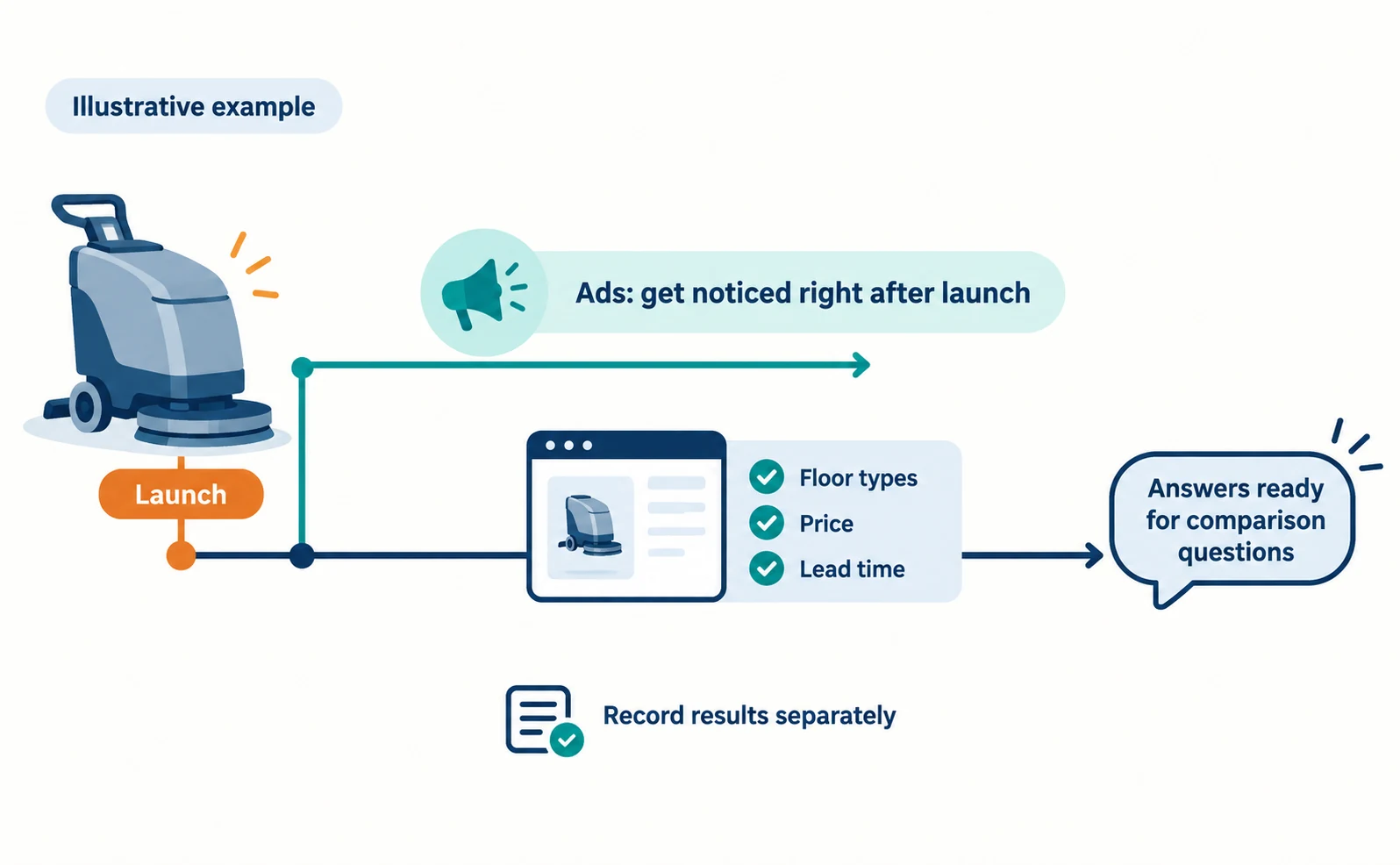
Ad spend alone cannot keep you recommended after the ads stop. For the organic side, see what LLMO is, and for the overall approach, see what AIO means and where to start.
Whichever you choose, record the results separately. Ad numbers and whether your company appeared in AI answers are different measures. Mixing them makes it impossible to tell which one worked.
Start by agreeing internally on the goal right now: immediate visibility, or being recommended over time.
FAQ
- Q. Will running ads make AI more likely to cite my pages?
- The official documentation does not say so. OpenAI states that ads do not influence ChatGPT's answers. Google's help page does not describe any link between ads and the sources chosen for AI Overviews. To be cited, review whether your pages answer customer questions.
- Q. Can businesses in Japan use ChatGPT ads?
- Yes, as of September 23, 2026. ChatGPT ads launched in Japan on August 11, 2026, and self-service Ads Manager is available in Japan. The legal entity that advertises and is billed must be based in an available country.
- Q. Can I show ads only within Google's AI Overviews?
- No. Google states that you cannot target only AI Overviews or opt out of them. Ads within AI Overviews are English-only and available in 12 countries such as the US and Canada. Japan is not included.
Sources
- [1] About ads and AI Overviews (Google Ads Help) — accessed 2026-09-23
- [2] Testing ads in ChatGPT (OpenAI) — accessed 2026-09-23
- [3] Ads Manager Availability (OpenAI Help Center) — accessed 2026-09-23
- [4] Ads Manager Beta Account Setup (OpenAI Help Center) — accessed 2026-09-23
- [5] Overview of OpenAI crawlers (OpenAI) — accessed 2026-09-23
About the author
Shogo MizushimaCEO of kairos Inc. / AgentSignal Developer
Develops AgentSignal, a tool for measuring AI crawler visits and AI-referred traffic, and diagnosing AIO readiness. Writes about measurement and practical improvements for AI search using observed data.
Related articles
Measurement and site improvement
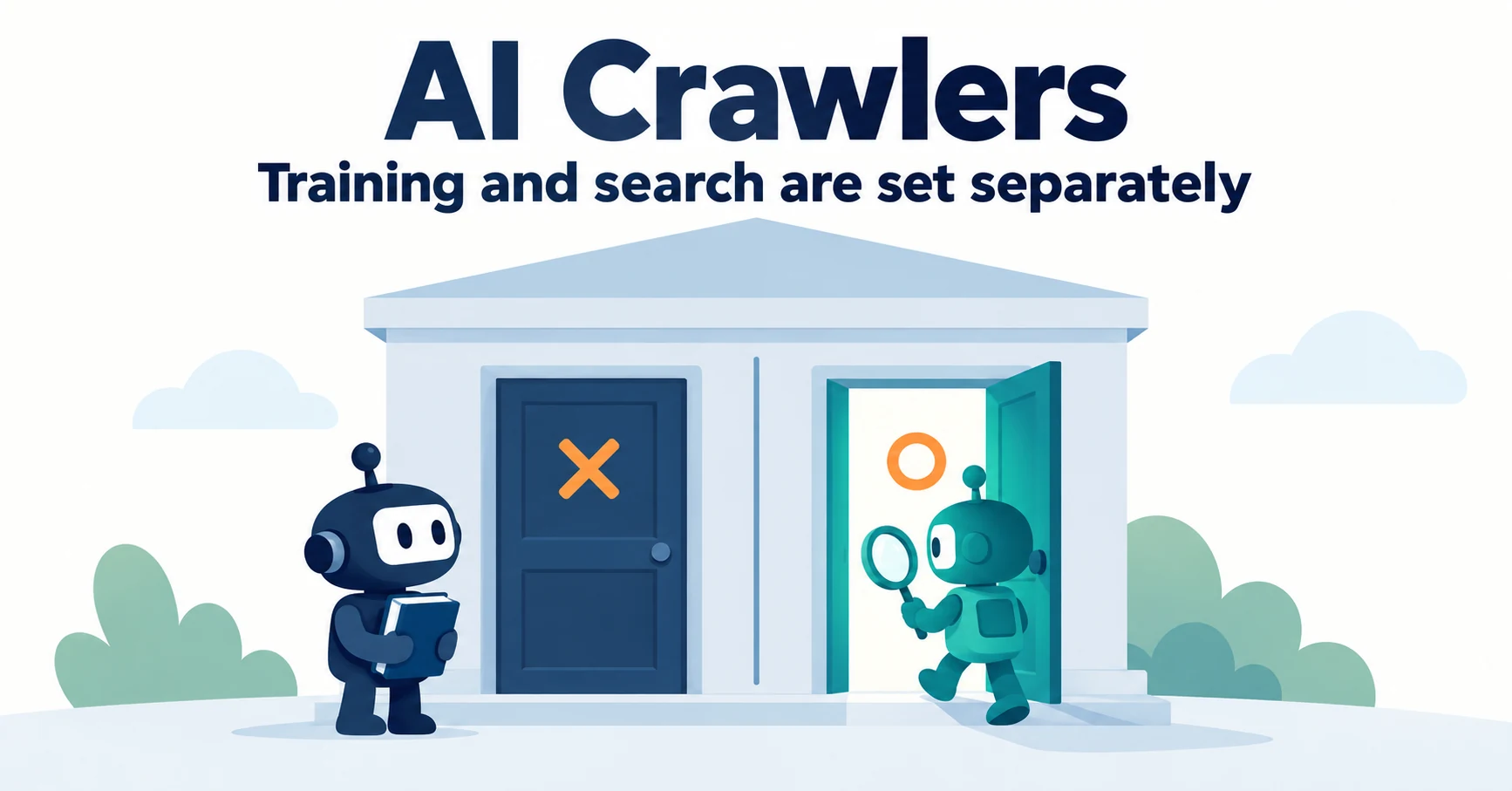
What Are AI Crawlers? Why Blocking GPTBot Doesn’t Remove You from ChatGPT Search
AI crawlers are programs AI companies use to read public web pages. Learn how GPTBot differs from OAI-SearchBot, how Google-Extended works, why visits can continue after a robots.txt block and how to choose settings by purpose.
Published
AIO and AI search
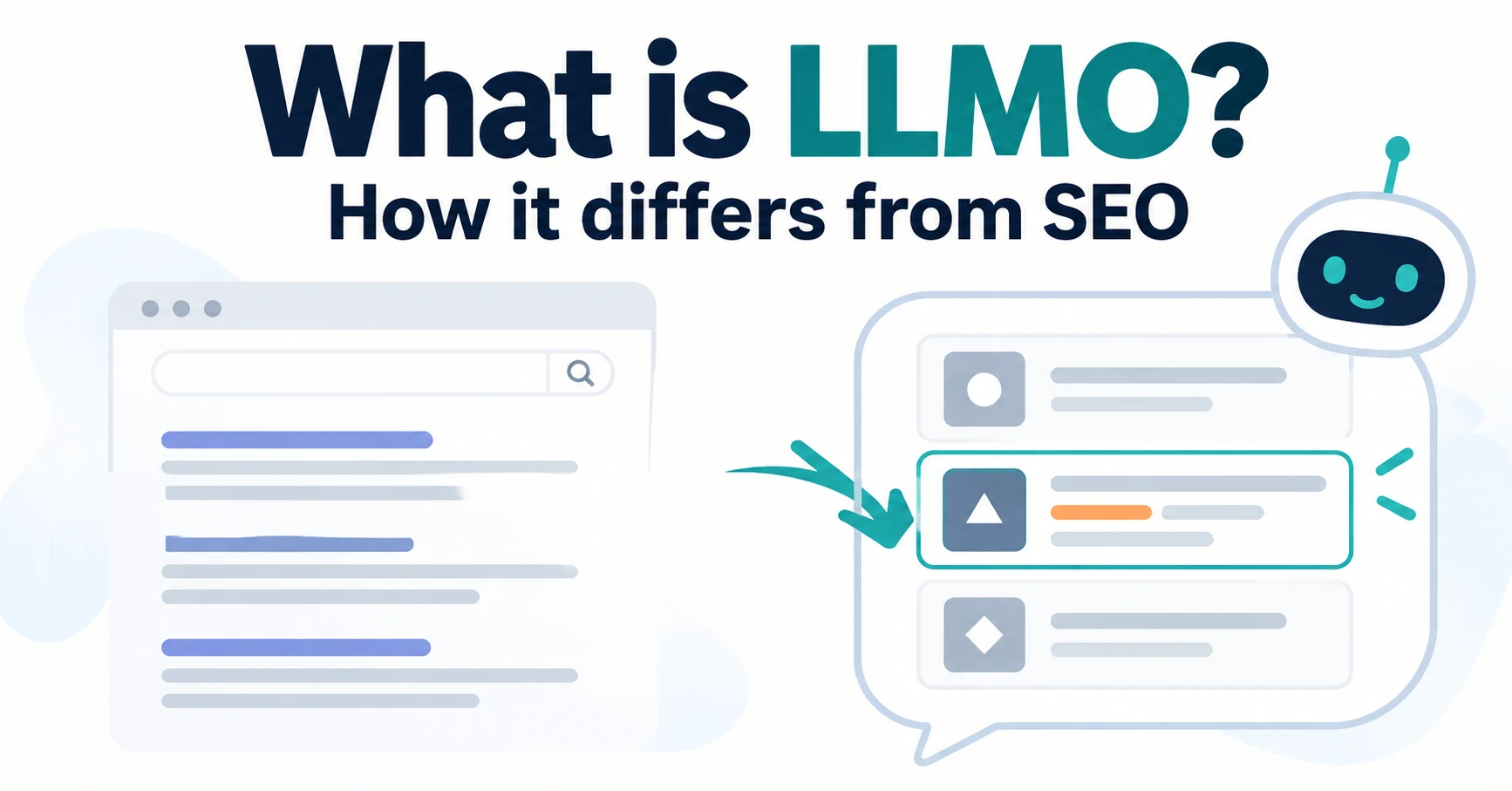
What Is LLMO? How It Differs from SEO and Why Some Say It Is Pointless
LLMO is the work of helping answers from ChatGPT and other AI find and accurately describe your company. Learn how it differs from SEO, why some call it pointless, how E-E-A-T relates, how to measure results and what to do in the first month.
Published
AIO and AI search
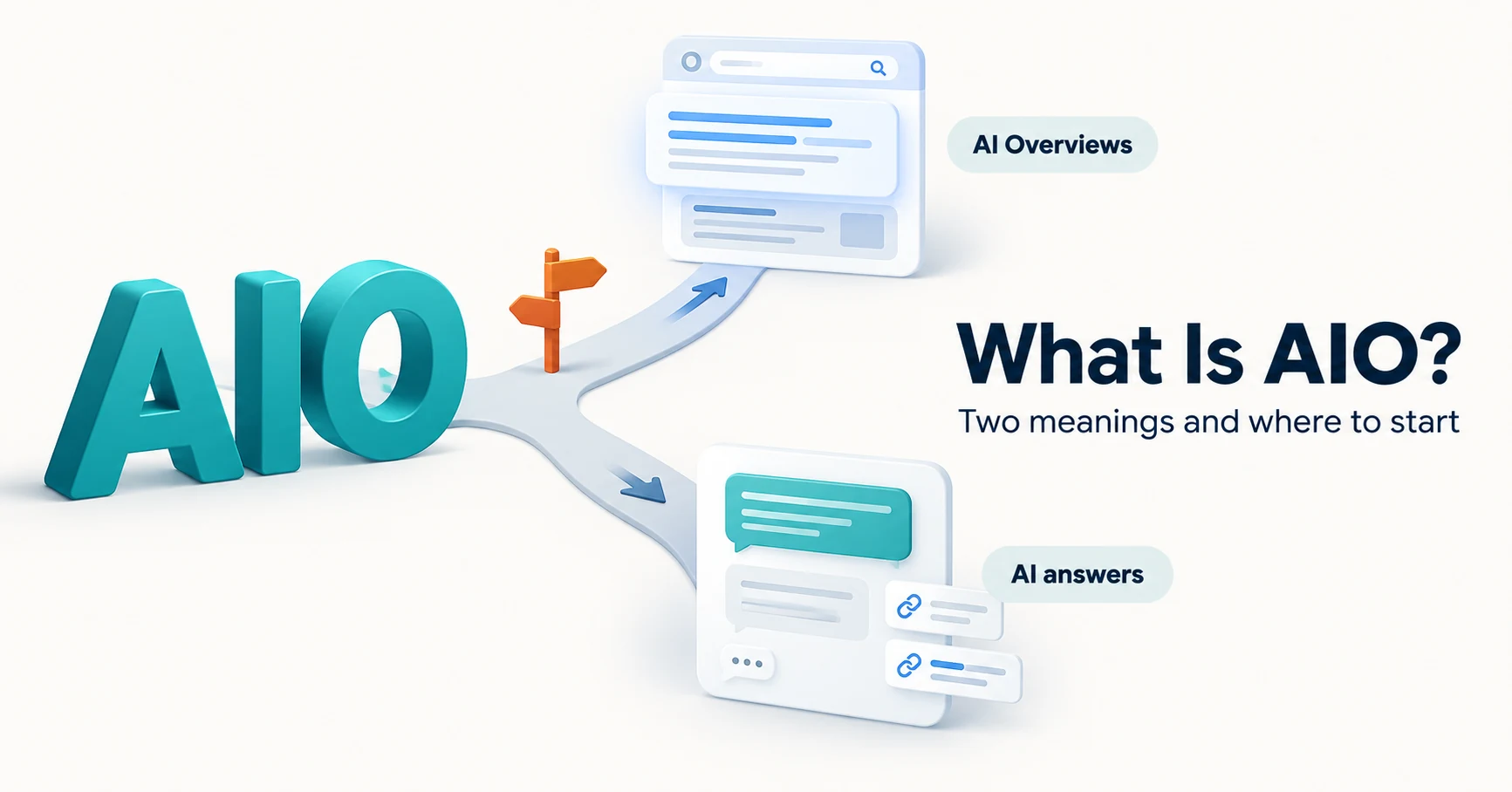
What Is AIO? Its Two Meanings and Where to Start with AI Optimization
AIO has two meanings: work to get your company featured in AI answers, and Google Search’s AI Overviews. Learn how it relates to SEO, what to confirm in a proposal, what Search Console and Bing reports show, and your first tasks.
Published