AI-referred inquiries up 51%: Arizona College of Nursing’s local AIO approach
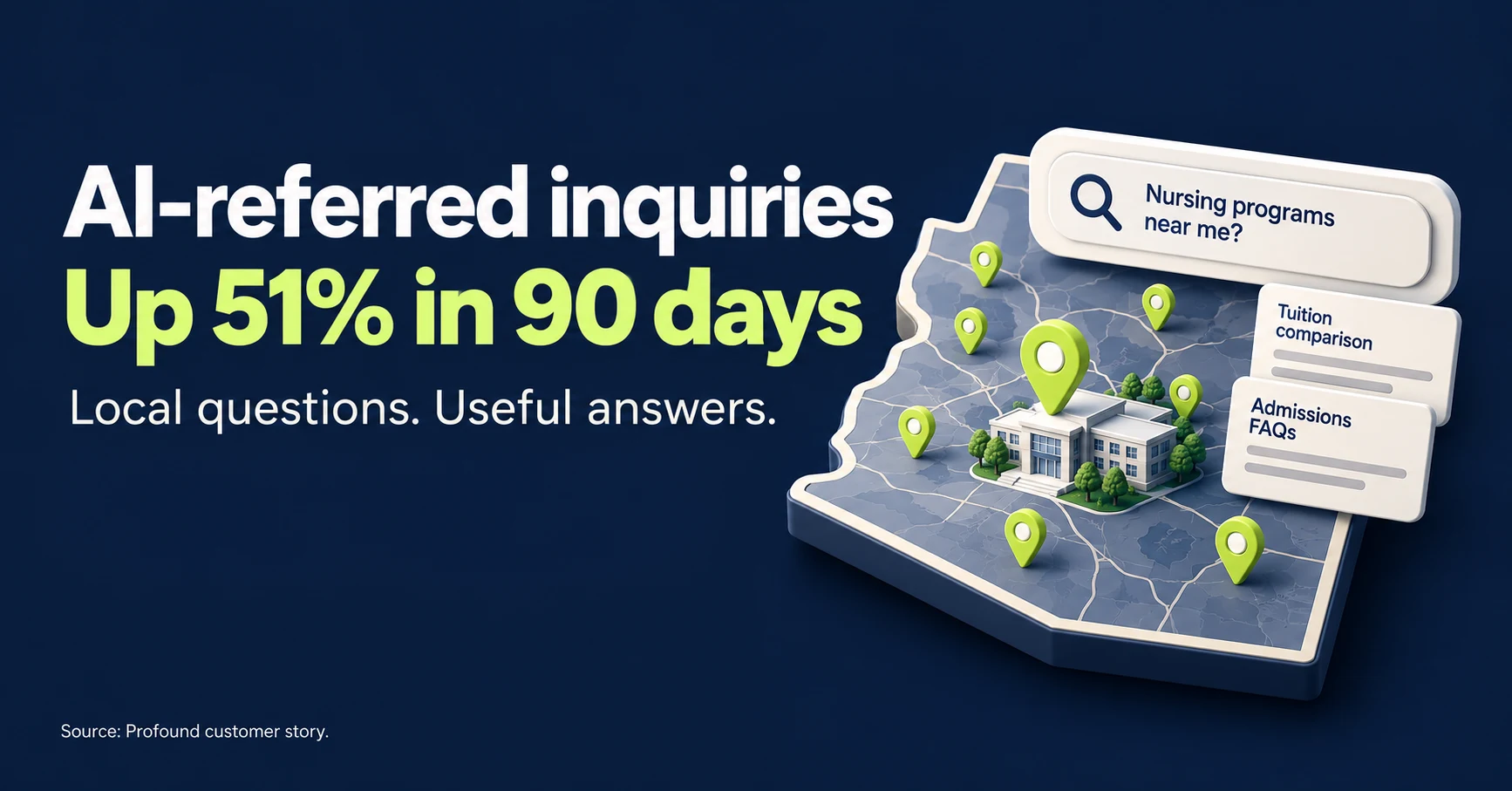
Arizona College of Nursing reported 51% more AI-referred enrollment inquiries and 26% more visits in 90 days. The team examined questions across 24 markets and developed tuition comparisons and local FAQs.
More visits from AI do not automatically tell you whether prospective customers are taking the next step.
Arizona College of Nursing reportedly increased AI-referred enrollment inquiries by 51% in 90 days. Its approach included organizing questions across 24 markets and creating tuition comparisons and local admissions FAQs. Profound’s case study
For businesses with multiple locations, the case offers a practical way to think about AI search optimization: make the information needed to choose a particular location easy to find.
Arizona College of Nursing’s 90-day results: inquiries and visits are different measures
The reported results were a 51% increase in AI-referred enrollment inquiries and a 26% increase in AI-driven visits over 90 days. Profound’s case study

Illustration: Count enrollment inquiries and website visits as separate measures.
Inquiries are not enrolled students. Without the underlying counts and detailed attribution method, a change in inquiry conversion rate cannot be calculated either.
This is a customer story published by the supporting platform, not an experiment isolating the effect of FAQs or tuition comparisons. Its practical value is in the questions and pages the team worked on.
Tracking more than 300 questions across 24 markets by campus
The college collected more than 300 market-specific questions across 24 markets and used campus-level organization to monitor citations and competitors. Profound’s case study
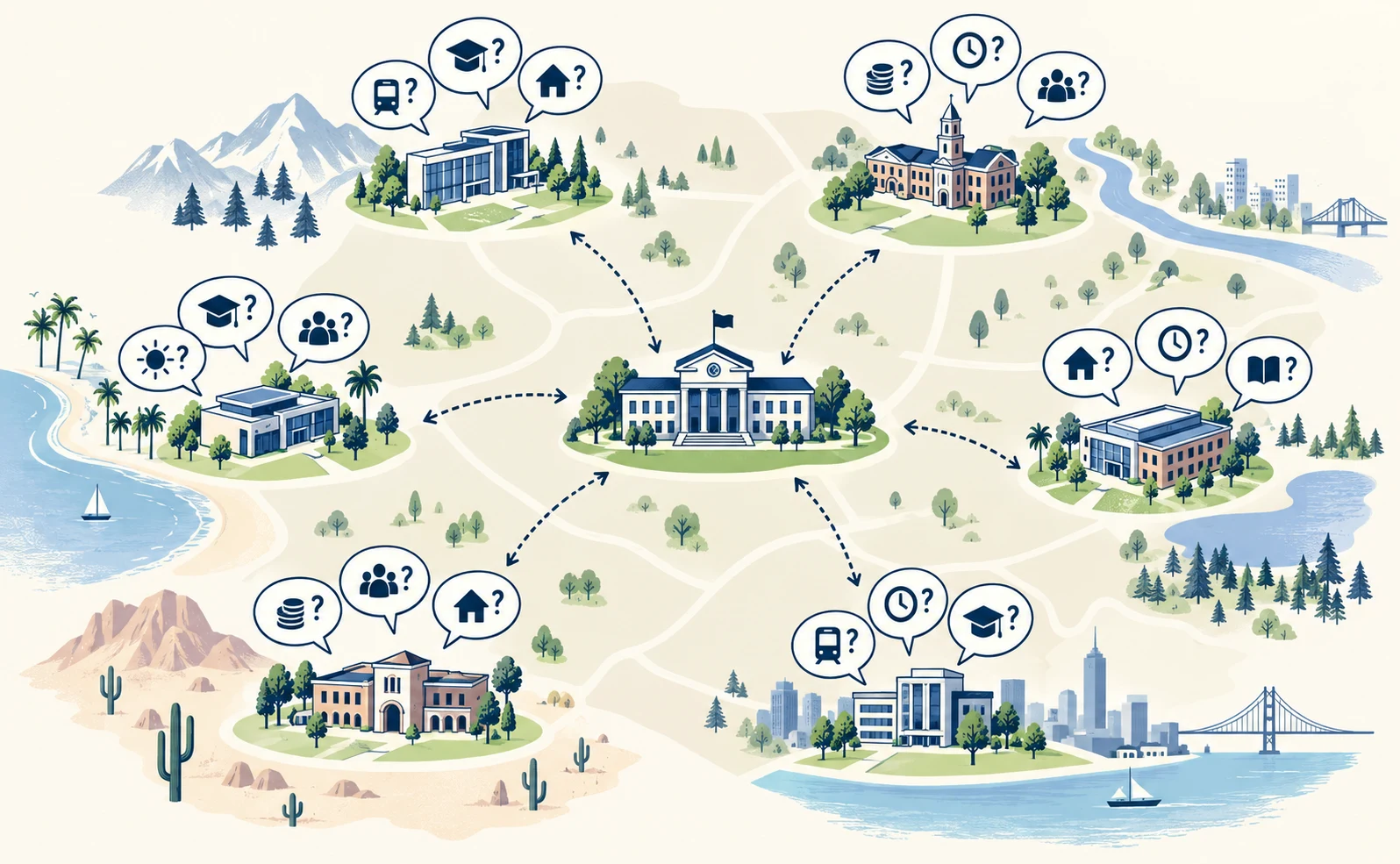
Illustration: Match each campus with its local questions. The map is illustrative.
An overall figure can hide gaps at individual locations. Separate the questions customers ask at each location first.
Consider a fictional tutoring business. Enrollment fees, walking distance from a station, and evening classes may differ by branch. One general service description may not answer all three.
Tuition comparisons and local admissions FAQs: filling the missing answers
Tuition comparisons and local admissions FAQs were among the content opportunities the team pursued. These address costs and conditions people need before choosing a program. Profound’s case study
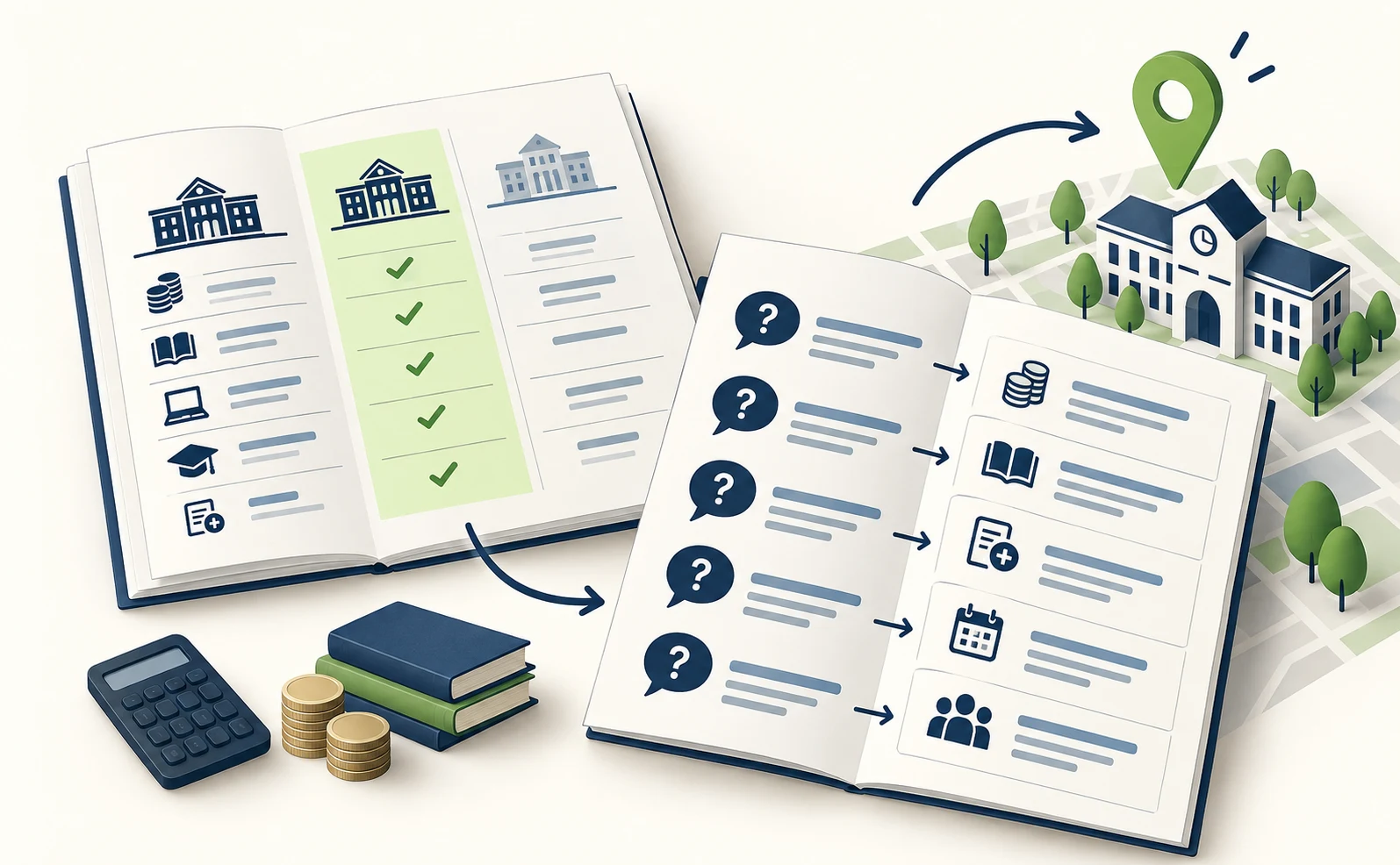
Illustration: Tuition comparisons and local admissions FAQs answer different questions.
The public Southfield, Michigan campus FAQ is an example of a geographically specific question page. Its current version has not been established as identical to the version used during the reported results period.
For your own site, focus on completeness of the answer rather than the number of FAQs. Explain upfront costs, materials, and conditions for additional charges alongside monthly fees so visitors can understand the total.
Paid landing pages were also compared with competitors
The college also compared paid landing pages with competitors to identify gaps in messaging. Profound’s case study
If the page visitors actually land on lacks the relevant conditions, they must search again. A useful editorial lesson is to place important answers on entry pages as well as in blog posts.
For a multi-location business, start with a location-by-question table
Start with a table connecting locations, recurring questions, and the pages that answer them. This is our suggested exercise, not the college’s actual worksheet.
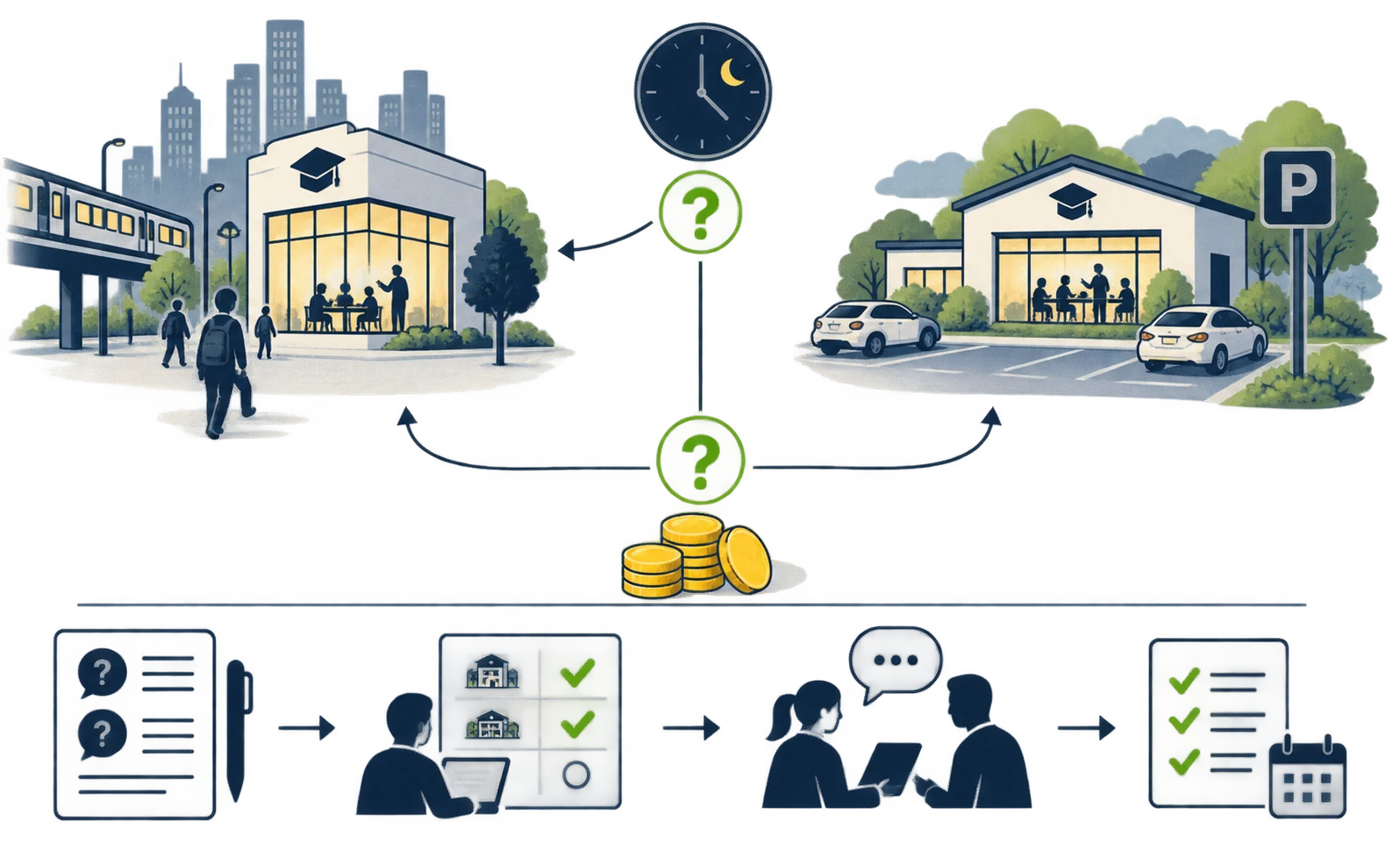
Illustration: Organize location-specific hours, parking, and fees using a fictional tutoring business.
| Illustrative location | Question | Information to provide |
|---|---|---|
| Station branch | Can I attend in the evening? | Last class and reception hours by day |
| Suburban branch | Can I drive there? | Parking availability and conditions |
| Both branches | What will the first month cost? | Shared fees and branch-specific extras |
- Select recurring questions from recent inquiries at each location.
- Read the location page and mark which answers are present.
- Ask the local team to resolve missing information.
- Add verified answers, conditions, and an update date.
Explain the real differences between locations instead of swapping place names into identical copy.
Count local inquiries separately by observable discovery source
After publication, compare inquiries for the same location over equal-length periods. Keep observed analytics referrals, customer-reported discovery sources, and unknown sources distinct.
Count information requests, visits or tours, and enrollments separately. Combining them obscures which step changed.
Begin with one location and check whether its page answers practical questions about costs and access. That is a concrete starting point for local AI search optimization.
FAQ
- Q. Does the 51% increase mean more enrolled students?
- No. It describes AI-referred enrollment inquiries, not enrolled students or revenue.
- Q. What should differ between local pages?
- Explain verified location-specific costs, hours, access, and application conditions rather than merely changing place names.
Sources
- [1] Profound’s case study — accessed 2026-09-26
- [2] Southfield, Michigan campus FAQ — accessed 2026-09-26
About the author
Shogo MizushimaCEO of kairos Inc. / AgentSignal Developer
Develops AgentSignal, a tool for measuring AI crawler visits and AI-referred traffic, and diagnosing AIO readiness. Writes about measurement and practical improvements for AI search using observed data.
Related articles
AIO and AI search
Airbyte reported a $100,000 ChatGPT-originated deal: the content changes behind its AIO work
Airbyte reported one $100,000 contract originating from ChatGPT. The team analyzed over 500 prompts and revised content into direct answers, lists, and steps.
Published
AIO and AI search
AI-referred signups up 37%: how OpusClip made AIO measurement continuous
OpusClip reported 37% more AI-referred signups and 20% more traffic. The team combined seven-day rolling averages with human checks of AI answers.
Published
AIO and AI search
LLM-attributed traffic up 82%: Aleph’s one-theme-a-month content approach
Aleph reported 82% more LLM-attributed traffic and citation share rising from 1.5% to 5.3% over two months. The team selected one monthly theme and developed feature-specific buyer guides.
Published