LLM-attributed traffic up 82%: Aleph’s one-theme-a-month content approach
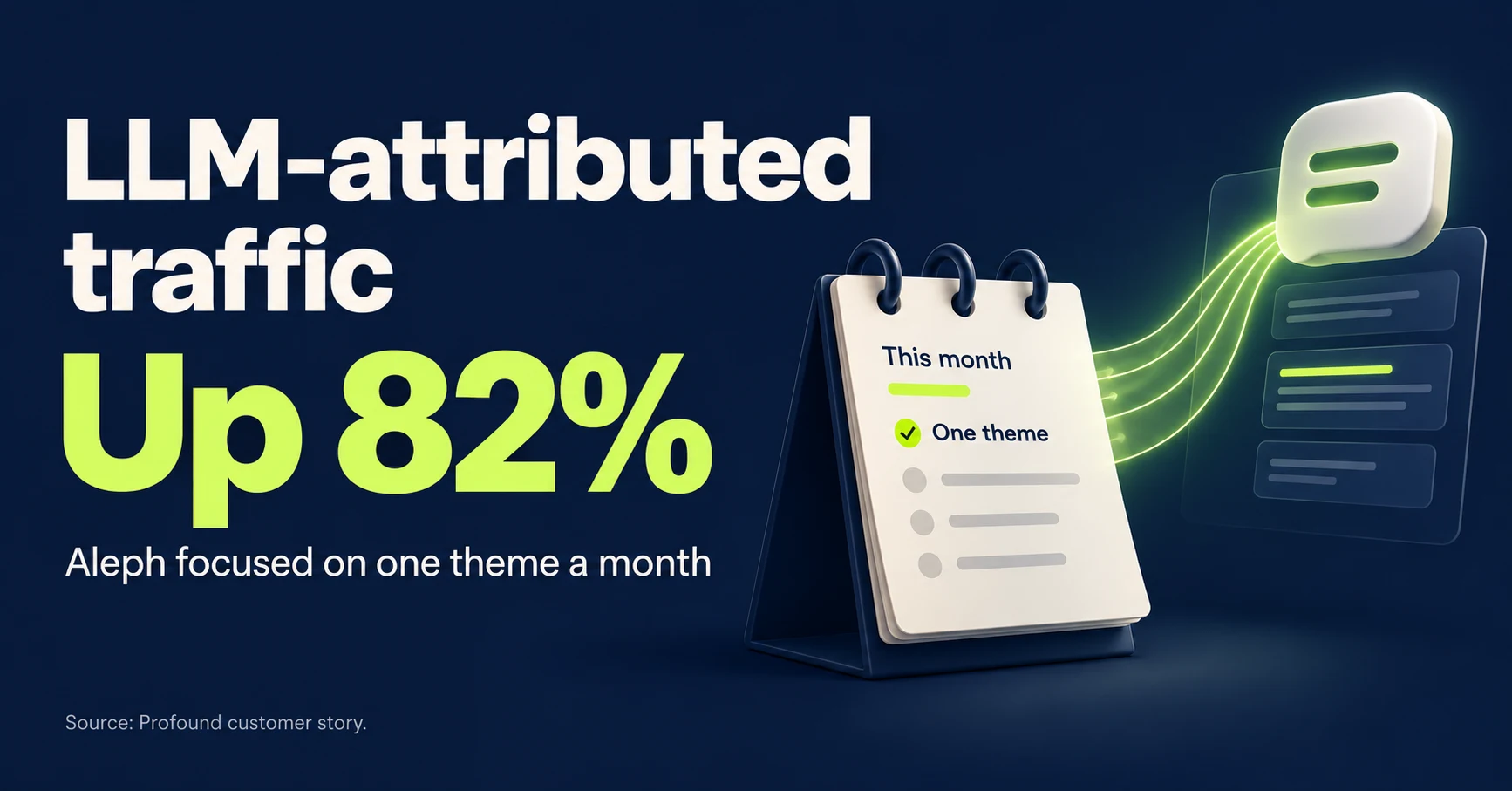
Aleph reported 82% more LLM-attributed traffic and citation share rising from 1.5% to 5.3% over two months. The team selected one monthly theme and developed feature-specific buyer guides.
You want to publish more, but cannot cover pricing, features, and competitor comparisons at once. Aleph, a financial planning and analysis platform, offers a useful case for a small content team.
The company focused on one theme each month and addressed buyers’ questions. Its supporting platform reports an 82% increase in LLM-attributed traffic. Profound’s case study
LLM optimization concerns how systems behind AI assistants represent a business. Here, the practical focus is choosing a manageable content theme.
Aleph’s three outcomes: traffic up 82%, citation share at 5.3%, and visibility up fivefold
The reported outcomes were 82% more LLM-attributed traffic, citation share rising from 1.5% to 5.3%, and a fivefold increase in visibility. The citation-share and visibility changes are described over two months. Profound’s case study

Illustration: Traffic, citation share, and visibility measure different things.
Citation share concerns the monitored citations; visibility concerns presence in AI answers. Neither is a website visit, and the traffic increase is not a revenue increase.
Starting traffic counts and isolated effects of individual actions are not provided. The useful lesson is how the team allocated its attention.
Group questions by volume, intent, and theme, then focus on one theme each month
Aleph organized prompts by volume, intent, and theme and focused on one theme each month. Profound’s case study

Illustration: Group pre-purchase questions into themes and select one monthly focus.
For your own business, group sales questions around needs such as understanding costs, comparing a capability, or switching products. This grouping is our editorial suggestion.
Question frequency is only one consideration. Choose a theme for which you can provide accurate answers and reduce a specific purchasing uncertainty.
If integration questions repeatedly arise in sales calls, explaining supported connections and limitations may be more useful than another broad “best business tools” article.
Answering variance-detection questions with a feature-specific buyer’s guide
The case describes identifying questions about AI-powered variance detection and publishing a buyer’s guide to relevant solutions. Profound’s case study

Illustration: A buyer guide should explain prerequisites, comparison criteria, and limitations.
Variance detection identifies differences between figures such as budget and actual performance. A useful guide should compare tools against the differences the buyer needs to investigate.
For your own feature, explain required inputs, how outputs are interpreted, and unsupported conditions. A list of capabilities alone may not help someone decide.
This is our editorial interpretation of a feature-led comparison. It does not reproduce Aleph’s guide or claim results attributable to that page alone.
External sources, internal links, and headings were also reviewed
The reported work also included external citation sources, internal links, and headings. The source does not say every one of those tasks happened monthly. Profound’s case study
On your own site, check whether a buyer’s guide leads to detailed specifications and implementation instructions. Someone checking whether a capability fits should not have to restart from a company overview.
Build an LLM optimization routine around one theme and a complete buyer’s guide
Collect pre-purchase questions about one capability and establish consistent comparison criteria. The following is a proposed worksheet.
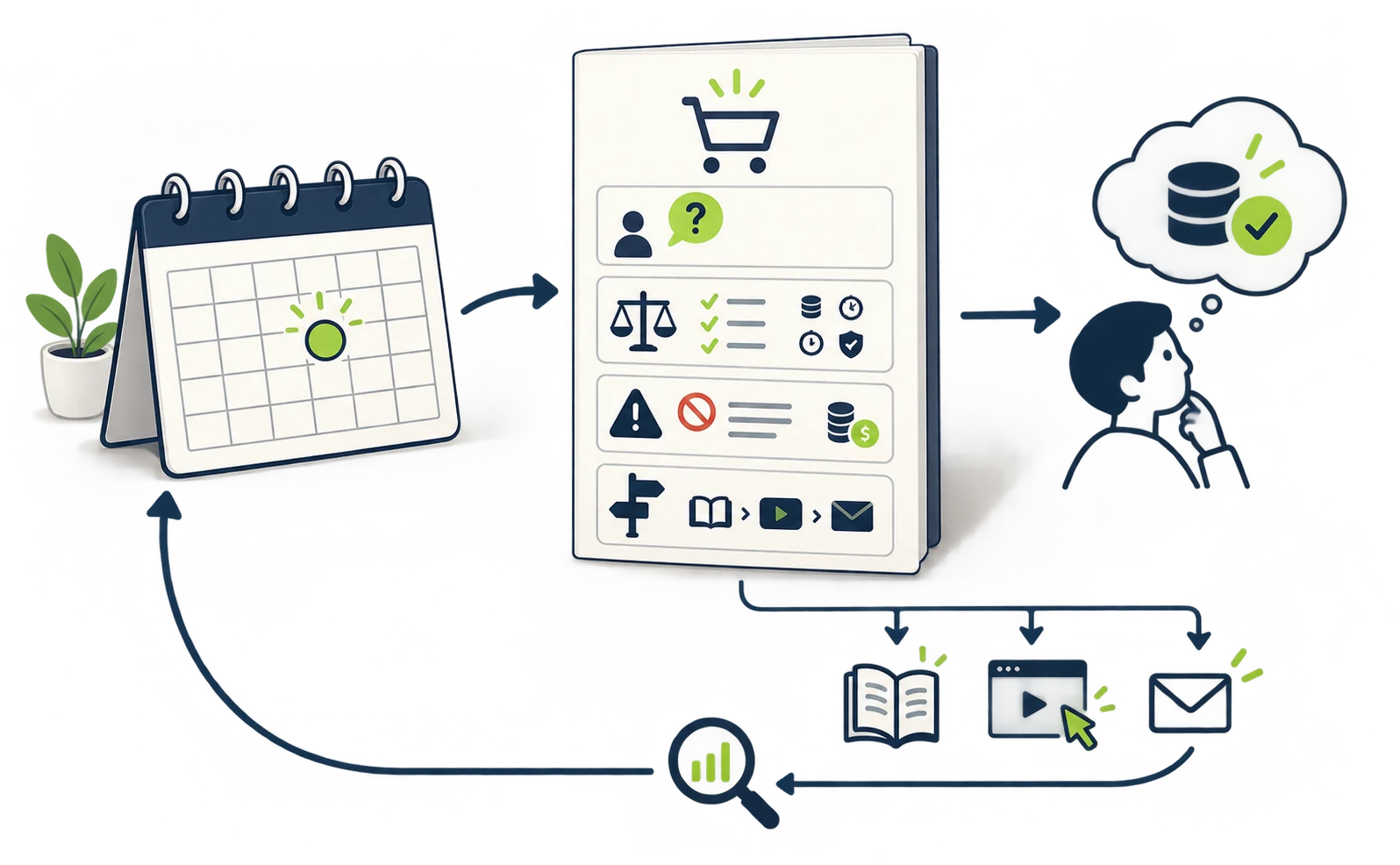
Illustration: Answer one focused question, connect supporting resources, and revisit the page.
| Guide element | Information to include |
|---|---|
| Job to solve | Who has the problem and what it is |
| Comparison criteria | Supported inputs, frequency, and permissions |
| Limitations | Unsupported uses and additional-cost conditions |
| Evidence | Official specifications, check date, and relevant testing |
| Next step | Detailed documentation, trial, or inquiry link |
Focus on that theme for the month and first consider whether an existing page can answer it. Create a new article when a distinct question needs a substantial answer.
Record the change date, question set, and URL. At the next review, compare AI presence, visits, and inquiries separately.
The point of choosing one theme is to finish the explanation needed for one purchasing decision.
FAQ
- Q. Must I publish a new article every month?
- No. Improve an existing page when it can answer the question; one monthly theme does not require a new page.
- Q. What increased by 82%?
- Website traffic attributed to LLMs, not revenue or contracts.
Sources
- [1] Profound’s case study — accessed 2026-09-26
About the author
Shogo MizushimaCEO of kairos Inc. / AgentSignal Developer
Develops AgentSignal, a tool for measuring AI crawler visits and AI-referred traffic, and diagnosing AIO readiness. Writes about measurement and practical improvements for AI search using observed data.
Related articles
AIO and AI search
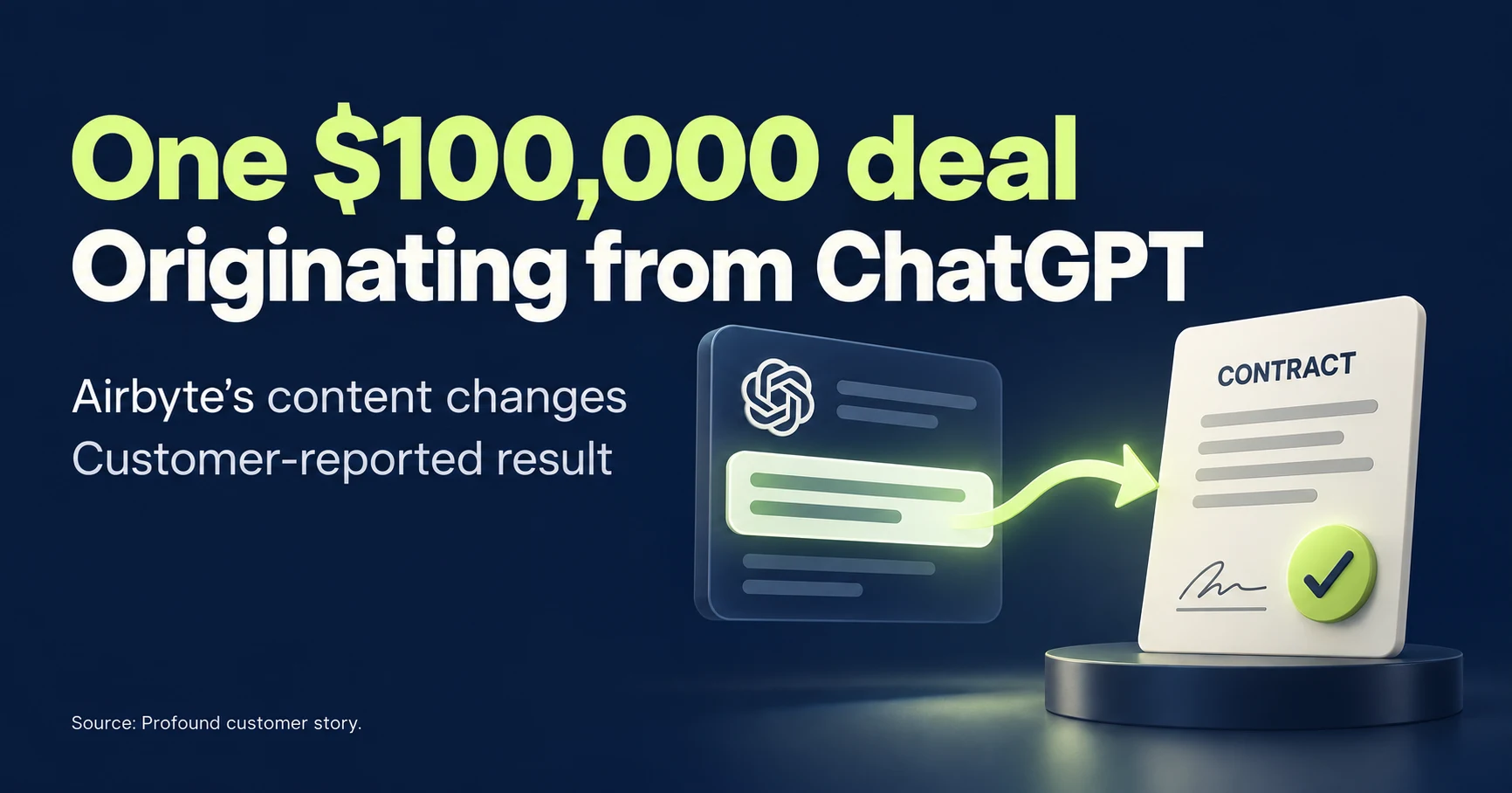
Airbyte reported a $100,000 ChatGPT-originated deal: the content changes behind its AIO work
Airbyte reported one $100,000 contract originating from ChatGPT. The team analyzed over 500 prompts and revised content into direct answers, lists, and steps.
Published
AIO and AI search
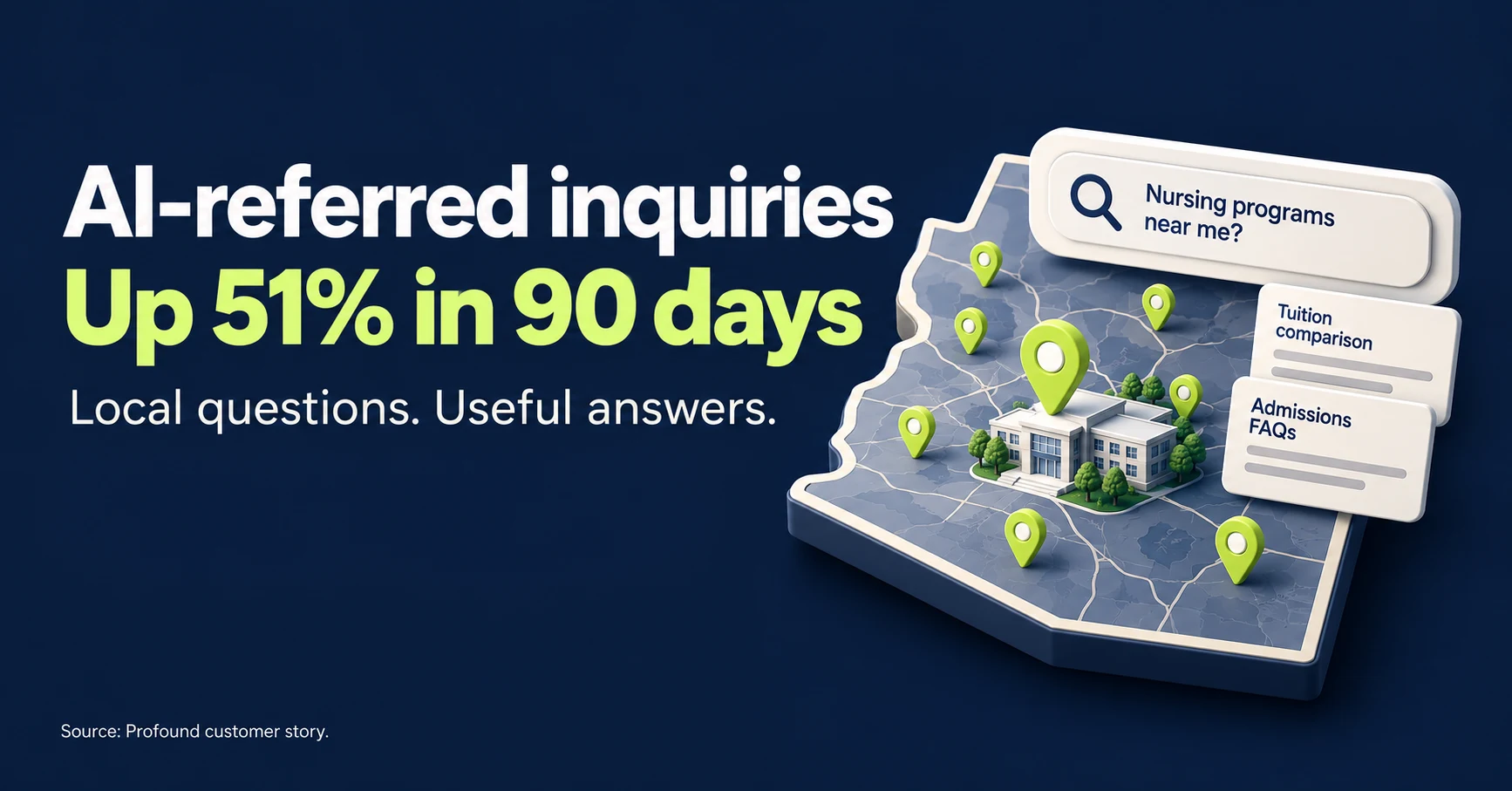
AI-referred inquiries up 51%: Arizona College of Nursing’s local AIO approach
Arizona College of Nursing reported 51% more AI-referred enrollment inquiries and 26% more visits in 90 days. The team examined questions across 24 markets and developed tuition comparisons and local FAQs.
Published
AIO and AI search
AI-referred signups up 37%: how OpusClip made AIO measurement continuous
OpusClip reported 37% more AI-referred signups and 20% more traffic. The team combined seven-day rolling averages with human checks of AI answers.
Published